Osaka
Where openness, humor, and generosity shape everyday life.
Which part of Osaka best matches the way you want to travel — and what trade-offs come with that choice?
Choose the atmosphere that feels right to you before reading further.
Namba
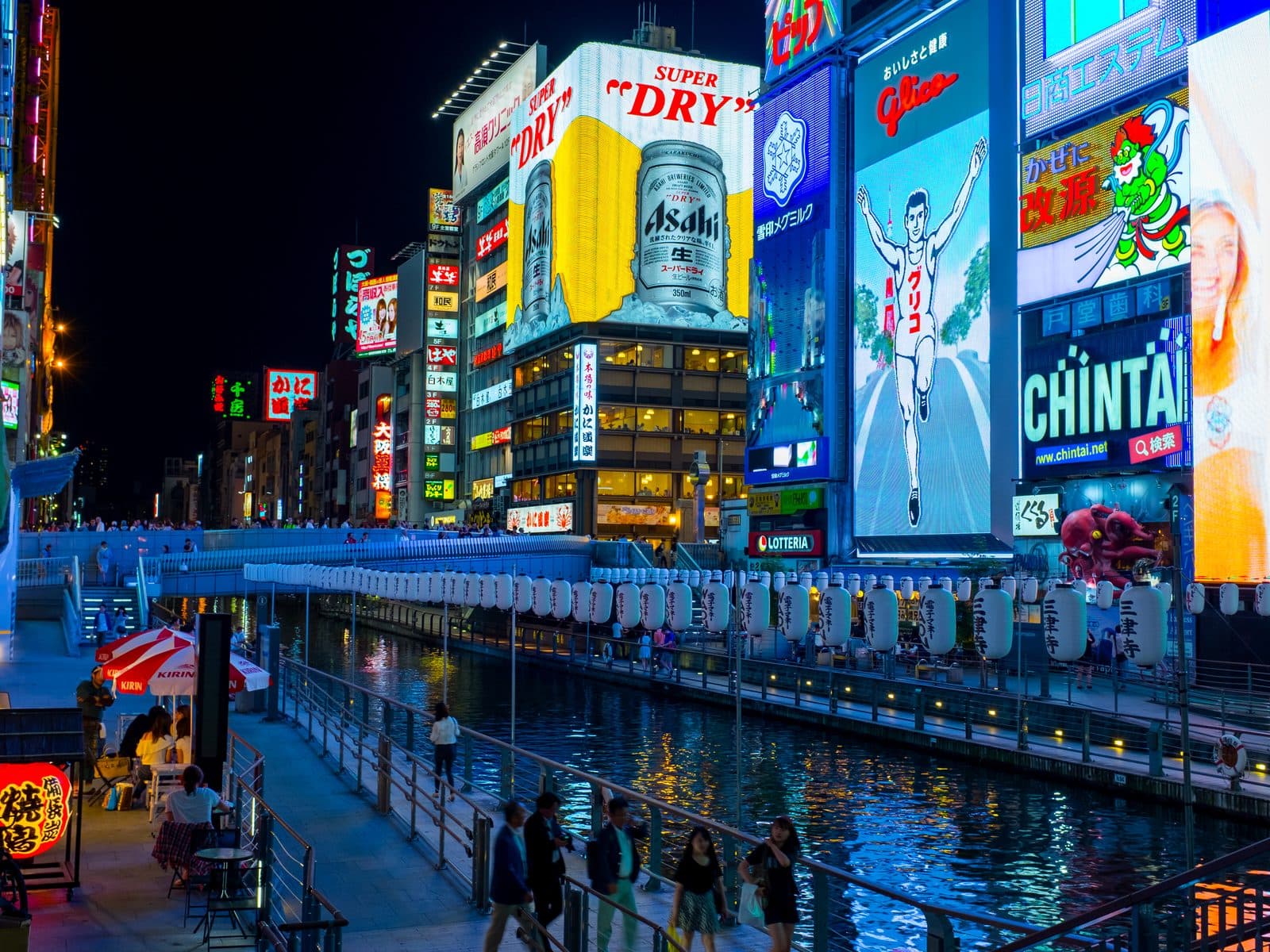
Canal-side food-and-neon energy where evenings are the itinerary — Dotonbori, Kuromon Market, and walk-out dining define the district. Canal-adjacent rooms stay busy late, and light sleepers may find the noise part of the character rather than a fixable flaw.
Umeda
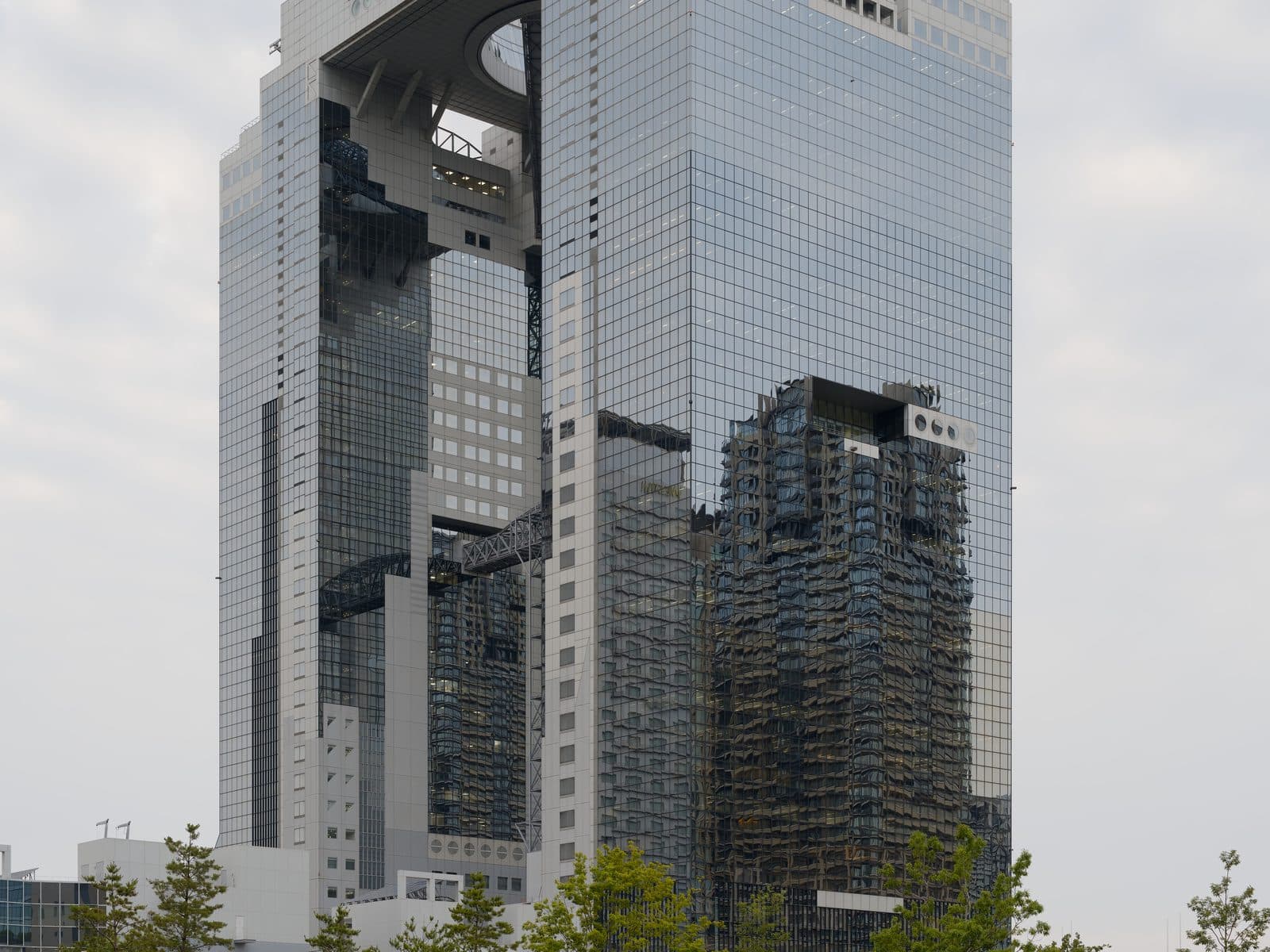
Osaka's northern rail hub — department-store mornings and Kansai day trips to Kyoto, Kobe, and Himeji run from one station complex. Shinkansen does not stop here, and evenings feel shopping-and-office oriented rather than canal-and-stall theater.
Osaka Bay
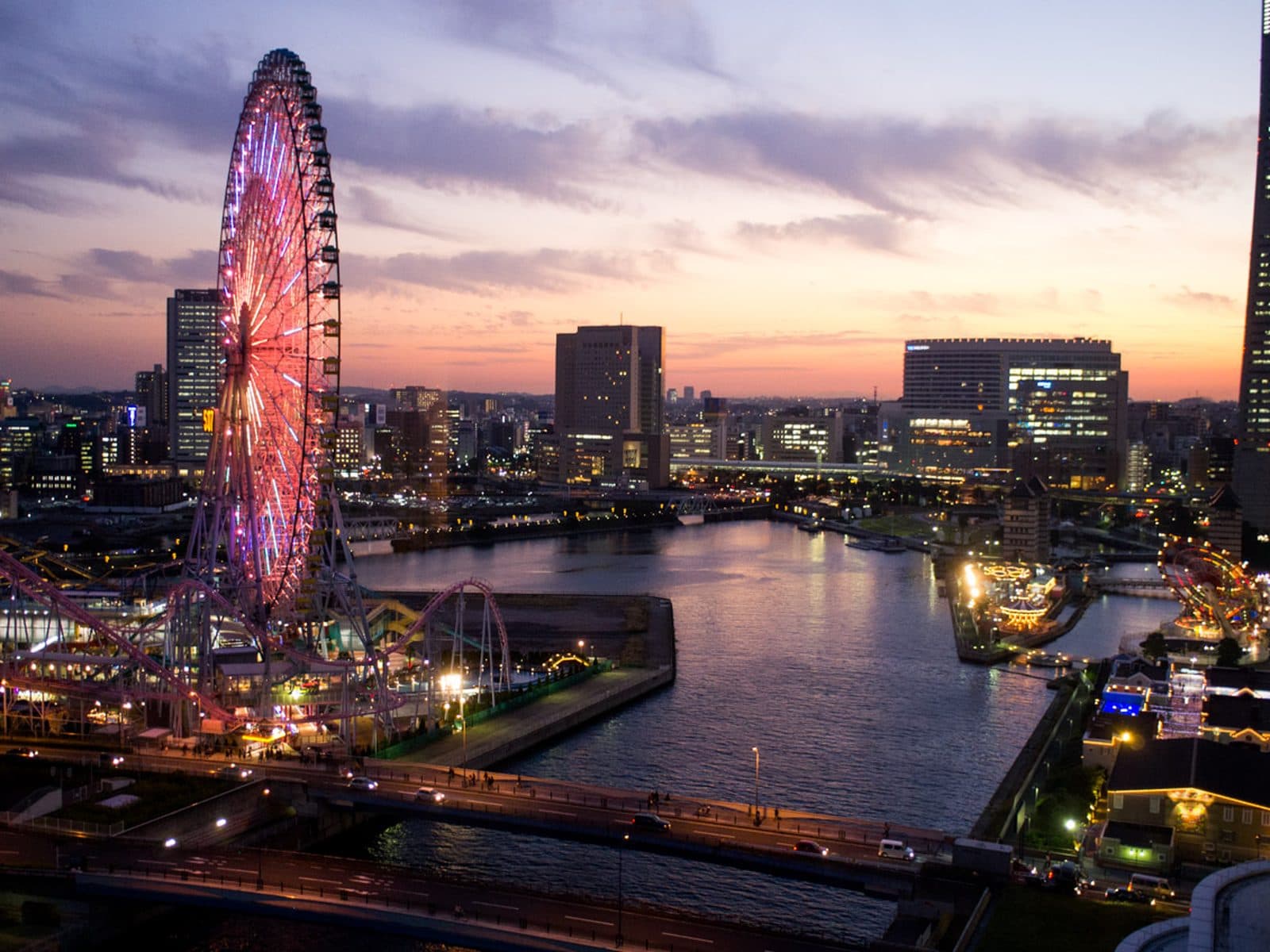
Waterfront calm built around Kaiyukan and Tempozan Marketplace — a family-day cluster with quieter evenings than Minami. Dotonbori and Umeda sit thirty or more minutes away, so a food-focused trip spends more time in transit from here.
Tennoji
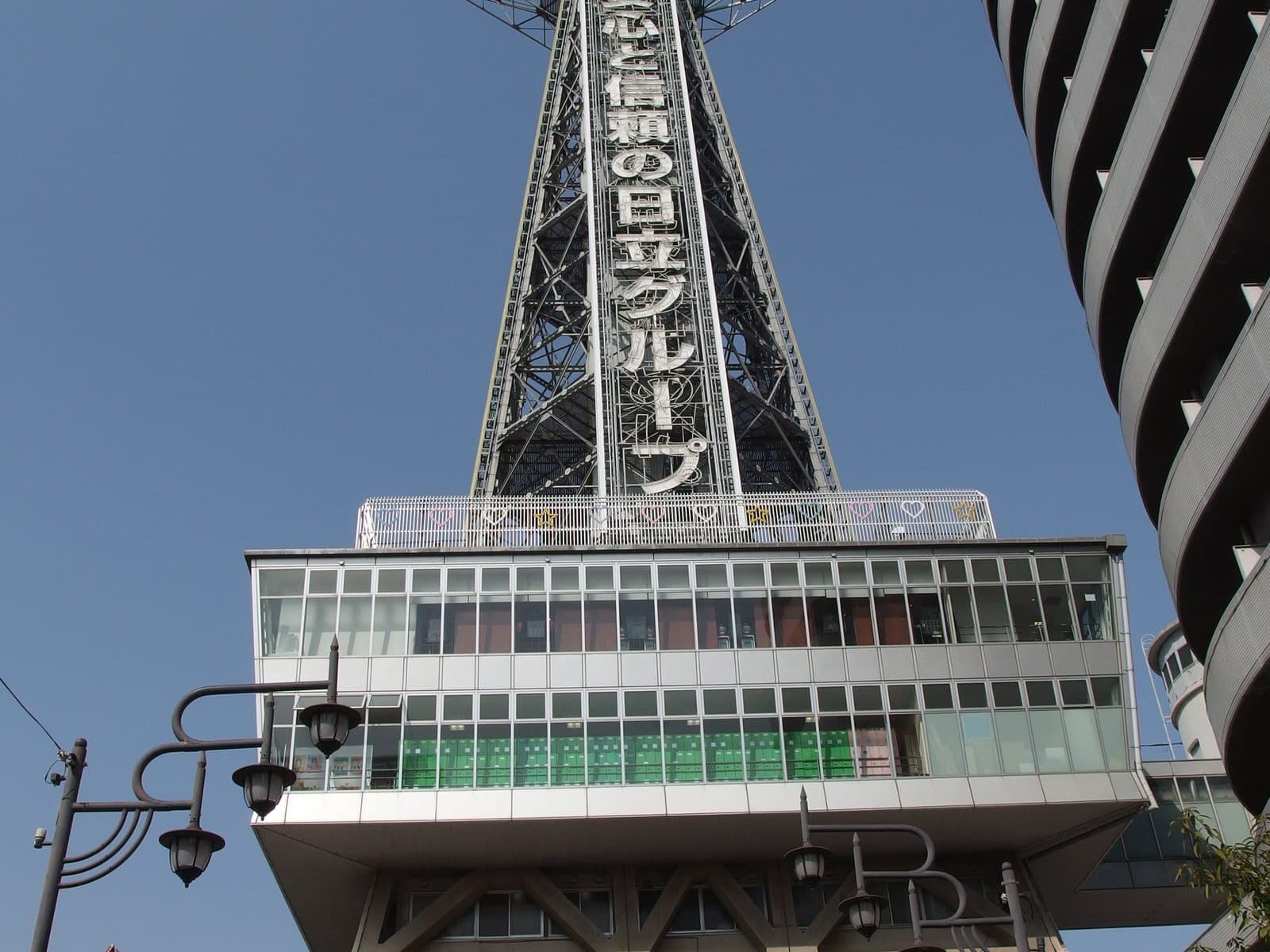
Retro Showa-era streets around Tsutenkaku Tower, with Kintetsu Nara access and often better value than canal-adjacent Namba. Dotonbori requires a ten-to-fifteen-minute subway ride, not an after-dinner stroll.
Namba
Canal-side food-and-neon energy where evenings are the itinerary — Dotonbori, Kuromon Market, and walk-out dining define the district. Canal-adjacent rooms stay busy late, and light sleepers may find the noise part of the character rather than a fixable flaw.
Umeda
Osaka's northern rail hub — department-store mornings and Kansai day trips to Kyoto, Kobe, and Himeji run from one station complex. Shinkansen does not stop here, and evenings feel shopping-and-office oriented rather than canal-and-stall theater.
Osaka Bay
Waterfront calm built around Kaiyukan and Tempozan Marketplace — a family-day cluster with quieter evenings than Minami. Dotonbori and Umeda sit thirty or more minutes away, so a food-focused trip spends more time in transit from here.
Tennoji
Retro Showa-era streets around Tsutenkaku Tower, with Kintetsu Nara access and often better value than canal-adjacent Namba. Dotonbori requires a ten-to-fifteen-minute subway ride, not an after-dinner stroll.
Image credits
You open a map and drop three hotel pins. All are in Osaka. All look plausible. One sits above a northern station concourse where department-store mornings and JR departures to Kyoto begin before coffee. One rests in a southern lane where dinner might start at a covered arcade and end along a canal after the stalls close. One anchors a Shinkansen platform where a departure board matters more than the street outside.
The question is not which pin wins a ranking. It is which daily pattern fits the trip you are actually building — the walks you want before breakfast, the station you can reach with luggage, the hour you expect to come home, and whether your evenings belong to food lanes or to rail timetables.
Osaka is compact enough to visit widely from almost anywhere, but not simple enough to treat every base as interchangeable. The city runs on two centers — Kita in the north and Minami in the south — and the useful work is matching where each day begins and ends to the way your days will move. The same decision logic as Where to Stay in Tokyo and Where to Stay in Kyoto, applied to a city whose geography runs north–south between rail hubs and evening streets rather than around a single loop line.
There is no single best neighborhood for every Osaka trip. Match your base to how you move, what you want within walking distance, and whether your evenings belong to northern station calm or southern food-and-canal energy.
Start with movement: Will you depart on Shinkansen from Shin-Osaka, eat out nightly in Namba and Dotonbori, or day-trip to Kyoto and Nara from a northern hub? Then match atmosphere: polished Kita department-store mornings, Minami arcade-and-stall evenings, retro Shinsekai lanes, or functional gateway rhythm near the bullet train.
Accommodation type is a separate decision. Ryokan vs Hotel in Japan covers the rhythm of the stay itself — hosted evening versus flexible checkout. Osaka is hotel-heavy; ryokan nights belong more often in onsen side trips than in the city core. This article covers where in Osaka that stay should sit.
Specific hotel recommendations belong elsewhere. The decision here is neighborhood — the part of the city whose mornings and evenings you will inherit for several days.
Four common bases cover many first-time and return itineraries. None is universally better. Each trades one kind of convenience for another.
Stay in Umeda when northern rail access, department-store infrastructure, and calmer returns after dinner matter more than doorstep canal energy. JR Osaka Station, Hankyu Umeda, Hanshin Umeda, and the Midosuji subway converge here — strong for Kyoto, Kobe, and Himeji day trips on conventional lines. Shinkansen does not stop here; bullet trains leave from Shin-Osaka.
Stay in Namba and Minami when evening food rhythm, covered arcades, and KIX access via Nankai should sit within walking distance. Dotonbori, Kuromon Market mornings, and the southern subway grid reward travelers who treat eating as itinerary rather than afterthought. Noise and crowds are part of the trade.
Stay in Shin-Osaka when Shinkansen legs, early departures, or KIX arrival via JR Haruka shape your calendar. The Tokaido/Sanyo corridor stops here — not at Osaka Station. The neighborhood is functional rather than atmospheric; Dotonbori requires a deliberate subway ride south.
Stay in Tennoji and Shinsekai when retro local Osaka, Kintetsu Nara access, and often better value matter more than Dotonbori at your doorstep. Haruka also serves Tennoji for airport days. Abeno Harukas and Shitennoji temple anchor a southern rhythm distinct from both Umeda polish and Namba spectacle.
Shinsaibashi and Osaka Bay appear in dedicated sections below — shopping-spine convenience and family-focused bay clusters suit specific trip shapes rather than competing as table defaults.
Four common base areas — each fits a different daily rhythm.
Stay in Umeda / Osaka Station
Northern rail access, department-store mornings, and calmer returns after dinner matter; you accept training south for Minami evenings.
Strong for Kyoto, Kobe, and Himeji day trips on JR and private lines; weaker for doorstep Dotonbori and Shinkansen departures — bullet trains leave from Shin-Osaka, not here.
Stay in Namba / Minami
Evening food rhythm, covered arcades, and KIX via Nankai should sit within walking distance — and you accept noise and crowds.
Strong for Dotonbori evenings, Kuromon mornings, and Nara via Kintetsu from Namba; northbound day trips add a subway or loop-line leg to Umeda.
Stay in Shin-Osaka
Shinkansen legs, early departures, or KIX via JR Haruka shape your calendar; atmosphere matters less than timetables.
Strong for Tokaido/Sanyo bullet trains and airport-express pairing; minimal neighborhood character — eating out requires deliberate transit to Minami.
Stay in Tennoji / Shinsekai
Retro local Osaka, Kintetsu Nara access, and often better value matter more than canal-spectacle evenings at your door.
Strong for Shinsekai counter culture and Haruka airport access; Dotonbori requires a subway ride, not an after-dinner stroll.
No area is universally better. Shinsaibashi and Osaka Bay suit specific trip styles — covered in dedicated sections below.
Four major bases illustrate how Osaka neighborhoods differ in daily feel — not in quality. Use this table to compare trade-offs in parallel. Shinsaibashi and Osaka Bay appear in dedicated sections; they are specific-fit alternatives rather than omissions.
Umeda offers northern hub energy and department-store mornings. Namba offers southern food-and-evening rhythm. Shin-Osaka offers Shinkansen and Haruka gateway convenience. Tennoji offers retro local character with southern rail access.
None of these columns declares a winner. A base that simplifies your mornings may complicate your evenings, and the reverse is equally true.
Four major bases compared by travel rhythm — not ranked.
| Criteria | Umeda | Namba | Shin-Osaka | Tennoji |
|---|---|---|---|---|
| Atmosphere | Northern Kita hub — polished concourses, department stores, elevated walkways | Southern Minami core — canal lanes, stall smoke, arcade shopping, evening-forward | Transit terminal tone — hotel towers, elevated highways, minimal street life | Retro Showa storefronts, Tsutenkaku skyline, local counter culture |
| Transport | JR Osaka Station, Hankyu, Hanshin, Midosuji subway; Haruka from Osaka Station; not Shinkansen | Nankai Namba to KIX; Midosuji, Sennichimae, Yotsubashi subway; JR Namba separate complex | Tokaido/Sanyo Shinkansen; JR Kyoto Line; Midosuji one stop to Umeda, south to Namba; Haruka to KIX | JR Tennoji, Kintetsu Nara line, Midosuji/Tanimachi; Haruka Tennoji; Loop Line access |
| Evenings | Department-store dining, restrained tower-district tone; less canal theater | Dotonbori, izakaya lanes, late konbini runs — loudest default evenings in Osaka | Station-area dining; Minami requires ~20–25 min subway south | Neighborhood-tavern rhythm, kushikatsu counters; less canal-spectacle than Namba |
| Walking | Underground shopping, Grand Front, Umeda Sky Building area within station radius | Kuromon Market, Dotonbori, Shinsaibashi largely on foot within southern core | Hotel cluster around station only; no walkable city heart at doorstep | Shinsekai streets, Shitennoji, Abeno Harukas walkable locally; Minami by subway |
| Day trips | Strongest for Kyoto JR/Hankyu, Kobe, Himeji; Nara often faster from Namba Kintetsu | Strong for Nara Kintetsu; Kyoto via Hankyu or Keihan connections; northbound legs to Umeda JR | Strong for Shinkansen chains — Tokyo, Hiroshima, Fukuoka; Kyoto 2 min by bullet train | Strong for Nara Kintetsu, southern Osaka sights; cross-city to Umeda or Namba by subway |
| Best for | Multi-direction Kansai days, business-hotel predictability, calmer sleep after eating out | Food-first trips, KIX Nankai arrivals, evening energy, social counter dining | Rail-heavy itineraries, early Shinkansen departures, KIX Haruka pairing | Budget-conscious stays, retro local texture, Nara day trips, Haruka without Shin-Osaka sterility |
Atmosphere
Transport
Evenings
Walking
Day trips
Best for
Shinsaibashi and Osaka Bay are discussed in dedicated sections. Match any base to your actual daily route, not to a reputation.
Umeda — Kita, the northern center — is Osaka's rail and shopping hub. JR Osaka Station anchors the Osaka Loop Line and conventional lines toward Kyoto, Kobe, and beyond. Hankyu Umeda sends private-line trains toward Kyoto-Kawaramachi and Kobe; Hanshin Umeda covers the Amagasaki and Kobe corridor. The Midosuji subway runs north–south through the district, linking Kita to Minami in roughly fifteen minutes without changing trains.
The station complex is large — multiple levels, underground shopping arcades, and exit names that reward verification on arrival day. Yodobashi Camera, Grand Front Osaka, and the Umeda Sky Building area give vertical-city mornings without requiring Dotonbori nights. Department-store food halls — depachika — offer contained evening options when street-stall grazing feels like too much after a long travel day.
As a base, Umeda suits travelers who want one reliable northern hub and accept training south for Minami evenings. JR Special Rapid reaches Kyoto in roughly thirty minutes; Hankyu Kyoto-Kawaramachi takes longer but drops you in downtown Kyoto rather than at JR Kyoto Station — a meaningful difference for evening plans. KIX access runs via JR Haruka from Osaka Station or airport buses serving Umeda — not via Nankai, which terminates at Namba.
The trade-off is tone and Shinkansen geography. Evenings feel shopping-and-office oriented rather than canal-and-stall theater. Bullet trains do not stop at Osaka Station — a costly mistake on departure day if you booked "Osaka" without reading the map. If your trip is defined by Nozomi departures, Shin-Osaka earns a look even when Umeda feels more central. If your trip is defined by Kansai day-trip rail and calmer returns, Umeda earns its place. For city context beyond neighborhood choice, see the Osaka destination page.
Namba anchors Minami — Osaka's southern center and the district most visitors picture when they say "Osaka." Dotonbori canal, neon reflections, takoyaki counters, and okonomiyaki shops define an evening-forward rhythm that aligns with the city's food-first reputation. Kuromon Market — the "Kitchen of Osaka" — rewards morning browsing before the southern grid fills. Namba Parks and the surrounding retail add daytime structure without requiring a trip north.
Transport makes Namba a practical arrival choice. Nankai Namba connects directly to Kansai International Airport via Rapi:t and Rapi:t α — often the strongest airport link for travelers whose first night belongs in Minami. The Midosuji, Sennichimae, and Yotsubashi subway lines converge here. JR Namba sits in a separate station complex from Nankai — verify which operator your ticket expects before you stand at the wrong concourse.
Day trips from Namba follow southern logic. Kintetsu from Namba reaches Nara in roughly forty minutes — one of the best Nara anchors in Kansai. Kyoto connections run via Hankyu, Keihan, or a northbound leg to JR Osaka Station depending on which Kyoto downtown you target. Japan Rail Pass holders still face the same Hankyu-versus-JR drop-off question — the pass does not change which station your evening ends at.
The trade-off is sensory load. Canal-adjacent rooms stay busy late. Light sleepers may find noise part of the district character rather than a fixable hotel flaw. Tourist density can blur counter culture with packaged street food — this guide stays on travel mechanics, not food rankings. Namba suits travelers who want eating to be the itinerary and who accept training north when Umeda or Shin-Osaka days appear on the calendar. For how restaurant types change what to expect at the door, see Japanese Restaurants Explained.
Shinsaibashi is not a separate city — it is the covered shopping spine that connects Namba southward toward Yotsubashi and Hommachi. On booking sites, "Shinsaibashi" and "Namba" blur together; on the ground, the distinction matters for daily rhythm.
The Shinsaibashi-suji arcade stretches roughly six hundred meters as a covered shopping street — department stores, fashion retailers, and side lanes that feed into Amerikamura's youth-shopping pocket. Midosuji subway stops at Shinsaibashi Station between Namba and Honmachi, placing this corridor on the city's north–south spine. Mornings here feel retail-and-departure oriented; evenings tilt toward dining lanes that bleed into Dotonbori within a ten- to fifteen-minute walk south.
As a sleep base, Shinsaibashi suits travelers who want Minami access without sleeping directly on the canal. You inherit arcade mornings and walkable southern evenings while sitting slightly north of Dotonbori's densest noise. The trade-off is ambiguity — hotels marketed as "Shinsaibashi" may sit closer to Namba, Yotsubashi, or Honmachi than the arcade itself. Verify the nearest subway exit and walking time to the streets you expect to use nightly.
Shinsaibashi rarely replaces Namba in the decision frame above because the daily pattern overlaps heavily. It earns its own section when your pin sits on the shopping spine rather than the canal — a subtle but real difference in noise, walking radius, and which exit you learn by heart.
Shin-Osaka is the only Shinkansen stop in the city on the Tokaido/Sanyo corridor. Nozomi, Hikari, and Sakura services for Tokyo, Kyoto, Hiroshima, and Fukuoka depart from here — not from JR Osaka Station in Umeda. JNTO and JR West treat Shin-Osaka as the bullet-train gateway; many first-time visitors discover the distinction only on departure morning.
The surrounding district is functional. Business hotels cluster around the station. Elevated highways and office towers define the streetscape more than market lanes or temple paths. JR Haruka — the KIX express — serves Shin-Osaka, making late airport arrival plus early Shinkansen departure a coherent one-base plan for rail-first itineraries. Midosuji Line connects one stop north to Umeda and southbound toward Namba in roughly twenty to twenty-five minutes.
As a base, Shin-Osaka suits calendars shaped by How to Use the Shinkansen in Japan — multi-city chains, late arrival and early departure, or Osaka as one Kansai node among several. Luggage forwarding between hotels can turn a Shin-Osaka arrival night into a lighter Namba culture stay mid-trip; see Luggage Forwarding in Japan before splitting pins without a bag plan.
The trade-off is atmosphere. Eating out requires deliberate transit rather than walk-out spontaneity. Booking sites list "Osaka" hotels that are technically Shin-Osaka — fifteen to twenty minutes from Dotonbori by subway — without making the distance obvious. If your trip is food-and-evening-first, Namba or Shinsaibashi may feel more natural. If your trip is defined by bullet-train geography, Shin-Osaka earns its place on the map.
Tennoji and Shinsekai offer southern Osaka with a different tone from Dotonbori spectacle. Shinsekai — the "new world" district developed around Tsutenkaku Tower — carries Showa-era storefronts, kushikatsu counters, and local humor that the Osaka destination page names as part of the city's personality. Tennoji Station anchors JR, Kintetsu, Midosuji, and Tanimachi lines — a southern hub with Abeno Harukas, one of Japan's tallest buildings, and Shitennoji temple nearby.
As a base, Tennoji often delivers better value than canal-adjacent Namba while keeping more street life than Shin-Osaka. Kintetsu from Tennoji reaches Nara efficiently. Haruka stops at Tennoji for KIX access — useful when airport convenience matters but Shin-Osaka's terminal tone does not. The Loop Line connects toward Osaka Castle and the bay without returning to Umeda first.
The trade-off is perception and distance. First-timers may undervalue Tennoji or reduce it to a tower photo. Dotonbori requires a Midosuji ride — roughly ten to fifteen minutes — not an after-dinner stroll. Shinsekai can skew tourist-street in peak hours; lived-in blocks sit beside postcard corners.
Tennoji suits travelers who want Osaka personality without Namba hotel noise — budget-conscious stays, Nara day trips, and neighborhood-tavern evenings rather than canal neon at the doorstep. For broader Kansai context when choosing between Osaka and a Kyoto base, see Where to Stay in Kyoto.
Osaka Bay — Tempozan, Kaiyukan aquarium, and the surrounding waterfront — occupies a different trip shape from Kita or Minami. Kaiyukan and Tempozan Marketplace form a coherent family day cluster. Universal Studios Japan sits on the Sakurajima Line toward Universal City Station — a theme-park-first itinerary rather than a general Osaka food crawl.
The Chuo subway line reaches Osakako; buses and ferry links connect the bay to central Osaka. KIX is not direct — most arrivals route through Namba or Tennoji first. As a sleep base, the bay suits specialized stays: one or two nights for aquarium or USJ before moving to Namba or Umeda for food-focused days.
Waterfront mornings feel distinct from canal neon — families, school groups, and promenade walks replace stall smoke and izakaya lanes. Evenings near many bay hotels stay quieter than Minami. The trade-off is isolation. Dotonbori and Umeda sit thirty or more minutes away by transit. A food-focused weekend anchored at the bay spends more time on trains than a southern-base itinerary would.
Osaka Bay works when the trip shape is explicit — children, aquarium, USJ, or a slower waterfront pace — not when Osaka's default eating-and-evening rhythm should define every night. Planning Less, Seeing More applies when a short bay stay precedes a longer Minami base rather than replacing neighborhood choice entirely.
Trip style narrows the map faster than hotel filters.
Food-first travelers who treat eating as the itinerary often lean toward Namba, Shinsaibashi, or Tennoji — accepting noise in exchange for walk-out counter culture. Rail-heavy calendars with recurring Shinkansen legs often lean toward Shin-Osaka — accepting atmosphere in exchange for departure-board convenience. Multi-direction Kansai day trips often lean toward Umeda — accepting southern legs for evening dining in exchange for northern rail clarity.
First-time visitors arriving at KIX on Nankai often land naturally in Namba. First-time visitors with Haruka tickets or early Tokyo-bound Shinkansen often land naturally in Shin-Osaka or Umeda. Families anchoring Kaiyukan or USJ may lean toward Osaka Bay for one or two nights before shifting south.
Short Osaka layovers — one or two nights — reward bases that minimize transfer friction: Namba for Nankai arrivals, Shin-Osaka for bullet-train departures, Umeda for mixed Kansai day trips. Longer stays can justify splitting pins — Shin-Osaka arrival, Namba middle, Umeda departure — if luggage forwarding and checkout logistics are manageable.
Budget-conscious travelers often find better value in Tennoji than on Dotonbori's doorstep. Slow walkers benefit from bases where main sights sit inside one walkable district — Shinsaibashi for southern grid walks, Umeda for underground shopping without street hills. Ryokan nights in Osaka are rare; see Ryokan vs Hotel in Japan before searching for machiya atmosphere that Kyoto handles more naturally.
Osaka rewards travelers who learn one north–south spine and one loop before filtering hotels.
The Midosuji Line runs from Esaka through Umeda, Shinsaibashi, Namba, and Tennoji — the mental map for crossing Kita and Minami without changing trains. The JR Osaka Loop Line circles the inner city, linking Osaka Station, Tennoji, and Osakajokoen among other stops. An IC card — ICOCA in Kansai, or Suica and PASMO from elsewhere — handles taps across JR, subway, and many private lines without calculating each fare separately.
KIX access splits by product, not by "closest station." Nankai Rapi:t from Namba suits travelers whose first night belongs in Minami. JR Haruka serves Shin-Osaka, Tennoji, and Osaka Station — suits rail-first arrivals and departures. Late KIX arrival may favor the product that reaches your chosen base directly rather than the one that looks fastest on a map. Airport Arrival Guide: Your First Hours in Japan covers the arrival-to-city workflow; this section picks up once you know which Osaka pole you are heading toward.
Shinkansen geography is non-negotiable: bullet trains stop at Shin-Osaka only. Conventional JR and private lines serve Umeda, Namba, and Tennoji. How to Use the Shinkansen in Japan covers boarding; neighborhood choice determines how often you return to Shin-Osaka versus living from Midosuji stops.
City buses fill gaps trains do not improve — rear-board payment and numbered tickets on some routes differ from Tokyo patterns. For Kyoto-style bus friction, see Taking the Bus in Japan; Osaka subway-first movement often outperforms bus-only planning for Kita–Minami legs.
Luggage shapes arrival day more than any sightseeing plan.
Namba is not one station — it is a complex of separate concourses. Nankai Namba, Midosuji subway Namba, and JR Namba sit in overlapping but distinct buildings. Standing at the wrong operator's exit after a long flight is a common first-hour mistake. Verify which ticket your airport train expects before you filter hotels by district name alone.
KIX access splits by product. Nankai Rapi:t terminates at Nankai Namba — the strongest link when Minami is your base. JR Haruka serves Shin-Osaka, Tennoji, and Osaka Station — the stronger link when those poles anchor your calendar. Late KIX arrival may favor the express that reaches your chosen base directly rather than the one that looks fastest on a map. A hotel directly above a known station exit — regardless of district charm — often beats a picturesque pin you cannot reach comfortably after dark with two suitcases.
Umeda and Shin-Osaka tolerate wheels more gracefully than canal-adjacent Namba, where exit distance and underground shopping arcades add friction. Luggage forwarding in Japan between hotels can turn a Shin-Osaka arrival night into a lighter Namba culture stay mid-trip — or send bags ahead before you train south from Umeda on day one.
Coin lockers cluster at major hubs — Umeda, Namba, Shin-Osaka, and Tennoji among them — for check-in gaps and same-day exploration. Large compartments fill quickly at peak hours; see Using Coin Lockers in Japan for when a locker beats carrying or forwarding. Pair first-hour needs with Convenience Stores in Japan for water, cash, and a charged phone before neighborhood character dominates. Save emergency numbers and note koban locations near your station exit — Safety in Japan — before navigating unfamiliar concourses after dark.
Checkout day follows the same logic. Store bags at your departure station, forward to Kyoto or Tokyo, or carry only an overnight bag into Dotonbori lanes — choose based on tomorrow's movement, not today's hotel address alone.
Is Namba the same as Dotonbori?
Not quite. Namba is the broader southern transport and commercial hub — stations, arcades, Namba Parks. Dotonbori is the canal-and-stall district within walking distance south of it. Many hotels labeled "Namba" actually mean this wider Minami core, which also includes Shinsaibashi; walking time and noise still vary block by block.
Should I stay at Shin-Osaka just because I'm taking the Shinkansen?
Not necessarily. Shin-Osaka earns its place when Shinkansen legs recur — early departures, late arrivals, or a multi-city chain — not for a single bullet-train day. For an occasional Shinkansen trip, Namba or Umeda plus a twenty-to-twenty-five-minute Midosuji ride to Shin-Osaka usually costs less than trading away evening atmosphere for the whole stay.
Is Shinsaibashi different from Namba?
Yes, in walking distance and noise, if not always in name. Shinsaibashi is the covered shopping spine north of Namba on the Midosuji line; hotels marketed under either name often overlap. Shinsaibashi pins sit slightly farther from canal noise, while Namba pins sit closer to Dotonbori's energy.
Can I day-trip Kyoto and Nara from any base?
Yes, but the station you leave from changes. Kyoto runs most often from Umeda on JR or Hankyu; Nara runs efficiently from Namba or Tennoji on Kintetsu. Base choice decides which morning commute you get, not whether the day trip itself is possible.
Are Umeda and Namba interchangeable?
No. They are two distinct city centers — Kita in the north, Minami in the south — with different evening rhythm and different KIX access products, Haruka for Umeda and Nankai for Namba. Treating them as the same base creates daily friction rather than saving a decision.
Should I stay at Osaka Bay for a food-focused weekend?
Usually not. The bay suits aquarium, USJ, and waterfront days, not Dotonbori's walk-out food culture. A food-first itinerary belongs in Minami; treat a bay stay as a dedicated one- or two-night addition, not a base for eating out nightly.
Should I split my stay across two neighborhoods?
Sometimes, if the trip is long enough to justify it. Common patterns are Shin-Osaka for arrival, Namba for culture nights, or a bay stay for one USJ day before shifting to Minami — workable when luggage forwarding and checkout logistics are manageable. See Planning Less, Seeing More for when one base beats two.
Does Hankyu versus JR matter for Kyoto day trips?
Yes. Hankyu drops you in downtown Kyoto; JR arrives at Kyoto Station — different neighborhoods, not just different trains. Your evening return station depends on which line you used outbound, so plan the full loop, not just the departure.
List your non-negotiable movements first — which station, which line, which hour — then sketch Kita versus Minami before you filter hotels.
Stay near the stop you will actually use, not the stop that sounds most famous. Verify whether your hotel means Umeda, Namba, Nankai Namba, JR Namba, Shinsaibashi, or Shin-Osaka.
Confirm Shinkansen departures require Shin-Osaka — not Osaka Station — before you book a "central Osaka" pin for a bullet-train morning.
Pair KIX arrival with the express product that reaches your base directly — Nankai for Namba, Haruka for Shin-Osaka, Tennoji, or Osaka Station.
Consider Shin-Osaka or Umeda for arrival and departure nights and Namba for the middle of your stay if the trip is long enough to justify one checkout.
Pair seasonal plans with official forecasts rather than historical peak guesses — see When Is the Best Time to Visit Japan?.
Forward luggage before split stays — hands-free travel matters when checkout days involve cross-city movement.
Evening dining near your base differs between depachika floors and izakaya lanes — see Japanese Restaurants Explained for how restaurant types change what to expect at the door.
Load an IC card before you depend on station Wi-Fi underground — see IC Cards in Japan.
Save emergency numbers and note koban locations near your station exit — Safety in Japan — before navigating unfamiliar concourses after dark. Pair first-hour needs with Convenience Stores in Japan for water, cash, and a charged phone.
Name what each Osaka day must accomplish: a Shinkansen departure from Shin-Osaka, a Kuromon morning, a Dotonbori evening, a Kyoto day trip, a Nara afternoon, a USJ day.
Mark those needs on a simple Kita–Minami sketch. Notice which stop repeats — Umeda, Shinsaibashi, Namba, Shin-Osaka, Tennoji.
Choose neighborhood before hunting specific hotels — filters hide trade-offs this article is meant to surface.
Confirm KIX arrival time and whether Nankai or Haruka reaches your chosen base more directly.
Read How to Use the Shinkansen in Japan if Shin-Osaka anchors your departures.
Compare Where to Stay in Kobe if Kobe is a separate overnight on this trip rather than a day trip from your Osaka base.
Book ahead for peak travel weeks — When Is the Best Time to Visit Japan? helps read crowd and holiday pressure.
Load an IC card plan before you depend on station Wi-Fi underground.
Leave one Osaka day deliberately open — a neighborhood to revisit after you have walked your first choice — so the base can prove itself before the rest of Kansai pulls you onward.
The right Osaka neighborhood is not the one with the most recommendations. It is the one whose mornings and evenings match the trip you are already building — the station you can reach with luggage, the streets you want after dinner, and the pace you can keep without fighting two city centers every day.
Umeda, Namba, Shinsaibashi, Shin-Osaka, Tennoji, and Osaka Bay each offer a real daily rhythm. Each collects a different cost in transfer time, evening noise, or gateway convenience. None is universally correct.
Choose the area the way you would choose a train seat: not because it is famous, but because it fits what comes before and after. When the neighborhood matches the way you travel, the hotel becomes infrastructure again — and Osaka becomes the point.
If you have compared Osaka neighborhoods and know which base fits your trip, the next step is choosing a specific place within that area.
Stay near the places you will actually spend time — the station you will use most days, the streets you want after dinner, and the walks you want before coffee. Japan Atlas will add curated area collections here when editorial vetting is complete. For now, your neighborhood decision is the planning work that matters.
Future: neighborhood hotel collections by area — editorial picks chosen for station access and daily rhythm, not commission rankings.
Continue exploring this way of seeing Japan.