Hiroshima
Where memory lives on beside ordinary life.
Should you base in the city, on Miyajima, or split the two — and which part of compact Hiroshima matches the way you want to travel?
You open a map and drop three hotel pins. All are in Hiroshima. All look plausible. One sits above a Shinkansen concourse where a Miyajimaguchi departure can begin before breakfast. One rests near a riverside walk where the memorial park opens at dawn and trams hum at the edge of the water. One anchors a lantern path on an island where the tide table matters as much as the check-in time.
The question is not which pin wins a ranking. It is which daily pattern fits the trip you are actually building — the walks you want before coffee, the ferry you can reach with luggage, the hour you expect to come home, and whether Miyajima earns an overnight or stays a day trip from the city.
Hiroshima's first fork is not north versus south entertainment districts. It is city stay versus Miyajima island — then, within the city, which compact corridor matches memorial mornings, tram commutes, and Shinkansen legs. The same decision logic as Where to Stay in Tokyo, Where to Stay in Kyoto, and Where to Stay in Osaka, applied to a city whose geography runs between a readable streetcar spine and a ferry-linked shrine island.
There is no single best area for every Hiroshima trip. Separate accommodation type — city business hotel versus island ryokan — from neighborhood within the city. Most first-timers sleep in Hiroshima proper and day-trip Miyajima; one island night fits a specific rhythm, not a default checklist item.
Start with the city-versus-island fork: Will you chase last ferry timetables from a city base, or book one slow ryokan night when tide and evening light matter? Then match city neighborhood to movement: Shinkansen and Miyajimaguchi departures from Hiroshima Station, memorial park mornings on foot, Hondori arcade evenings, or Kamiya-cho tram crossroads for mid-budget convenience.
Accommodation type is a separate decision. Ryokan vs Hotel in Japan covers the rhythm of the stay itself — hosted kaiseki evening versus flexible checkout. Miyajima is where Hiroshima prefecture's clearest ryokan pairing lives; the city core is hotel-heavy. This article covers where that stay should sit.
Specific hotel recommendations belong elsewhere. The decision here is neighborhood — and whether the island earns a night — not which property ranks highest on a booking site.
Four common bases cover many first-time and return itineraries. None is universally better. Each trades one kind of convenience for another.
Stay near Hiroshima Station when Shinkansen legs, airport bus arrivals, or early Miyajimaguchi JR departures shape your calendar. The Sanyo corridor stops here — strong for rail-first multi-city trips touching Hiroshima as one node.
Stay in the Peace Memorial Park and downtown corridor when memorial mornings, riverside walks, and museum blocks should begin on foot or one short Hiroden stop. Reflection-first trips reward park-adjacent calm over station concourse energy.
Stay in Hondori and the central shopping arcade when covered-street strolls, ordinary city meals, and Hiroden spine access should sit outside your door — balanced first-timer rhythm without station sterility.
Stay on Miyajima when one ryokan night, tide-table scheduling, and post-ferry quiet matter more than Shinkansen doorstep convenience — accepting ferry dependency, overnight bag discipline, and higher nightly cost.
Kamiya-cho and Hatchobori suit mid-budget tram-hub convenience; Hiroshima Port suits direct city–Miyajima ferry logic. Both appear in dedicated sections below rather than as table defaults.
Four common base areas — each fits a different daily rhythm.
Stay near Hiroshima Station
Shinkansen legs, HIJ airport bus arrivals, or early Miyajimaguchi JR departures shape your calendar; you accept tram legs south for memorial days.
Strong for Sanyo corridor rail, business-hotel predictability, and Miyajima day trips via JR; weaker for Peace Park doorstep mornings and neighborhood atmosphere at the door.
Stay in Peace Memorial Park / Downtown
Memorial mornings, riverside walks, and museum blocks should begin on foot — and you accept subdued evenings and one tram stop toward Hondori for dinner.
Strong for reflection-first itineraries and slow park-centered days; Miyajima still requires station or port transit from most park-adjacent pins.
Stay in Hondori / Central Arcade
Covered arcade strolls, ordinary city meals, and Hiroden hub access should sit outside your door — balanced first-timer rhythm without station sterility.
Strong for walkable city evenings and tram spine movement; not island tide logic — Miyajima days still route through station or port corridors.
Stay on Miyajima
One ryokan night, tide rhythm, and post-day-tripper quiet matter — and you accept ferry timetables, overnight bag rules, and limited inventory.
Strong for evening shrine illumination and kaiseki rhythm; no Shinkansen on island — city nights before and after should cluster near Hiroshima Station or Peace Park corridors.
No area is universally better. Kamiya-cho, Hatchobori, and Hiroshima Port suit specific trip styles — covered in dedicated sections below.
Four major bases illustrate how Hiroshima areas differ in daily feel — not in quality. Use this table to compare trade-offs in parallel. Kamiya-cho, Hatchobori, and Hiroshima Port appear in dedicated sections; they are specialist alternatives rather than omissions.
Hiroshima Station offers Shinkansen and Miyajimaguchi gateway energy. Peace Memorial Park offers memorial-adjacent mornings. Hondori offers arcade-and-tram city rhythm. Miyajima offers island ryokan nights and tide scheduling.
None of these columns declares a winner. A base that simplifies Miyajima departures may add tram legs to memorial mornings, and the reverse is equally true.
Four major bases compared by travel rhythm — not ranked.
| Criteria | Hiroshima Station | Peace Park / Downtown | Hondori | Miyajima |
|---|---|---|---|---|
| Atmosphere | Arrival-and-departure hub — concourses, towers, commuter flow | Quiet riverside and park-adjacent calm — memorial geography nearby | Ordinary city energy — covered arcade, shoppers, tram bells | Shrine-town and forest edge — lantern paths, water sounds after ferries thin |
| Transport | Sanyo Shinkansen; JR to Miyajimaguchi; Hiroden Lines 1/2/5/6 terminus; HIJ airport bus | Hiroden Genbaku Dome-mae and adjacent stops; walkable mesh toward Hondori | Hiroden Hondori stop; walk to Peace Park and Kamiya-cho (~10–15 min) | Ferry from Miyajimaguchi or Hiroshima Port; no Shinkansen; JR back to city only via ferry chain |
| Evenings | Functional — dinner means choosing a tram destination, not stepping into a lane | Restrained — riverside walks, early returns; lively dining toward Hondori | Social and practical — arcade glow, restaurant counters, tram last-run awareness | Ceremonial-quiet — ryokan meal rhythm; distinct from city memorial or arcade tone |
| Walking | Station concourse and Hiroden stop within hotel radius; Peace Park ~15–20 min or one tram | Park, dome, and museum corridors largely on foot from park-adjacent pins | Hondori arcade, side lanes, walk to Peace Park and Kamiya-cho within southern core | Shrine paths and town lanes on foot; narrow paths punish large luggage |
| Day trips | Strongest for Miyajimaguchi JR + ferry, Iwakuni JR west, Okayama corridor east | Memorial sites at doorstep; Miyajima via station or port with one to two transfers | Central city days on foot; Miyajima via Hiroden to station or port | Island-focused — city memorial sites become ferry-plus-tram days from ryokan base |
| Best for | Shinkansen-heavy itineraries, early Miyajima departures, business-hotel predictability | Reflection-first trips, slow walkers, park-centered days with one Miyajima visit | Balanced first-timers, ordinary city evenings alongside one memorial day | One slow ryokan night, tide-and-light priority, light luggage or forwarding plan |
Atmosphere
Transport
Evenings
Walking
Day trips
Best for
Kamiya-cho, Hatchobori, and Hiroshima Port are discussed in dedicated sections. Match any base to your actual daily route, not to a reputation.
Hiroshima Station anchors the Sanyo Shinkansen corridor — Nozomi, Hikari, and Sakura services from Osaka, Kyoto, Tokyo, and westbound toward Hakata. For rail-first Japan itineraries, this is the strongest base when Hiroshima is one node in a multi-city chain.
JR Sanyo Line trains reach Miyajimaguchi in roughly twenty-five minutes — the standard international path to Miyajima. Station-area hotels pair naturally with an early ferry morning without a cross-city tram leg first. Hiroden Lines 1, 2, 5, and 6 terminate here, sending streetcars south toward the memorial core and Hondori. Hiroshima Airport limousine buses serve the station in roughly forty-five minutes — the primary air gateway for HIJ arrivals.
A dense business-hotel cluster surrounds the concourse — predictable check-in, luggage-forwarding friendly, straightforward IC card taps. Astram Line connections north suit readers also visiting Sandankyo or northern suburbs on longer stays.
As a base, Hiroshima Station suits Shinkansen-heavy calendars, Miyajima day trips with early Miyajimaguchi departures, and travelers who prioritize business-hotel predictability over neighborhood charm. Luggage forwarding in Japan and coin lockers at the station pair well with arrival and departure days.
The trade-off is atmosphere and memorial geography. The district feels transit-oriented — morning Shinkansen boards and hotel lobbies as infrastructure, not lane-quiet evenings. Peace Memorial Park is not a default morning walk — plan fifteen to twenty minutes on foot or one Hiroden leg south. Travelers who book "Hiroshima" expecting park doorstep may misjudge distance. Evenings require choosing a tram destination rather than stepping into a covered arcade. If memorial mornings on foot matter more than bullet-train convenience, Peace Park or Hondori may feel more natural. If rail geography and Miyajimaguchi access define your calendar, Hiroshima Station earns its place on the map.
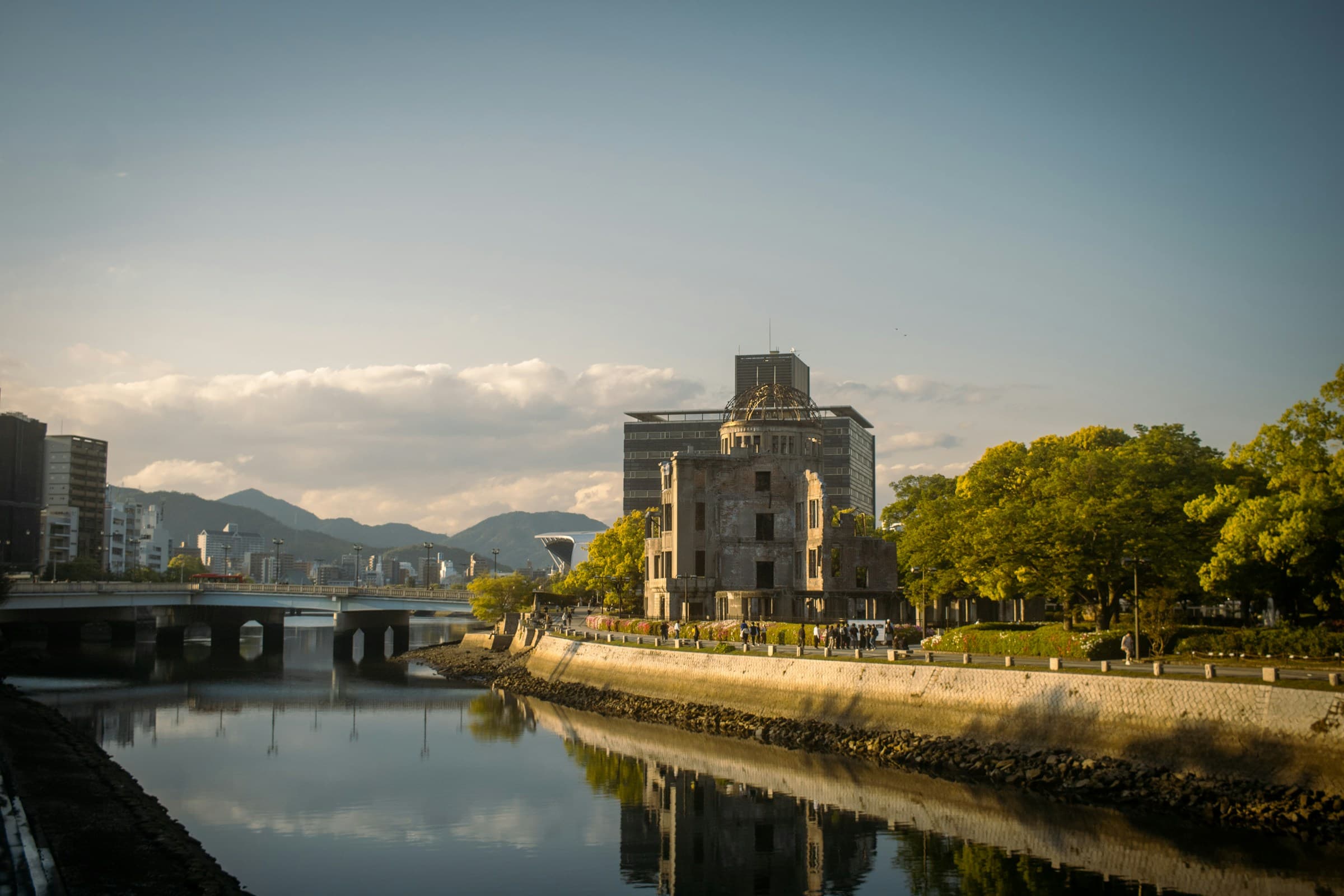
The Peace Memorial Park corridor — Atomic Bomb Dome, museum blocks, and Motoyasu River walks — defines Hiroshima's reflection-first rhythm. Hotels in this zone put memorial mornings within walking distance or one short Hiroden stop, matching the Hiroshima destination voice: quiet attention, memory alongside ordinary city life.
Riverside paths and park-adjacent calm offer a slower pace than Hondori arcade crowds. Morning commuters pass the dome; trams hum at the park's edge. Travelers who will visit the park more than once — dawn walk, museum block, return at dusk — benefit from proximity that station-area hotels cannot replicate without a daily tram leg.
Hiroden Lines 1, 2, and 6 serve Genbaku Dome-mae and adjacent stops. Hondori sits walkable for meals while sleeping closer to reflection sites. Miyajima access runs Hiroden north to Hiroshima Station for JR Miyajimaguchi, or toward Hiroshima Port for the direct ferry — one to two transfers from most park-adjacent bases. Shinkansen departures require Hiroden north to Hiroshima Station — plan twenty to twenty-five minutes door to platform with luggage.
As a base, the Peace Park corridor suits reflection-first itineraries, slow walkers reducing daily transit, and visitors who want city memory sites on foot but will day-trip Miyajima once. Hotel density is thinner than station or Kamiya-cho — fewer choices, more mid-range business properties than ryokan character.
The trade-off is evening energy and emotional weight. Evenings trend restrained — riverside walks and early returns rather than arcade-social nights. Lively dinner streets sit toward Hondori or Kamiya-cho, not always at the hotel door. Some travelers prefer not to sleep adjacent to memorial geography; editorial framing here is practical proximity, not required pilgrimage. If ordinary city strolls and covered-arcade evenings should define every night, Hondori may feel more natural. If memorial rhythm should shape your mornings without station concourse friction, the park corridor earns its place.
Hondori is Hiroshima's default urban stroll — a covered shopping arcade where side lanes, okonomiyaki counters, and oyster-adjacent dining culture meet without this article becoming a food-ranking list. The destination copy's "shopfronts opening, meals at unremarkable hours" fits here: students, shoppers, tram bells, ordinary city energy.
Hiroden Lines 1, 2, 5, and 6 converge at Hondori — easy north to Hiroshima Station, south and west toward Kamiya-cho and Hatchobori, and walkable toward Peace Memorial Park in roughly ten to fifteen minutes. As a sleep base, Hondori suits first-time visitors who want readable city rhythm with meals and trams outside the door — more street life than the station, less memorial weight than park-adjacent hotels.
Miyajima days route Hiroden to Hiroshima Station for JR Miyajimaguchi, or toward Hiroshima Port for the direct ferry. Shinkansen departures follow the same northbound Hiroden leg to the station. Evening-forward city rhythm rewards travelers who want ordinary Hiroshima alongside one memorial day — arcade glow, restaurant counters, tram last-run awareness.
The trade-off is crowd density and Miyajima convenience. Weekend and holiday arcade flow stays busier than park riverside calm — not hostile, but louder than memorial-adjacent mornings. Miyajima is not at the doorstep; island days still require station or port transit. Tourist-adjacent commerce near the arcade means booking pins deserve map verification — "city centre" labels blur Hondori, Kamiya-cho, and Peace Park into one vague pin.
Hondori suits balanced first-timers, short two-night city stays before or after a Miyajima ryokan night elsewhere, and travelers who want walkable meals without station-tower sterility. If Shinkansen legs recur daily or early Miyajimaguchi departures anchor your calendar, Hiroshima Station may simplify mornings. If memorial proximity matters more than arcade evenings, Peace Park may fit better. Hondori earns its place when ordinary city rhythm is the point.
Kamiya-cho and Hatchobori form Hiroshima's commercial crossroads — department stores, bank-district grids, and Hatchobori tram junction where Hiroden Lines 1, 2, 5, and 9 intersect. Booking sites often label this zone "Hiroshima city centre" without distinguishing it from Hondori or Peace Park pins a few blocks away.
As a base, Kamiya-cho delivers strong mid-budget hotel value — business hotels with grid-walk convenience, often better rates than station-tower premiums. Mornings feel organized: depachika food halls, tram transfers, commuters. Evenings stay moderate — quieter sidewalks after business hours than Hondori peak, with dinner nearby but not theatrical.
The district sits equidistant between Hondori arcade and Peace Memorial Park — walkable to both. Hiroden hub access suits Miyajima transit days routing north to the station or east toward the port. Shinkansen departures require Hiroden north to Hiroshima Station in roughly fifteen minutes.
As a base, Kamiya-cho suits mid-budget convenience-first visitors, business travelers or families preferring department-store predictability, and repeat visitors who already know memorial sites and want efficient city infrastructure.
The trade-off is emotional resonance and evening character. Office-district rhythm lacks memorial poetry for reflection-first trips — efficient, not contemplative. Easy confusion with generic "city center" booking labels means map pins need verification against actual tram stops. If your trip is defined by park-dawn walks or island ryokan rhythm, Kamiya-cho may feel like the wrong emotional register even when the logistics work.
Kamiya-cho earns its place when tram-hub practicality and value matter more than arcade spectacle or park doorstep calm — not when neighborhood atmosphere should carry the trip's meaning.
Miyajima is Hiroshima's defining accommodation fork — not a yes-or-no checklist item, but a rhythm choice with real trade-offs. Most first-timers sleep in the city and day-trip successfully. One island night fits a specific trip shape: tide timing, ryokan interest, and tolerance for ferry logistics.
City stay only gains Shinkansen convenience, memorial sites on foot, business-hotel predictability, and easier luggage handling. You trade compressed Miyajima hours, last-boat pressure on day trips, and torii views at tour-group density.
One Miyajima ryokan night gains tide rhythm, evening illumination, post-ferry quiet, and kaiseki meal pacing per Ryokan vs Hotel in Japan. You trade ferry dependency, overnight bag discipline, higher nightly cost, and fewer property choices.
Split stay — city plus island — gains memorial city days and island ryokan rhythm in one itinerary. You trade check-out coordination, forwarding or locker planning, and one extra hotel transition.
An island night is worth weighing when you have one or two ryokan nights budgeted for the whole Japan trip and Hiroshima is the natural slot; when a tide table shows meaningful high or low tide during your island afternoon or evening; when you accept tatami, shared bath etiquette, and kaiseki timing — see How to Use Japanese Onsen; and when you want dawn or dusk torii without a return ferry.
It is often not worth the friction for a single-night Hiroshima stopover, large luggage without a forwarding plan, discomfort with ferry timetables, or no interest in ryokan meal rhythm. Trip length matters: two or three city nights plus a Miyajima day trip covers most first itineraries cleanly; three or four nights total opens room for one island night without compressing memorial time.
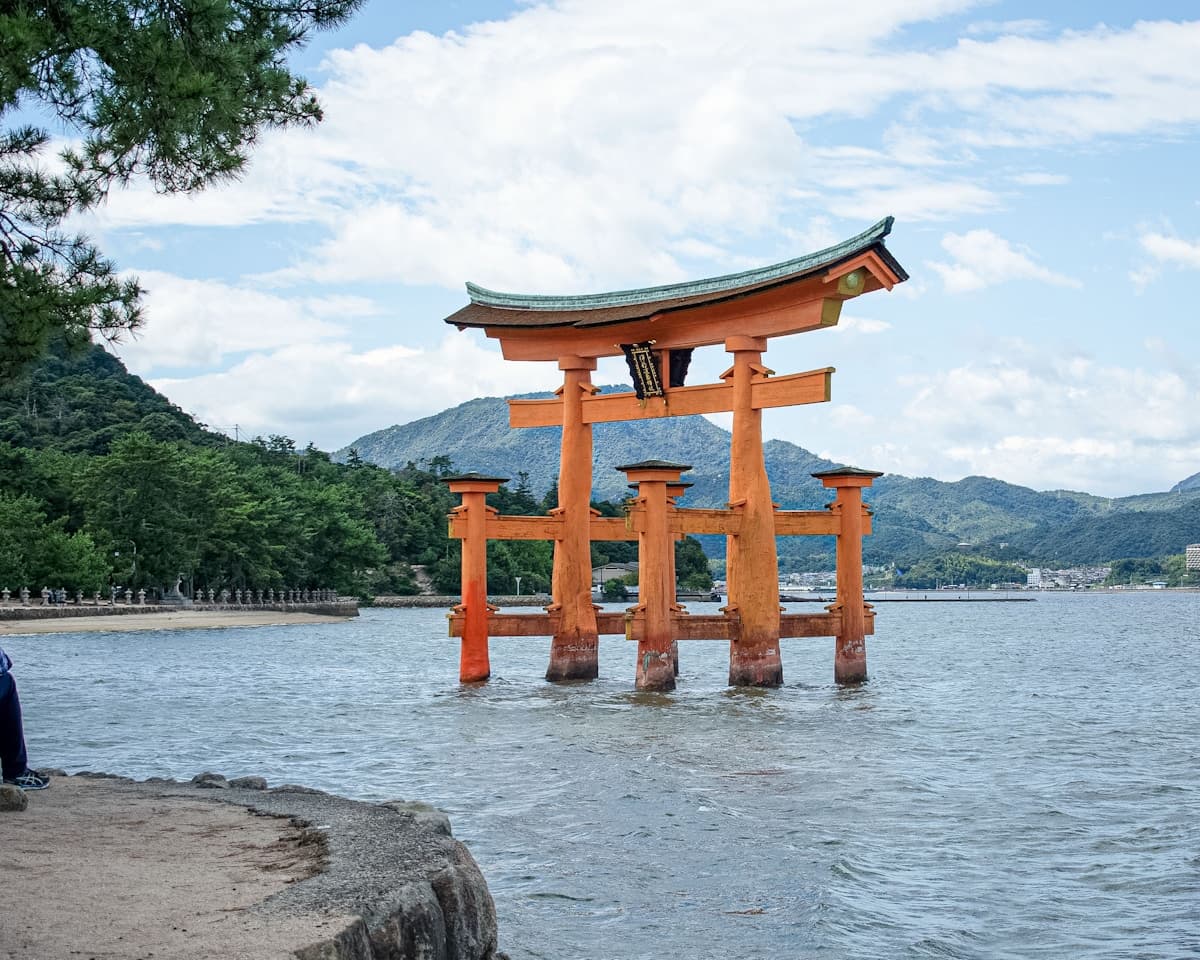
Tide is scheduling infrastructure, not photography trivia. The floating torii sits partially on sand at low tide and waterborne at high tide — both are valid experiences. The mistake is not checking which window matches your visit. Day-trippers from the city should align ferry departure with tide and museum hours, not just the last train back.
Ferry path choice changes which city neighborhood pairs best. JR Hiroshima to Miyajimaguchi plus a short ferry suits station-based hotels — the most documented international path. Hiroshima Port direct ferry — roughly forty-five minutes — suits port-adjacent hotels or travelers avoiding the JR transfer. Plan your morning exit from Miyajima before ryokan check-out: ferries run to Miyajimaguchi for JR back to Hiroshima Station, or to Hiroshima Port for a different city re-entry.
Large suitcases belong forwarded to your post-Hiroshima hotel via luggage forwarding in Japan, not wheeled along narrow island paths. Coin lockers at Hiroshima Station suit city-only Miyajima day trips — see Using Coin Lockers in Japan. The island fork is lifestyle stakes, not a moral requirement — match it to the trip you are building, not to what social media suggests everyone must do.
Miyajima — Itsukushima — is a shrine town at the forest edge where tide tables, ferry timetables, and ryokan rhythm replace streetcar logic. The floating torii, evening illumination, and post-day-tripper quiet are the experiences city stays compress into a few hours.
As a sleep base, Miyajima suits one slow night rather than a full-trip anchor. Ryokan inventory is limited and seasonal; kaiseki dinners and tatami rooms align with Ryokan vs Hotel in Japan more naturally here than anywhere in Hiroshima city. Overnight guests inherit the island after tour-group ferries thin — lantern paths, water sounds, deer on the margins without spectacle framing.
Access from the city runs two main paths: JR Sanyo to Miyajimaguchi plus JR or Matsudai ferry — roughly ten minutes on the water; or Hiroden or walk to Hiroshima Port for a direct city–Miyajima ferry — roughly forty-five minutes. Editorial planning should mark which path your hotel neighborhood favors before booking. No Shinkansen serves the island; morning exit to your next city requires ferry plus JR or port tram chains planned before check-out.
As a base, Miyajima suits travelers booking one ryokan night as a rhythm break, couples or slow travelers prioritizing tide tables and evening shrine light, and visitors with light luggage or forwarding already arranged.
The trade-off is friction and single-purpose cost. Narrow paths, ferry stairs, and tatami rules punish large bags. Weather, timetables, and last-departure discipline require contingency planning — day-trippers who miss the boat face expensive taxi or overnight scramble. Travelers who do not value ryokan rhythm may find an island night expensive for one torii photo. City memorial sites become ferry-plus-tram days rather than morning walks.
Miyajima earns its place when tide and evening light are itinerary priorities — not when the island is treated as mandatory overnight proof of a complete Hiroshima trip.
Hiroshima Port — Ujina ferry gateway — offers direct Hiroshima–Miyajima ferry service without the Miyajimaguchi JR leg. For travelers who want boat-from-city logic, the port puts Miyajima on a waterfront departure mindset distinct from station concourse energy.
As a base, the port suits Miyajima-focused visitors who prefer city-originating ferry over JR transfer — often second-time travelers optimizing a known routine. Port-adjacent business hotels pair with morning ferry departures when the direct route is the deliberate access path.
Hiroden connects the port area toward central corridors — Hondori, Peace Park, and Hiroshima Station require tram legs. HIJ airport limousine buses serve Hiroshima Station more predictably than port-adjacent hotels — arrival friction matters on day one. Shinkansen geography sits farther from the port than from Hiroshima Station.
The trade-off is thin neighborhood ecosystem and utilitarian surroundings. Fewer international-friendly hotel options than station or Kamiya-cho. Port-industrial tone — decks, timetables, bay wind — not a neighborhood stroll destination. For memorial-first first-timers, port proximity does not compensate for park-and-museum morning distance. JR Miyajimaguchi remains faster and more documented for many travelers — port base is niche optimization, not default logic.
Hiroshima Port earns its place when direct ferry is the planned Miyajima access path and city memorial days are secondary — not when Peace Park mornings or Shinkansen departures define the trip.
Four areas appear often on maps but rarely serve as a whole-trip base for first-time Hiroshima visitors. They belong here as optional context — not as competing defaults with the four table columns above.
Onomichi — temple walks, Shimanami cycling gateway, Seto Inland Sea mood — sits sixty to ninety minutes from Hiroshima. Strong as a separate corridor trip or cycling extension, poor as a default base for Peace Memorial Park access.
Miyajimaguchi — the ferry doorstep suburb without island overnight — is functional, not atmospheric. Useful as a transfer reference, not a sleep anchor.
Iwakuni and Kintaikyo — JR west from Hiroshima Station — reward day trips, not Hiroshima neighborhood choice.
Okayama and Kurashiki — Shinkansen east on the Sanyo corridor — suit multi-city bases, not Hiroshima area pins.
Sandankyo Gorge — nature day trip north via Astram and bus — has no visitor hotel cluster worth anchoring a Hiroshima memorial trip.
If one of these areas matches a specific passion — cycling the Shimanami, a sake town, a gorge walk — it can earn a night or two outside Hiroshima proper. For most itineraries, the city neighborhoods and optional Miyajima night above carry the daily rhythm more cleanly.
Trip style narrows the map faster than hotel filters.
Memorial-first travelers who will visit Peace Park more than once often lean toward the park corridor or Hondori — accepting tram legs to the station when Shinkansen days appear. Rail-through calendars with recurring Sanyo Shinkansen legs often lean toward Hiroshima Station — accepting memorial tram legs in exchange for Miyajimaguchi and airport bus convenience.
Balanced first-timers — one memorial day, ordinary city evenings, one Miyajima day trip — often lean toward Hondori or Peace Park corridor. Ryokan-interested travelers with tide-table alignment often add one Miyajima night rather than forcing island logic into a one-night city stopover.
Miyajima-heavy day-trip itineraries — without overnight — often lean toward Hiroshima Station or, for direct-ferry devotees, Hiroshima Port. Short one-night stopovers on the Sanyo corridor reward station proximity over neighborhood character.
Slow walkers benefit from park-adjacent or Hondori bases where main sights sit inside one walkable district. Families may prefer Kamiya-cho department-store predictability or station-area logistics over island ryokan bag rules. Planning Less, Seeing More applies when splitting city and island pins — station nights for arrival, Peace Park for memorial middle, Miyajima for one ryokan night — if checkout and forwarding are manageable.
Seasonal pressure on Miyajima ryokan inventory and memorial-site queues rewards early planning — see When Is the Best Time to Visit Japan?. The city-versus-island fork should be decided before filtering hotels by price alone.
Hiroshima rewards travelers who learn the Hiroden streetcar spine before filtering hotels.
Hiroshima Electric Railway — Hiroden — runs above-ground streetcars on Lines 1, 2, 5, 6, and others through the city core. Readable stops, flat fares, and IC card taps make the system approachable — unlike a metro maze. Route numbers matter: mark which lines reach Hiroshima Station, Genbaku Dome-mae, Hondori, Hatchobori, and Hiroshima Port before arrival day.
Shinkansen geography is straightforward: bullet trains stop at Hiroshima Station on the Sanyo corridor — same pattern as Kyoto, unlike Shin-Osaka's split. How to Use the Shinkansen in Japan covers boarding; neighborhood choice determines how often you return to the station versus living from Hiroden stops.
Miyajima access splits by path. JR plus Miyajimaguchi: Hiroshima Station to Miyajimaguchi on JR Sanyo, then short ferry — suits station-area hotels, most common international route. Hiroshima Port direct ferry: Hiroden or walk to port, roughly forty-five minutes to Miyajima — suits port-adjacent bases or travelers avoiding JR transfer. Day-trippers must chain return ferry with JR or tram to the city — mark last-departure times before you board outbound.
HIJ airport access runs via limousine bus to Hiroshima Station — primary air gateway. Airport Arrival Guide: Your First Hours in Japan covers arrival workflow; this section picks up once you know whether station, park, or Hondori anchors night one.
Coin lockers cluster at Hiroshima Station for check-in gaps and Miyajima day trips with main bags — see Using Coin Lockers in Japan. Astram Line north from Hiroshima Station serves Sandankyo and northern suburbs on longer itineraries — secondary to Hiroden for most first trips.
Luggage shapes Hiroshima arrival day more than any sightseeing plan — especially when Miyajima enters the itinerary.
HIJ airport limousine buses terminate at Hiroshima Station. A hotel directly above a known station exit — regardless of district charm — often beats a park or Hondori pin you cannot reach comfortably after dark with two suitcases. Late arrival may favor station proximity and a tram last-run check before you commit to a southern pin.
Miyajima overnight demands overnight bag discipline. Large suitcases belong forwarded to your post-Hiroshima hotel — Osaka, Kyoto, Fukuoka — via luggage forwarding in Japan, not wheeled along island paths and ferry stairs. Pack a small bag with ryokan essentials; tatami rooms and narrow lanes punish wheels. Split city-and-island stays without a forwarding plan create checkout-day chaos — choose lockers at Hiroshima Station, forwarding to the next hotel, or carry-only logic before you book two pins.
City-only Miyajima day trips pair well with coin lockers at Hiroshima Station — store main bags, ferry light, collect on return. Park-adjacent and Hondori hotels tolerate wheels more gracefully than island ryokan paths, but Shinkansen departure days still favor station-area locker banks.
Port-base arrivals add friction: airport buses serve the station more predictably than port-adjacent hotels. Ferry-day mornings from the port with full luggage require a plan for where bags sit during island hours.
Checkout day follows the same logic. Forward to your next city, store at Hiroshima Station, or carry only an overnight bag onto Miyajima — choose based on tomorrow's movement, not today's hotel address alone. Pair first-hour needs with Convenience Stores in Japan for water, cash, and a charged phone before neighborhood character dominates.
Do I have to stay overnight on Miyajima?
No. Most first-timers day-trip successfully from the city. An island ryokan night is a rhythm choice — tide timing, evening light, kaiseki interest — not a requirement for a complete Hiroshima trip.
Should I check the tide table before Miyajima?
Yes. High and low tide change the torii experience — partially on sand versus waterborne. Checking a tide table is scheduling infrastructure, not optional photography trivia. Align ferry departure with the window you care about.
Are there two ferry routes to Miyajima?
Yes. JR to Miyajimaguchi plus short ferry versus Hiroshima Port direct ferry. Different hotels, timetables, and luggage flows — mark your path before booking.
What happens if I miss the last ferry off Miyajima?
Day-trippers face expensive taxi or an overnight scramble. Overnight guests avoid last-boat pressure — one reason the island night suits slow travelers who want post-ferry quiet.
Can I bring a large suitcase to a Miyajima ryokan?
Poor fit. Tatami rooms, ferry stairs, and narrow paths punish large bags. Forward luggage to your next hotel or pack a small overnight bag.
Does "Hiroshima city centre" mean Peace Park?
Not necessarily. Kamiya-cho, Hondori, and Peace Park are walkable but different mornings. Hiroshima Station is north — park access requires Hiroden or a fifteen- to twenty-minute walk, not doorstep proximity.
Is Peace Memorial Park walkable from Hiroshima Station hotels?
Not as a default morning routine. Plan one Hiroden leg or fifteen to twenty minutes on foot — workable, but a daily leg station-area guests should expect.
Do I need to learn Hiroden routes?
Worth marking once. IC cards work on Hiroden, but Lines 1, 2, 5, and 6 reach different stops — Genbaku Dome-mae, Hondori, Hatchobori, Hiroshima Station. Stop names matter more than in a numbered metro.
Can I see Hiroshima and Miyajima in one afternoon?
Tight. Memorial sites, city meals, and Miyajima each want unhurried blocks. Two to three days per Hiroshima destination copy is realistic — compressing everything into one afternoon trades quality for checklist speed.
Should I stay at Hiroshima Port for a memorial-first trip?
Usually no. Port suits direct-ferry Miyajima logic, not park-and-museum mornings. Memorial-first itineraries belong in Peace Park corridor or Hondori, not port-industrial surroundings.
Is ryokan versus hotel the same as city versus Miyajima?
Related but distinct. City business hotel versus island ryokan is an accommodation-type decision first — see Ryokan vs Hotel in Japan. Neighborhood within the city is the second decision.
Should I day-trip Miyajima on my only clear weather day without a backup?
Risky. Ferry views and mountain visibility are weather-sensitive. Build a flexible slot rather than betting one afternoon.
Can I split city and island without a luggage plan?
Poor idea. Check-out, ferry, and check-in same day need forwarding or lockers — not a wheeled suitcase on Miyajima paths.
Does Osaka or Kyoto neighborhood logic transfer to Hiroshima?
Partially. Hiroshima has one compact core, not two poles like Osaka. The primary fork is city versus island, not Kita versus Minami.
Should I book Onomichi for a Hiroshima memorial trip?
Poor default. Onomichi is a different corridor — fine for Seto cycling, distant for Peace Park access.
Do memorial sites get crowded?
Yes, especially museum and park queues on peak days. Hotel distance to your first Hiroden stop matters when you want an early arrival.
Check a tide table before committing to a Miyajima day or overnight — high and low tide both work; not checking does not.
Mark ferry last departure before you board outbound — day-trippers need return ferry plus JR or tram chain times written down.
Compare Hiroden day-pass math on multi-hop days against individual IC card taps — worthwhile when you tram between station, park, Hondori, and port in one day.
Verify booking map pins against actual Hiroden stops — "city centre" labels blur Kamiya-cho, Hondori, and Peace Park.
List non-negotiable movements first — Shinkansen platform, Miyajimaguchi ferry, Genbaku Dome-mae morning — then sketch city versus island before filtering hotels.
Forward luggage before a Miyajima ryokan night or split stay — hands-free travel matters on ferry stairs and tatami paths.
Pair seasonal plans with official forecasts — see When Is the Best Time to Visit Japan?.
Load an IC card before depending on station Wi-Fi underground — see IC Cards in Japan.
Decide city length and Miyajima night yes-or-no before booking — adding an island night mid-plan often forces an extra checkout.
Save emergency numbers and note koban locations near your station exit — Safety in Japan — before navigating unfamiliar concourses after dark.
Name what each Hiroshima day must accomplish: a Shinkansen departure, a Peace Park dawn, a Hondori evening, a Miyajima ferry with tide alignment, an Iwakuni day trip.
Mark those needs on a simple sketch — city core versus island. Notice which stop repeats: Hiroshima Station, Genbaku Dome-mae, Hondori, Miyajimaguchi ferry, Miyajima ryokan.
Decide city base versus Miyajima night before booking city length — the fork changes forwarding, bag size, and ferry planning.
Choose neighborhood before hunting specific hotels — filters hide trade-offs this article is meant to surface.
Confirm HIJ arrival time and whether Hiroshima Station proximity matters on night one.
Read How to Use the Shinkansen in Japan if the Sanyo corridor anchors your departures.
Read Ryokan vs Hotel in Japan before searching for Miyajima ryokan inventory.
Book ahead for peak travel weeks and Miyajima ryokan seasons — accommodation pressure rises during holidays and autumn weekends.
Leave one Hiroshima half-day deliberately open — flexible weather slot for Miyajima — so the base can prove itself before the Sanyo corridor pulls you onward.
The right Hiroshima neighborhood is not the one with the most recommendations. It is the one whose mornings and evenings match the trip you are already building — the station you can reach with luggage, the memorial walks you want at dawn, the ferry you can catch with tide in mind, and whether Miyajima earns a slow night or stays a day trip from the city.
Hiroshima Station, Peace Memorial Park, Hondori, Kamiya-cho, Miyajima, and Hiroshima Port each offer a real daily rhythm. Each collects a different cost in transfer time, evening atmosphere, ferry logistics, or emotional register. None is universally correct.
Choose the area the way you would choose a train seat: not because it is famous, but because it fits what comes before and after. When the neighborhood — and the island decision — match the way you travel, the hotel becomes infrastructure again — and Hiroshima becomes the point.
If you have compared Hiroshima neighborhoods and know which base fits your trip, the next step is choosing a specific place within that area.
Stay near the places you will actually spend time — the station you will use most days, the streets you want after dinner, and the walks you want before coffee. Japan Atlas will add curated area collections here when editorial vetting is complete. For now, your neighborhood decision is the planning work that matters.
Future: neighborhood hotel collections by area — editorial picks chosen for station access and daily rhythm, not commission rankings.
Continue exploring this way of seeing Japan.