Kyoto
Where tradition still shapes everyday life.
What actually happens when you enter an onsen for the first time — and what should you expect at each step?
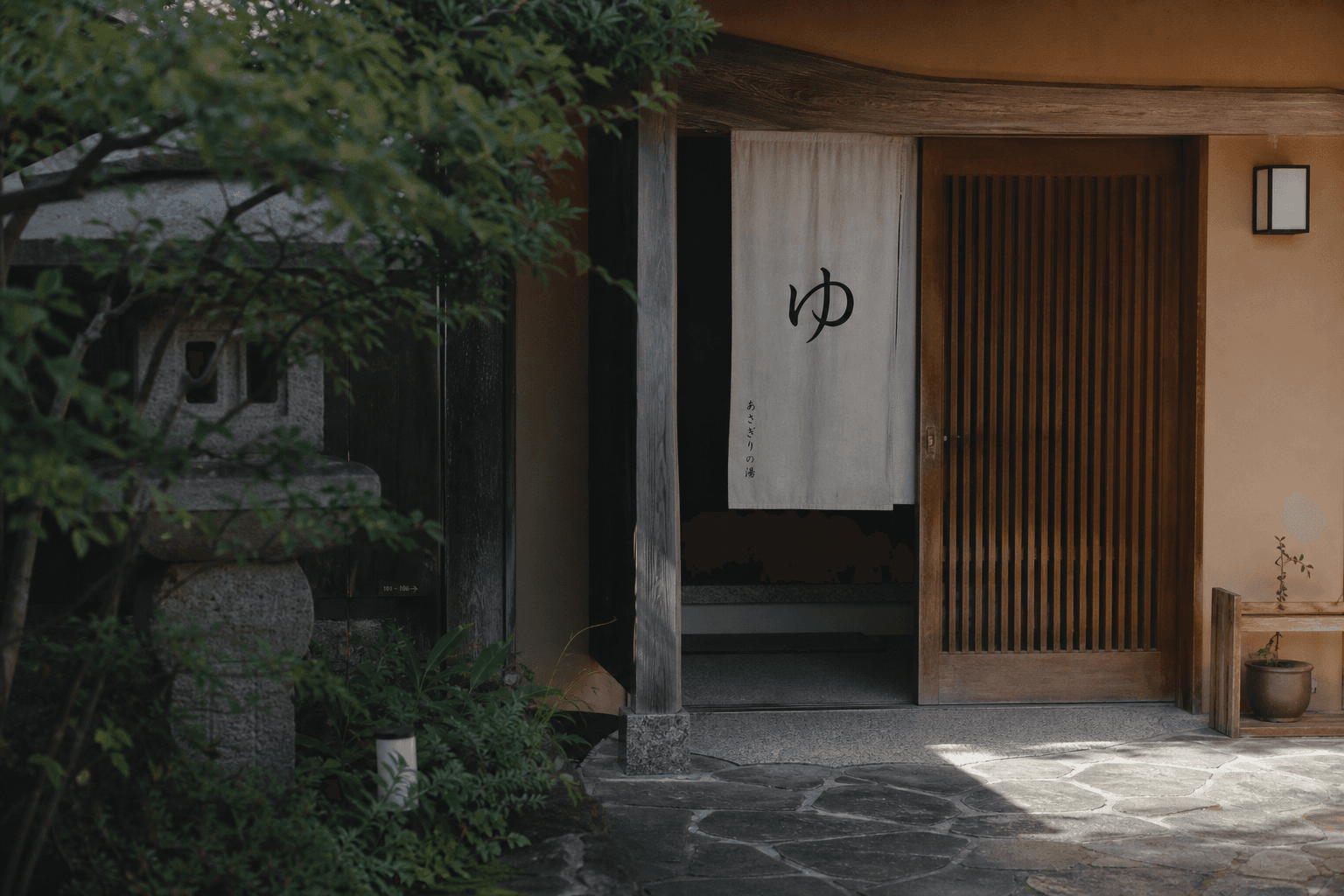
You stand outside an onsen entrance — wooden doors, steam visible through a gap, the hiragana ゆ on the sign. You know the bath is inside. You are less sure about the sequence: where shoes go, when clothes come off, whether everyone is watching, whether you will know what to do when you reach the washing area.
That uncertainty is normal. Most first-time visitors are not worried about failing a cultural exam. They simply cannot picture the next twenty minutes.
The useful question is not whether you will bathe correctly on the first try. It is what actually happens when you walk through the door — step by step, room by room — until you are sitting in warm water wondering why you waited so long to feel this calm.
An onsen visit follows a clear sequence: enter the facility, store your belongings, wash completely while seated at a washing station, then enter the shared bath. Most facilities ask you to undress in the changing room; swimwear is generally not worn. A small towel is often provided for washing and modesty while walking — it stays out of the bath water.
Photography is not allowed in bathing areas. Tattoo policies vary by facility — check when booking rather than assuming. Conversation is usually soft; the atmosphere is quiet rather than lively.
JNTO encourages first-time visitors to review the basics, then enter without expecting to master every custom immediately. The sequence is learnable in one visit. Facilities differ in layout, but the flow — wash, then soak — stays consistent across most hot-spring baths, hotel spas, and ryokan communal baths.
The essentials first-time visitors usually want confirmed before entering.
Facilities differ. Check your specific bath's rules when booking.
An onsen is a hot-spring bathing facility. The water is geothermally heated and found across Japan — from mountain towns to hotel basements. Facilities marked with the hiragana ゆ (yu) are usually onsen or public baths. Inside, curtains or signs showing 女 (women) and 男 (men) mark gender-separated areas at the vast majority of facilities.
A sento is a local public bath — a related but distinct tradition. Sento are neighborhood bathhouses rather than natural hot-spring resorts. The washing-then-soaking sequence is similar, but a small local sento may ask you to bring your own soap and towels, while onsen hotels and larger facilities usually provide them.
This article focuses on what happens during a visit — the sequence you will walk through — rather than comparing bathing traditions. Whether you enter an onsen at a ryokan, a day-use bathhouse, or a hotel spa, the practical experience tends to follow the same calm order: store belongings, wash, soak, dry off, return.
Most first visits follow one sequence, even when the building looks unfamiliar.
You remove outdoor shoes at the entrance and follow signs toward the correct gender area. In the changing room, you undress completely and place clothes and valuables in a locker. You carry only your small towel and any washing items toward the washing area.
At a washing station, you sit on a stool, wash thoroughly, and rinse completely. Many baths offer a basin for kakeyu — pouring hot water over yourself before entering the tub — to adjust to the temperature.
You enter the shared bath slowly. Your small towel stays on your head or beside the tub, not in the water. You soak only as long as comfortable, then step out, dry off, and return to the changing room.
After bathing, you hydrate, change, and continue your day — or, at a ryokan, return in yukata for a quiet evening. The sequence is simpler once you have seen it once.
A typical first visit follows one calm sequence.
Enter the facility
Remove outdoor shoes at the entrance; follow signs to the correct gender area (女 / 男).
Store shoes and belongings
Use the locker in the changing room; keep only what you need for washing.
Wash before bathing
Sit at a washing station; soap, rinse thoroughly; optional kakeyu to adjust to the temperature.
Enter the bath
Small towel on head or beside tub; ease in; stay only as long as comfortable.
Dry off before the changing room
Use your small towel; return to lockers.
Relax after bathing
Rest, hydrate, change; at a ryokan, return in yukata for the evening.
Ryokan, day-use, and hotel baths vary in layout — the sequence stays similar.
The visit begins before you reach the water.
At the entrance, you usually remove outdoor shoes and may receive slippers for indoor corridors. Remove slippers before stepping into the changing room itself — footwear stops at the threshold.
Gender-separated facilities mark entrances with 女 or 男. Take a moment to read the curtain or sign; at some hotels, bath assignments swap between morning and evening, so the door that was correct yesterday may differ today.
Inside the changing room, you undress completely and store clothes in a locker. Most facilities provide lockers or similar secure storage; overnight guests should keep valuables in the room safe rather than bringing them to the bath.
A small towel is often provided or available for rent. If you are coming from a ryokan, you may already be wearing yukata — you will leave it in the changing area while you bathe.
Other guests are focused on their own routines. The changing room is functional rather than performative. You have time to orient yourself before walking toward the washing area.
Shoe and slipper thresholds at bath facilities follow the same read-the-space logic described in Japanese Etiquette Explained — watch racks, raised flooring, and posted signs at each door.
Washing happens before the bath — every time, at every facility that follows standard practice.
The washing area contains individual stations: a stool, a hand-held shower or faucet, a bucket, and usually soap and shampoo. You sit while you wash. Standing at your station is less common and can splash neighboring areas.
Wash thoroughly, then rinse completely so no soap enters the shared tub. If you wear makeup, rinsing before bathing keeps the water clean for everyone.
Near the bath entrance, many facilities provide a basin for kakeyu — ladling hot water over your shoulders and body before you enter. This helps your body adjust to the temperature. It is customary rather than ceremonial; a few scoops are enough.
Your small towel is for washing and for modesty while walking between areas. It is not for the bath water itself — that distinction becomes clearer in the next section.
The shared bath is for soaking, not swimming. Water temperature varies by facility and season; enter slowly and give your body a moment to adjust.
Place your small towel on your head or folded beside the tub — not in the water. Only your body enters the bath. Long hair should be tied up or wrapped so it does not touch the water.
Onsen are places of quiet. Soft conversation is normal; loud voices and splashing are unusual. The atmosphere tends toward stillness rather than performance.
Stay only as long as comfortable. If the water feels too hot, step out and use cooler water nearby if available. JNTO advises avoiding long soaks and avoiding alcohol before bathing.
When you are finished, leave the bath calmly, dry yourself with your small towel before returning fully to the changing room, and take your time. There is no prize for staying longest.
Rotenburo — open-air baths — follow the same washing-then-soaking sequence as indoor baths. The setting changes; the order does not.
An outdoor bath may offer sky, trees, or mountain air. Some are attached to guest rooms; others are communal areas within a larger facility. Steam rises differently in cold weather, which is one reason winter onsen nights pair well with snow-country travel — see When Is the Best Time to Visit Japan? for seasonal context.
Indoor baths can feel more enclosed and warmer. Hotel basement spas, urban day-use baths, and ryokan communal baths all use the same basic rooms: changing area, washing stations, shared tub.
Layout varies — stairs, stone paths, wooden decks — but the sequence you learned at the washing station still applies. If you can wash and enter calmly indoors, you can do the same outdoors.
Communal bathing is normal in Japan, but not every traveler wants it on the first night — or at all. That is a practical preference, not a failure.
Private baths (kashikiri-buro) can be reserved at many ryokan and some hotels for solo or couple use. Room-attached open-air baths (rotenburo) let you bathe without entering a shared area. Both follow the same washing logic; the privacy changes.
Day-use onsen — drop-in bathing without an overnight stay — can be a low-commitment first visit. Many onsen towns offer day rates; you experience the sequence without organizing a full ryokan evening around it.
If communal bathing still feels uncertain after reading the sequence, choosing a private or room bath is a reasonable way to enjoy hot-spring water on your terms. The goal is a calm experience, not a particular type of courage.
Three topics create uncertainty before the first visit. Each has a simple expectation to confirm in advance.
Tattoos: Policies vary by facility. Some traditional onsen may not accept visible tattoos; more facilities are becoming tattoo-friendly. JNTO advises checking in advance. Private baths are an option when communal entry is restricted. Some facilities offer small tattoo cover sheets suitable only for very small tattoos — confirm with the property rather than assuming.
Photography: Cameras and phones stay out of the bathing area. Photography is forbidden in consideration of privacy — for other guests and for yourself.
Phones: Keep phones in the locker with your clothes. The bathing area is for bathing, not documentation.
Checking tattoo policy when you book removes most of the last-minute uncertainty. The photography and phone expectations are consistent across standard facilities.
Many onsen welcome children, but rules vary by facility. Some offer family-friendly hours, private bathing, or child-sized amenities. Check when booking if you are traveling with young children.
Changing rooms and the vast majority of baths are gender-specific. Some hotels still offer mixed-gender baths; most are divided. Curtains at entrances show 女 and 男. If your group includes different genders, you will usually bathe separately and meet afterward in a rest area or your room.
At some hotels, communal baths swap gender assignment between morning and evening. If you return at a different hour than your first visit, read the signage again.
Families sometimes book private baths so everyone can bathe together without navigating communal gender separation. That is a normal booking choice, not an exception to avoid.
Leaving the bath is part of the sequence, not an afterthought.
Dry yourself with your small towel before returning fully to the changing room. Many facilities provide larger towels in the changing area; at simpler baths, the small towel may be all you have until you reach your room.
Hydration helps after soaking — especially in summer heat or after a long train day. A bottle from a convenience store or vending machine nearby is enough.
Rinsing your body with fresh water after the onsen is personal preference. Some guests rinse; others do not. Neither approach is universally correct.
At a ryokan, you may return to your room in yukata, rest briefly, and move toward dinner. At a day-use bath, you dress and continue sightseeing. The bath closes the physical sequence; what follows is yours to pace.
At many ryokan, the bath sits between check-in and dinner — a pause before the hosted evening begins.
You may arrive in yukata, bathe before kaiseki, and return to find futon prepared while you dine. The bath is part of the stay's rhythm, not a separate excursion. How that rhythm compares with a hotel's flexible evening is covered in Ryokan vs Hotel in Japan — this article owns the bathing sequence; that article owns the accommodation choice.
Allow unhurried time on ryokan nights. Rushing from bath to dinner misses the point of the pause. Planning Less, Seeing More applies here: one slow evening can carry the trip as much as a full day of sightseeing.
If your ryokan offers both communal and private baths, confirm which is included in your room rate and whether reservation is required.
Will everyone stare?
Most guests are focused on their own routine. Public bathing is normal in Japan; people tend to be discreet. The experience usually feels less exposed than imagination suggests.
Do I wear a swimsuit?
Generally no. You undress in the changing room. Swimwear stays behind. A small towel covers you while walking; it does not enter the bath water.
Can I bring my phone to take a steam photo?
No. Photography is forbidden in bathing areas for privacy. Phones belong in your locker.
What if I have a tattoo?
Policies vary. Check when booking. Private baths and an increasing number of tattoo-friendly facilities offer paths that do not require guessing at the door.
Do I need to speak Japanese?
The sequence is visual: shoes off, lockers, wash, soak. Staff at ryokan and larger facilities often assist first-time visitors. JNTO notes that mastering every custom immediately is not expected.
What if I enter the wrong gender area?
Read 女 and 男 carefully. If a bath swaps assignments during the day, check signage each visit. When uncertain, ask staff — that is normal at hotels and ryokan.
How long should I stay in the water?
Only as long as comfortable. Step out if you feel overheated. There is no required duration.
Check tattoo policy when booking — not at the door.
Try day-use bathing first if you want a low-commitment introduction before a ryokan night.
At a basic sento, bring your own soap and towel if the facility does not provide them.
Hydrate before and after bathing; a convenience store stop takes a minute and helps on travel days.
Allow unhurried time on ryokan evenings — bath, rest, then dinner.
If reaching an onsen town by train, brief Shinkansen planning reduces arrival-day friction so the bath stays calm.
Winter soaks after cold outdoor days and summer baths after humid sightseeing both work — seasonal timing is covered in When Is the Best Time to Visit Japan?.
Leave valuables in your room safe overnight; carry only what you need to the changing room.
Confirm bath type when booking: communal, private, or room-attached.
Confirm tattoo policy, child rules, and whether day-use hours fit your itinerary if you are not staying overnight.
Pack minimal valuables for the bath visit; use in-room safes at ryokan.
Know whether bath access is included in your stay or requires separate reservation.
If choosing between ryokan and hotel for a night that includes bathing, read Ryokan vs Hotel in Japan first — then return here for the sequence.
Review the flow once, then enter. The uncertainty usually shrinks after the first five minutes inside.
The onsen is less a test than a sequence. Shoes off, wash, soak, dry off — then the day continues, often more quietly than it began.
First-time visitors rarely remember every custom from a single visit. They remember the warmth, the stillness, and the relief of discovering that the process was legible after all.
You do not need to master Japanese bathing culture before you enter. You need to know what comes next — and to give yourself the unhurried minutes to let the water do its small, ordinary work.
Bath confidence is one layer of the stay. Accommodation type and neighborhood fit are the layers that come before booking.
If an onsen ryokan night is part of your trip, decide the rhythm first — hosted evening versus flexible checkout — then match the property to the area whose pace you want to inherit.
Future: vetted onsen ryokan pairings by region — placed after rhythm and area decisions, not in opening prose.
Continue exploring this way of seeing Japan.