Japanese Etiquette Explained: Everyday Cues for First-Time Visitors
What should you notice in shared spaces so ordinary situations feel easier to navigate?
Photo: MIKI Yoshihito / Wikimedia Commons · CC BY 2.0 · Resized
- Category
- Travel
- Central Question
- What should you notice in shared spaces so ordinary situations feel easier to navigate?
On a station platform, a train is two minutes out. Passengers stand in a line that follows painted floor markings — not because someone announced the rule, but because the space itself shows where to wait. A first-time visitor who pauses at the edge is not failing. They are doing the useful work: reading the platform before stepping forward.
Most everyday etiquette in Japan works the same way. Queues, quiet voices on trains, shoe racks at a doorway, a no-photography sign on a shrine wall — each is a cue about how a shared space is meant to function. The goal is not to perform correctness. It is to move through ordinary situations without adding friction for the people beside you.
This article is a confidence guide, not a manners catalogue. It teaches one skill: read the situation before acting. Signs first. Staff guidance next. Then what the room or platform shows you. Then what nearby people are doing. Then a short question if you are still unsure.
You already know how to wait in a line. The rest of the trip uses the same attention.
The Short Answer
Everyday etiquette in Japan is less about memorizing customs than about noticing how a shared space is organized — and matching your behaviour to that organization without inconveniencing others.
When you enter an unfamiliar situation, read cues in this order:
1. Official signs, floor markings, and posted guidance at the entrance. 2. Staff direction when someone is clearly managing the space. 3. Venue-specific layout — shoe racks, queue tape, payment trays, smoking zones. 4. Visible spatial cues — where bags sit, which door people use, how loud voices are. 5. Nearby behaviour from people who clearly belong in the space. 6. A polite question when the first five layers still leave you unsure.
JNTO and the Japan Tourism Agency frame much of this as omoiyari — consideration for others in shared spaces. When in doubt, observe one cycle or ask. Mastering every custom before you arrive is not expected.
This article covers awareness cues across queues, transport, voice, shoes, photography, rubbish, smoking, restaurants, and temples — with links to sibling guides for operational detail on buses, the Shinkansen, IC cards, restaurants, and onsen.
Orientation cues first-time visitors usually notice once they know what to look for.
- Signs first
- Follow signs before assumptions
- Floor markers, queue tape, and entrance notices often spell out what the space needs.
- Voice
- Shared spaces are usually quieter than many visitors expect
- Soft conversation and headphones for media on trains and buses.
- Shoes
- Remove shoes only where the space indicates
- Racks, raised flooring, and tatami signal a threshold — not every indoor door.
- Photography
- Photography depends on the place
- Signs, permission, and residential context matter more than a single national rule.
- Rubbish
- Carry rubbish until you find an appropriate bin
- Public bins can be scarce; labeled disposal points appear at stations and shops.
- When unsure
- Observe first, then ask politely
- Staff and shop employees answer short questions routinely.
These are awareness cues, not a complete manners list.
Read the Situation Before the Rule
Etiquette becomes easier when you treat each moment as a reading exercise rather than a test.
A posted sign outranks habit from home. A staff member directing flow at a temple entrance outranks what you saw yesterday at a convenience store. A shoe rack beside a lowered floor outranks a generalization about Japan and indoors.
Blind mimicry is the common trap. Copying the loudest tourist on the platform, or the one person eating on a commuter train, can mislead you as easily as copying a local commuter who knows this specific line's rhythm. The better habit is calm observation: watch one boarding cycle, one customer at the register, one family at a genkan threshold — then act.
Three responses carry equal weight. None replaces the others.
Follow the visible sign when the venue or operator has made the expectation explicit — queue markings, no-photo icons, designated smoking areas, payment-location notices.
Observe the space when layout is readable but unsigned — where bags rest on a train, which side of a shop entrance forms the line, how loud voices are in a given car, where slippers stop and tatami begins.
Ask when still unsure — shoes at a ryokan side entrance, whether photography is permitted in a specific hall, where to place payment at an unfamiliar register. A brief question to staff prevents more friction than a confident guess.
This is observation, not obedience. The point is to reduce uncertainty for yourself and others — not to perform deference.
Three equal ways to read a shared space when the right move is not obvious from habit alone.
Follow the visible sign
Posted guidance exists — queue markings, shoe-area notices, photography bans, smoking zones, payment-location signs.
Trust what the venue or operator made explicit before defaulting to habit from home.
Observe the space
No sign exists but layout is readable — where lines form, where bags sit, voice level in the car, which footwear others removed.
Watch one boarding cycle or one customer interaction; do not copy a single outlier or another visitor guessing.
Ask if still unsure
Shoes, photography, seating, or payment remain ambiguous after looking.
A short question to staff or a shop employee prevents most friction; mastering every custom immediately is not expected.
Calm observation, not performance. Most moments need only one of these responses.
Queues and Shared Movement
Queues in Japan organize shared movement — at train platforms, shop entrances, restaurant waitlists, and festival gates. The line is not ceremony. It is how a space handles many people fairly.
On train and subway platforms, passengers usually line up beside floor markings or platform-edge guides. When the train arrives, let passengers disembark before you step forward. JNTO and Tokyo Toei guidance both describe this sequence as standard practice.
At shops and restaurants, a single orderly line is common. Some ramen shops use a waitlist clipboard; family chains may ask you to write party size and seating preference. Join at the back. If friends are already waiting, Go Tokyo guidance suggests rejoining together at the rear rather than cutting in.
Escalators deserve the same reading habit. You may notice regional habits — some cities historically favored standing to one side — but official guidance from JNTO and Tokyo Metro's nationwide stand-still campaign prioritizes standing still, holding the handrail, and not walking on escalators. Safety, not side choice, is the operator message.
Sidewalks and temple approaches reward the same patience. Step aside before stopping to photograph or consult a map. In residential lanes — especially in Kyoto hillside districts — blocking a narrow path affects people who live there, not only other visitors.
The queue is often the first cue you already understand. The rest of the article extends the same attention to voice, shoes, and signs.
Public Transport
Shared transport asks for quiet, orderly movement and luggage that stays out of aisles and doorways. The details differ by mode — this section names the etiquette layer only; operational mechanics live in sibling articles.
Boarding rhythm: line up at platform markers, let passengers off, then board. An IC card reduces ticket-machine friction but does not change queue discipline.
Voice and phones: keep conversations low; refrain from phone calls on trains and buses per JNTO and operator guidance. Use headphones for music and video. Near priority seats, guidance is stricter — Go Tokyo advises turning mobile devices off near priority seating; JR East and Toei emphasize silent mode and no calls throughout the car. Offer priority seats to elderly, pregnant, disabled, and parents with young children when it seems useful; they may decline.
Eating and drinking: avoid meals on crowded commuter trains. Eating on the Shinkansen with a tray table is normal; eating while walking in streets and markets is discouraged in official traveler guidance.
Luggage: stow bags in overhead racks or designated areas; keep aisles clear. For heavy inter-city days, luggage forwarding and coin lockers solve a different problem than onboard etiquette — but they reduce the aisle friction that other passengers feel.
Buses: local services vary by city. Queue discipline and voice expectations apply; boarding doors, fare timing, and stop buttons are covered in Taking the Bus in Japan, not duplicated here.
Women-only cars exist on some lines at stated hours — check platform labels rather than assuming.
Read the car you entered. A quiet commuter train and a holiday Shinkansen with families occupy different sound levels — both still reward awareness of neighbors.
Voice, Phones, and Personal Space
Voice level is one of the first cues visitors notice — and one of the easiest to adjust once you hear the room.
Trains and buses: conversations stay quiet; phone calls are discouraged. Headphones contain media sound. JNTO's traveling mindfully guidance ties lower volume to omoiyari — not inconveniencing others in enclosed space.
Stations and streets: announcements and crowd noise set a baseline. You need not whisper on a wide concourse, but phone calls on a packed platform still draw attention differently than they might at home.
Restaurants and cafés: counter shops tend toward brief, focused meals; izakaya evenings tolerate more conversation. Match the room rather than importing one volume for every meal. On an ordinary evening walk — residential lanes after dinner, a commercial strip thinning after nine — the same habit applies: read the block you are in. An Evening in Japan describes that arc as observation, not rules.
Personal space: casual physical contact in greetings is less common; observe distance others keep in queues and at ticket windows. Brief eye contact and a nod often replace extended small talk with strangers.
Masks when ill: wearing a mask when you have cold symptoms is a common consideration practice in shared spaces — a practical courtesy rather than a tourist performance.
If you are unsure, listen for thirty seconds. The room usually teaches the target volume faster than a rule list.
Shoes and Indoor Transitions
Shoe customs confuse visitors because they are situational — not because Japan has one indoor rule.
Remove outdoor footwear when a space signals it: shoe racks or cubbies at an entrance, a lowered genkan step, tatami flooring, or explicit signage at homes, many traditional restaurants, temples, and ryokan. JNTO customs guidance describes shoe removal at these thresholds as common practice.
Not every indoor door requires it. Modern hotels, department stores, and many chain restaurants expect street shoes throughout. Read the entrance: if there is no rack and no raised transition, you are likely fine in the shoes you walked in with.
Slippers may appear in ryokan corridors, traditional inns, and some temple buildings. Toilet slippers are separate from indoor slippers — swap at the restroom threshold and leave toilet slippers inside when you exit. The full bathing and locker sequence lives in How to Use Japanese Onsen; Ryokan vs Hotel in Japan covers accommodation rhythm.
Tatami rooms require bare feet or socks without outdoor soles. Dragging wheeled luggage across tatami damages flooring — another reason forwarding or a day pack helps on ryokan nights.
Easy on-off shoes and clean socks reduce friction more than an extra pair of fashion shoes — a packing habit noted in What to Pack for Japan.
When the threshold is ambiguous, pause and watch one guest or ask staff. The doorway usually answers before you need a general rule.
Photography and Private Space
Photography in Japan is usually fine in public tourist contexts — until a sign, a person, or a residential setting says otherwise.
Ask permission before photographing people, especially up close. JNTO and MLIT responsible-travel guidance both emphasize consent and awareness of surroundings.
Respect no-photography signs at shrines, temples, museums, shops, and transit areas. Some JR East guidance discourages photographing other passengers on platforms without authorization — and entering tracks or restricted areas for a shot is unsafe and prohibited.
Kyoto offers a clear regional example: Kyoto City responsible-travel pages note photography restrictions in many Gion alleys, parts of shrines and temples, and some restaurants where geiko and maiko work and residents live beside tourism. Treat those lanes as shared housing, not a studio set. For how neighborhood choice shapes that exposure, see Where to Stay in Kyoto.
Drones, tripods blocking paths, and flash in dim sacred interiors create friction even where photography is permitted. Step aside from foot traffic before you frame a shot.
This article is awareness, not a photography guide. The habit is simple: read the sign, read the room, ask when people are the subject.
Rubbish, Smoking, and Public Space
Rubbish and smoking are where visitor habits most often collide with local infrastructure — not because Japan is uniquely strict, but because public bins and open smoking areas are scarcer than many travelers expect.
Rubbish: public street bins are limited. JNTO, Go Tokyo, and Kyoto guidance all suggest carrying small waste until you reach a labeled bin at a station, convenience store eat-in area, or hotel. Separate items only when a bin asks you to.
Station restrooms and concourses often include labeled disposal points during long transit days — see Using Public Toilets in Japan for where facilities tend to appear and how shared restrooms are usually organized.
Convenience stores solve small disposal needs according to posted eat-in rules — not as a universal trash service. See Convenience Stores in Japan for what konbini stops can and cannot absorb in a travel day.
Smoking: outdoor smoking is restricted in many cities. Use designated smoking areas; street and park smoking is prohibited in broad zones of Tokyo and Kyoto. Kyoto City cites a ¥1,000 fine for smoking outside designated areas on city streets — an example of how local ordinance turns a general expectation into a posted rule.
Do not smoke while walking in restricted zones. Go Tokyo materials describe no-smoking-while-walking campaigns in busy districts.
Litter and smoke are shared-space problems. Carrying a wrapper for an hour is normal traveler behaviour when the bin has not appeared yet — not a failure of planning.
Restaurants: What to Notice
Restaurant etiquette for visitors is mostly about reading the door — not mastering cuisine.
Waiting: join the line or waitlist orderly. At busy ramen shops, turnover keeps the line moving; lingering after finishing affects the next person. Restaurant type and ordering mechanics are covered in Japanese Restaurants Explained — this section stays with shared-space cues only.
Payment: tipping is not customary. Thank staff verbally when you leave. Many shops use a small cash tray at the register — place payment on the tray rather than handing cash directly across the counter. For how much cash to carry and where cards work, see Cash or Card in Japan.
Outside food: bringing outside food into a restaurant is discouraged per Go Tokyo guidance. Finish the konbini snack before you sit down at a table-service shop.
Reservations: punctuality matters when you hold a booking; cancel in advance if plans change — JNTO customs guidance notes both habits.
Voice and pace follow the format: quick counter lunch versus long izakaya evening. Read the room you entered.
You do not need to perform expertise. You need to match the shop's rhythm once you recognize the format behind the door.
Temples and Shrines
Temples and shrines are active sacred and community spaces — not paused museum sets.
Move calmly. Keep voice low near prayer halls and cemetery paths. Follow one-way arrows and staff direction when present.
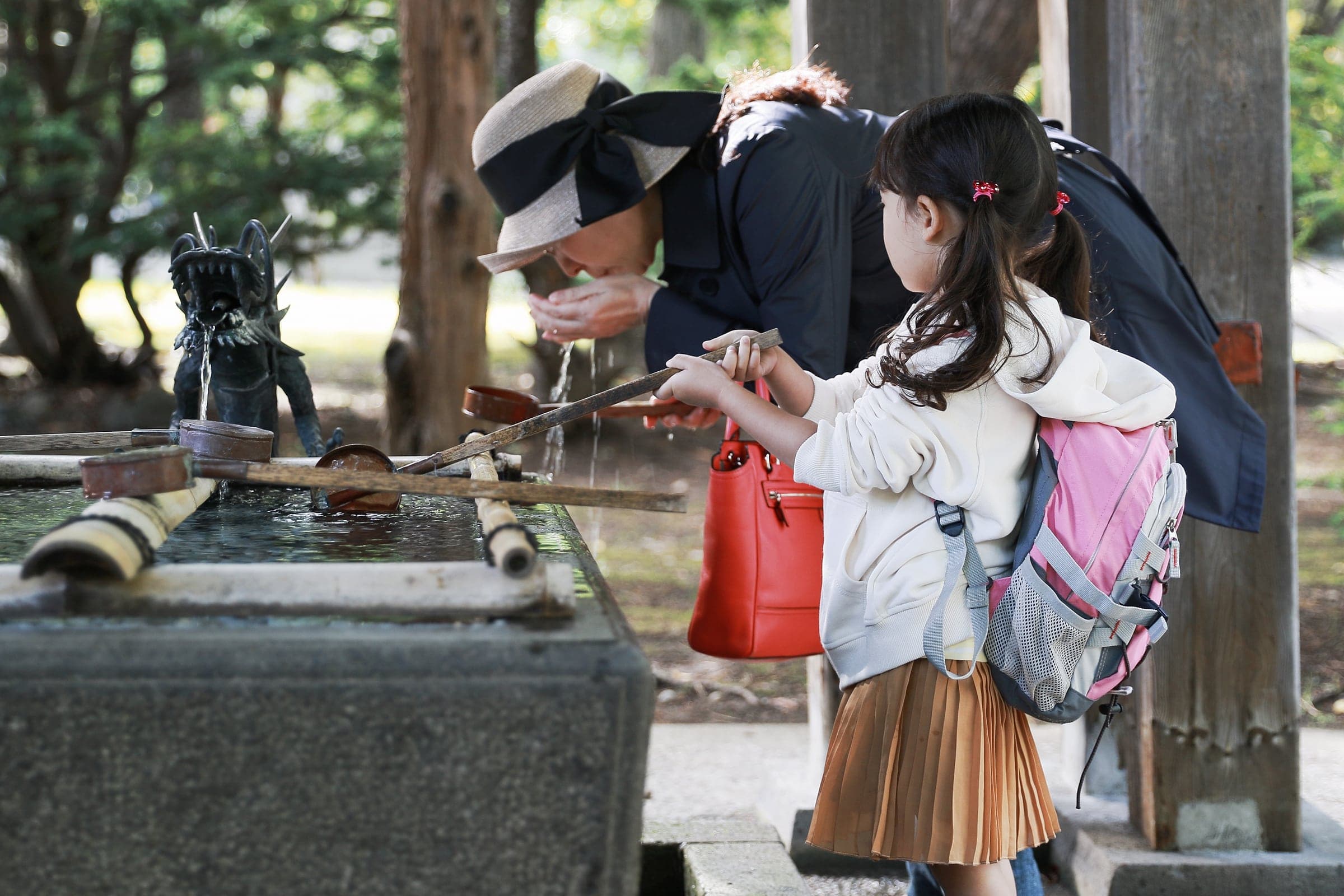
Shoes: remove footwear when entering buildings that require it — watch for racks, raised floors, and signage. JNTO's shrine and temple traditions guide covers deeper ritual context; this article does not teach prayer sequences or temizuya steps in full.
Photography: obey no-photo signs inside halls and near altars. Outdoor grounds may permit photography where signs allow. Do not block worshippers for a frame.
Cultural properties: do not touch statues, gates, or ropes unless participation is clearly invited. MLIT and Kyoto responsible-travel guidance both stress protecting cultural assets from careless contact.
Commercial photography, drones, and large group setups may require permission beyond ordinary visitor snapshots. When a site feels administratively complex, ask staff at the entrance.
For city context beyond a single visit, the Kyoto destination page and Where to Stay in Kyoto help you read how temple districts overlap residential life — especially in eastern hills lanes.
Regional Differences
Japan is one country with many local habits. Official signs and staff guidance still come first — but what you see on the ground may differ between Tokyo, Kyoto, and Osaka.
Tokyo: Go Tokyo's manners hubs emphasize queue order, platform markers, designated smoking areas, and priority-seat phone guidance. Dense stations reward fast bag stowage and low voice.
Kyoto: responsible-travel pages add residential friction — photography limits in Gion, narrow lane courtesy, rubbish carrying, and hands-free luggage promotion on slopes. A hillside evening walk and a station concourse ask for different awareness.
Osaka: warmth can be more audible in casual dining and street life — but shared transport expectations still reward quiet cars and orderly boarding. Regional friendliness does not cancel platform markings.
Escalators: you may still see stand-left or stand-right behaviour in some cities, but JNTO and the Tokyo Metro stand-still campaign officially discourage walking and leaving one side open. When in doubt, stand still and hold the handrail.
Read the city you are in today. Do not carry one anecdote from a forum as national law.
Common First-Time Questions
Do I need to bow constantly?
A modest nod at shops and hotels is enough for most travelers. Deep formal bows are not required in casual tourism encounters.
Is slurping noodles rude?
At ramen shops, slurping is normal and acceptable. Voice level still matters for conversation around the counter.
Which side of the escalator should I stand on?
Official guidance prioritizes standing still and holding the handrail. Regional side habits may appear, but operator campaigns discourage walking and leaving one side open.
Can I eat on the train?
Avoid eating on crowded commuter trains. Shinkansen travel with a tray table is a different context — see How to Use the Shinkansen in Japan for onboard rhythm.
Should I tip?
No. Tipping is not customary. A verbal thank you is enough at restaurants, hotels, and taxis.
Can I take photos of geisha in Kyoto?
Treat geiko and maiko as people at work in residential districts — not as performers for your camera. Kyoto City prohibits photographing them without permission in many areas.
Do I take my shoes off everywhere indoors?
No. Remove shoes when racks, tatami, genkan steps, or signs signal it — homes, many temples, ryokan, some traditional restaurants. Modern shops and hotels often do not.
Where do I throw away trash?
Carry it until a labeled bin appears — often at stations, konbini eat-in areas, or hotels. Few street bins exist.
What if I get it wrong?
Most mistakes are survivable. A brief apology, a correction when staff points, and moving on is usually sufficient. The goal is consideration, not perfection.
Practical Tips
Carry a small bag for rubbish until you find a labeled bin — especially on long walking days.
Load an IC card early so platform attention stays on queue markings, not ticket machines.
Keep some cash for trays and small shops even when cards worked yesterday — see Cash or Card in Japan.
Watch one boarding cycle before you join a queue on a new train line or bus operator.
Step aside before stopping on a sidewalk, temple approach, or market lane.
Use headphones for media on all shared transport.
At restaurant doors, read payment logos and waitlist clipboards before you commit — then follow Japanese Restaurants Explained for format.
At bath entrances, read shoe and slipper cues — then follow How to Use Japanese Onsen for sequence.
Learn sumimasen and arigato as practical tools, not as performance.
When a question is etiquette, ask staff. When it is lost property, a police report, or an emergency, use koban or 110/119 — Safety in Japan draws that line without turning the trip into a safety lecture.
Leave one afternoon unstructured — Planning Less, Seeing More pairs with the calm attention this article describes.
Why Consideration Matters More Than Perfection
Visitor anxiety about etiquette often assumes a hidden exam — one mistake revealing you as an outsider. Ordinary travel rarely works that way.
JNTO and MLIT frame responsible travel as reducing inconvenience to others: lower voice, clear luggage, carry rubbish, respect signs, ask when unsure. That is omoiyari in public — consideration made visible in small acts.
Residents are not grading tourists. They are sharing trains, queues, baths, and narrow lanes on the same Tuesday you are. The practical goal is smooth coexistence for an hour — not adoption of a national character.
You will misread a door once. You will board before noticing a queue marker. You will speak slightly too loudly before you hear the car. Correction is usually quiet — a gesture from staff, a sign you missed on second look.
Perfection is not the standard. Noticing, adjusting, and not repeating the same friction is enough for most trips.
When consideration becomes habitual, you stop performing Japan and start moving through it — the same skill you used on the platform before the train arrived.
Before You Go
Skim JNTO customs and traveling mindfully pages for the current responsible-traveler framing — links live in editorial notes for maintainers.
If Kyoto is on your route, read Kyoto City responsible-travel guidance for residential photography and smoking areas before hillside evenings.
Set up payment layers — Cash or Card in Japan and IC Cards in Japan — so register and platform moments stay calm.
Read sibling guides for operational depth: Japanese Restaurants Explained, Taking the Bus in Japan, How to Use the Shinkansen in Japan, How to Use Japanese Onsen.
Pack easy on-off shoes and a small rubbish pouch if you prefer not to rely on konbini disposal — see What to Pack for Japan.
Choose a Kyoto or Tokyo base with the walking and residential context you expect — Where to Stay in Kyoto and Where to Stay in Tokyo.
Expect to learn the sequence on the first day — not before it.
The platform queue was the lesson from the start: read the markings, wait in order, let people off, step forward when the space opens.
Queues, quiet cars, shoe racks, photo signs, and labeled bins are the same language in different rooms. Official guidance, staff direction, visible layout, nearby behaviour, and a short question when you are still unsure — that order carries through temples, restaurants, buses, and hotel entrances.
You do not need to memorize Japan before you arrive. You need to keep noticing what the space is already telling you. Consideration matters more than perfection. When you adjust once, the next shared moment usually feels ordinary — which is exactly the point.
Related Reading
Continue exploring this way of seeing Japan.
- Japanese Restaurants Explained: What to Expect Before You Walk In
- How to Use Japanese Onsen: What to Expect on Your First Visit
- Taking the Bus in Japan: A First-Time Guide
- How to Use the Shinkansen in Japan
- IC Cards in Japan
- Cash or Card in Japan?
- Convenience Stores in Japan: What Travelers Can Actually Use Them For
- Where to Stay in Kyoto: Choosing the Neighborhood That Fits Your Trip
- Planning Less, Seeing More