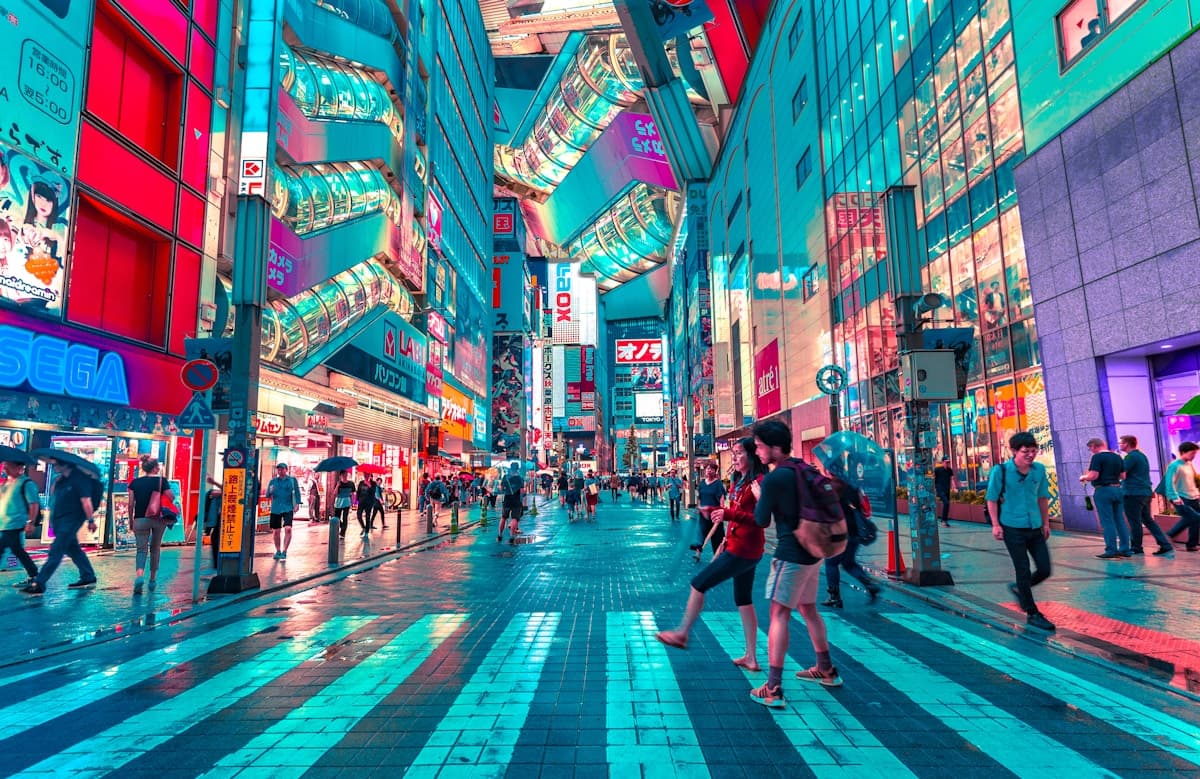
Tokyo
Where tradition and restless energy move side by side.
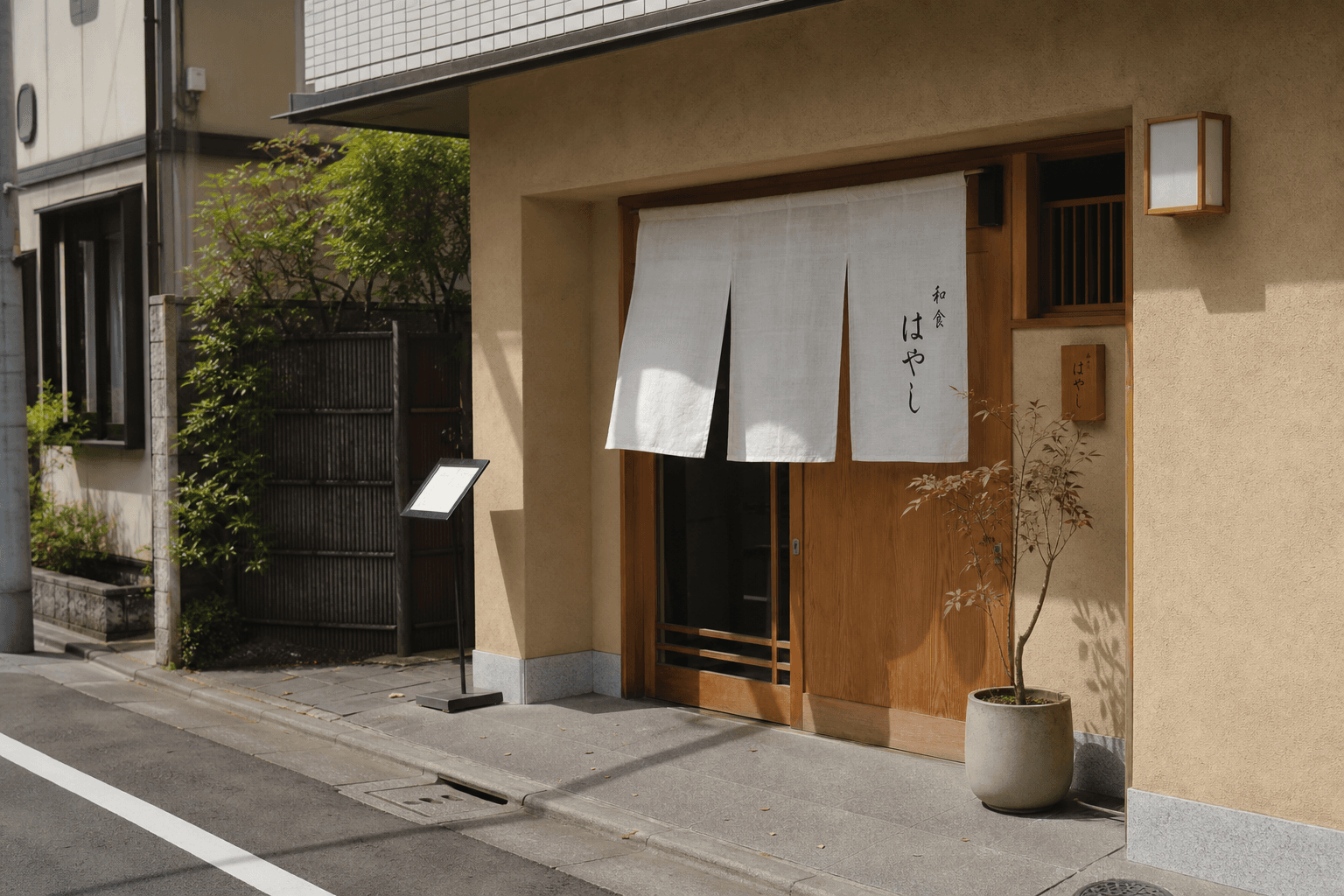
What kind of restaurant is this — and what should you expect when you open the door?
You pause on a side street with three doors within a block. One shows a ticket machine glowing through glass. One has a picture menu taped beside a booth window. One displays only Japanese lettering and a small lantern. Each looks like food. None announces, in English, what kind of place waits inside.
The useful question is not which door serves the best meal. It is what kind of restaurant each door represents — and what rhythm of ordering, waiting, paying, and leaving you are about to enter.
Japan's everyday dining landscape is wider than a single cuisine guide can hold. Ramen counters, family chains, teishoku cafeterias, izakaya evenings, and quiet cafés each run on different assumptions. Recognizing the type removes most first-visit friction before you cross the threshold.
Japanese restaurants are not one system. They are a set of familiar formats — each with its own ordering method, seating style, payment timing, and expected visit length.
Before you walk in, read the door: ticket machine near the entrance often means pay-first casual dining. Picture menus and booth seating often mean a family-style chain where you sit, order, and pay later. Lanterns and small plates on neighboring tables often mean an izakaya built for shared ordering over time.
Payment, reservations, and language support vary by shop — not by national rule. Cashless options are expanding in cities; small independents and rural stops may still prefer cash. Popular sit-down places may need advance booking; many ramen shops and chain family restaurants are walk-in.
This article explains types and mechanics — not what to order and not where to eat. For quick meals between destinations, Convenience Stores in Japan solve a different problem. For payment layers at the register, see Cash or Card in Japan rather than guessing at each door.
Match the restaurant type to the hour and the company you keep — not to a ranking list.
Choose a quick counter format when:
You have forty minutes between trains. You are eating alone and want a straightforward bowl or set meal. You are fine with a possible line and a short menu.
Choose a family restaurant or teishoku-style sit-down when:
Your group wants predictable menus, picture choices, and booth or table seating. Children or mixed tastes need flexibility without a reservation. You want an unhurried lunch or early dinner without researching a specialty shop.
Choose an izakaya when:
The evening is social — drinks and several small dishes over time. Your group can coordinate shared ordering without over-ordering at once. You accept that some places add a small table charge for an opening dish.
Choose a café when:
You want coffee, a light meal, or a quiet pause between neighborhoods. You are not trying to replicate a full dinner in a lunch-oriented shop.
Neighborhood density matters. Station areas in Tokyo and Kyoto concentrate casual options within walking distance of hotels — but the type you need still depends on the hour, not the pin on the map.
Think in formats, not fame.
Ramen shops are casual and quick. Many use a ticket machine at the entrance: insert money, select your bowl, hand the ticket to staff. Counter seating is common in small shops. Lines can form at busy hours. Slurping noodles is normal. Do not linger long after finishing — turnover keeps the line moving.
Sushi appears in several formats. Conveyor-belt shops let you take plates and pay by plate count at the end. Counter omakase at popular shops often requires reservation and can be difficult to enter same-day without one. This article mentions sushi as a format distinction in prose — not in the comparison table below, which covers four other everyday types.
Soba and udon shops range from table-service to self-service tray lines where you pick a size, add toppings along a counter, and pay at the end. Hot, cold, wet, and dry variations are common.
Teishoku (set-meal) restaurants serve rice, miso soup, a main dish, and pickles together — often cafeteria-style with a ticket machine near the entrance. Budget-friendly and straightforward.
Family restaurants are chain sit-down places with table service, picture menus at many locations, and typically no reservation. Useful when a group wants predictable options without planning ahead.
Izakaya are informal evening places built around drinks and shared small plates. Order incrementally. Torizara — small personal plates — help when sharing larger dishes. Some izakaya serve an automatic small appetizer (otoshi) that is not free; it may appear without a separate order.
Curry shops are a common casual category alongside family restaurants and teishoku — useful to recognize, but this article does not cover curry-specific mechanics in depth.
Cafés offer table service with payment usually at the register after your visit. Card acceptance varies by shop size and location.
None of these categories is better than another. Each solves a different moment in the day.
Four common formats — each with a different ordering rhythm and visit length.
| Criteria | Ramen | Family Restaurant | Café | Izakaya |
|---|---|---|---|---|
| Ordering | Often ticket machine at entrance; short fixed menu | Table service; picture menu common at chains | Table service; menu at seat or counter | Table or counter; order dishes incrementally as you eat |
| Atmosphere | Quick, casual, often counter-focused | Relaxed, family-friendly, booth or table seating | Quiet pause; slower than a lunch rush shop | Informal evening social; shared plates |
| Typical Visit | 20–40 minutes; eat and leave | 45–90 minutes; unhurried sit-down meal | 30–60 minutes; coffee or light meal | 1–2+ hours; drinks and small dishes over time |
| Payment | Usually pay before eating (ticket machine) | Pay after at table or register near exit | Pay after at register on the way out | Pay after; bill brought or pay at register |
| Good for | Solo travelers, fast lunch, late-night bowl | Groups with mixed tastes, children, predictable menus | Morning coffee, afternoon break, light work pause | Evening with friends; trying several small dishes |
| Things to Expect | Possible line; small shop; don't linger after finishing | No reservation at most chains; first-come seating | Card acceptance varies; smaller shops may be cash-only | Shared dishes; small otoshi charge may appear automatically |
Ordering
Atmosphere
Typical Visit
Payment
Good for
Things to Expect
These are patterns, not rules — individual shops vary.
Ordering rhythm follows restaurant type more than national etiquette.
Ticket-machine shops compress several steps. You often choose and pay at a machine near the entrance, receive a ticket, then hand it to staff at the counter or take a seat when directed. Ramen shops and many teishoku cafeterias work this way.
Table-service shops begin with seating. You read the menu at your table — sometimes with picture pages — and order when staff approach or when you press a call button. Family restaurants, many izakaya, and cafés commonly follow this pattern.
Counter service may combine both: you sit at a counter, order verbally or by pointing, and receive food in sequence. Small sushi counters and some udon shops work this way.
Self-service tray lines at some udon chains let you pick a bowl size, choose toppings along a counter, and pay at the end.
English support is increasing in major cities but is not guaranteed at every independent shop. Picture menus at chains help when language is limited. When in doubt, pointing and short phrases often suffice at casual places — mastering every custom immediately is not expected.
For waiting in line, voice level, cash trays, and other shared-space cues at the door, see Japanese Etiquette Explained. This section covers ordering mechanics only.
Most sit-down visits follow one of these sequences — ticket-machine shops compress the first steps.
Enter and wait or sit
Join the line, write your name on a waitlist, or take an open seat if the shop seats first-come.
Read the menu or use the ticket machine
At ticket-machine shops, choose and pay here before sitting. At table-service places, read the menu at your seat.
Order
Hand your ticket to staff, tap a tablet, call a server, or order directly at a counter — depending on the shop.
Eat
Food arrives in the shop's usual rhythm — one bowl quickly, or several shared dishes over time.
Pay at register or at table
If you did not pay upfront, settle the bill at the register near the exit or when staff bring the check.
Leave
At busy casual shops, leaving soon after finishing keeps turnover moving for the next person waiting.
Ramen and many fast-casual shops combine menu reading, payment, and ordering at the ticket machine.
Payment timing splits cleanly between pay-before and pay-after formats.
Pay before eating is standard at many ramen shops, teishoku cafeterias, and other ticket-machine fast-casual places. You settle at the machine or counter before the meal arrives.
Pay after eating is common at table-service restaurants. Staff may bring a bill to the table, or you pay at a register near the exit on your way out — sometimes both options exist.
Cash and cards: Cashless payment is expanding in Japan. Major urban hotels, department stores, and many chain restaurants accept international cards. Small independents and rural shops may be cash-only. Acceptance marks often appear at the entrance — check before you sit down if you are unsure.
IC cards work for transport and many convenience-store purchases, but they do not replace sit-down restaurant payment in most cases.
Tipping is not customary. A verbal thank you is enough.
Do not duplicate a full payment strategy here. Cash or Card in Japan covers how much yen to carry, ATM access, and where cards reliably work — use that guide for wallet setup; use this section for what happens at the restaurant door.
Reservation need follows popularity and format — not cuisine prestige.
Many downtown and popular sit-down restaurants benefit from advance booking — especially small counters, omakase sushi, and busy weekend evenings. JNTO advises checking accepted payment methods before entering; the same planning habit applies to reservation-required shops.
Casual formats — ramen, family restaurant chains, fast-food-style teishoku — typically do not take reservations. You arrive, join the line, or add your name to a clipboard waitlist with party size and seating preference (counter or table).
Lines are usually orderly. Punctuality matters when you hold a reservation — late arrival may forfeit the booking at some places.
Some restaurants impose table time limits — often around two hours — especially during busy periods. Confirm if you are planning a long evening.
Peak travel seasons add pressure. When Is the Best Time to Visit Japan? helps you read crowd and holiday trade-offs; Living by the Calendar explains how national holidays compress transport and bookings — restaurant demand often rises in the same windows.
Solo dining is normal at many casual formats — especially counter seating.
Ramen shops, sushi counters, self-service udon lines, and café tables all accommodate solo travelers without ceremony. Counter seats are designed for one person occupying one stool; you are not wasting space meant for a group.
A book or phone can fill the natural quiet at a counter, but conversation level varies by shop. Ramen shops tend toward brief, focused meals. Cafés tolerate longer solitary pauses.
Izakaya can work solo but are more naturally social. Some travelers enjoy sitting at a counter and ordering two or three small dishes without coordinating a group — that is acceptable, though the format shines when sharing.
If uncertainty is the barrier, start with a ticket-machine ramen shop or a family restaurant with picture menus. Both formats make the sequence legible on the first visit with minimal language.
Group dining changes ordering pace and seating needs.
Family restaurants suit mixed ages and tastes. Picture menus reduce ordering friction. Booth seating gives children space. Reservations are usually unnecessary at major chains — walk in and wait if needed.
Izakaya reward coordination. Shared plates mean the table orders incrementally rather than all at once. Torizara — small personal plates — help when dividing communal dishes. Avoid over-ordering early; you can add dishes as the evening continues.
Kaiten sushi — conveyor-belt sushi — works for families who want variety without a fixed course. Plates circulate; you pay by what you took.
Ramen is less natural for large groups in small shops. Counter space is limited. Split into nearby seats or choose a larger-format shop if the group insists on eating together.
Table time limits matter for groups planning long evenings. Confirm when booking if your celebration may run past two hours.
Do I need to speak Japanese?
Not for every meal. Ticket machines often use icons and numbers. Chain restaurants frequently offer picture menus. Independent shops may have little English — pointing and basic phrases carry many first visits. JNTO notes that mastering every custom immediately is not expected.
Should I tip?
No. Tipping is not customary in Japan. Thank staff when you leave.
What is the ticket machine for?
It replaces ordering and payment at the counter in many fast-casual shops. Insert money, select items, take your ticket, hand it to staff.
What is otoshi?
A small automatic appetizer at some izakaya — not complimentary. It may arrive without a separate order. Ask if you are unsure what appeared on the table.
Can I pay by card?
Often at chains and larger urban restaurants; less reliably at tiny independents. Check logos at the entrance or ask before ordering. See Cash or Card in Japan for the full payment mix.
Do I need a reservation?
Popular sit-down and counter shops — yes, often. Ramen, family chains, and many cafés — usually walk-in.
Is slurping noodles rude?
At ramen shops, slurping is normal and acceptable.
How do I handle dietary restrictions?
Be specific: no meat, no seafood, no dashi or stock if that matters. A written explanation in Japanese helps. Notify the restaurant when reserving set menus. Allergy labels exist but are not universal — confirm directly for severe allergies.
Read the entrance before you commit — payment logos, ticket machine, waitlist clipboard, and opening hours tell you the format.
Carry cash as backup even when cards worked yesterday in the city center.
Join the line orderly. At waitlist shops, write your party size and whether you prefer counter or table seating if the clipboard asks.
At ticket-machine shops, decide before you insert money — refunds are not always simple.
Leave soon after finishing at busy ramen shops. The next person in line is part of the same system.
Prepare a short dietary card in Japanese if restrictions matter — show it when ordering or when reserving.
When restaurants are closed or you only need a quick meal between stops, Convenience Stores in Japan fill a different gap — not a substitute for sit-down dining, but reliable infrastructure.
Match payment planning to your route using Cash or Card in Japan before your first restaurant visit.
Leave one meal unoptimized — as Planning Less, Seeing More suggests for itineraries generally.
Travel writing often treats restaurants as destinations to rank — a list to complete, a reputation to chase. Everyday dining in Japan works differently for most visitors.
The ramen shop after a museum closes. The family restaurant when rain interrupts outdoor plans. The izakaya where your group debriefs the day. The café where you regroup before the next train. These are infrastructure moments — not pilgrimages. For what those evenings feel like from the street — steam, noren, the hour when neighborhoods feed themselves — see An Evening in Japan.
Understanding the type removes the anxiety at the door. You are not failing if you chose a chain over a specialty counter. You are not missing Japan if lunch was a teishoku set rather than a celebrated bowl. You are feeding the day so the day can continue.
Residents use these formats constantly without documenting them. Travelers benefit from the same calm recognition: match the format to the hour, follow the shop's rhythm, and move on toward what the trip is actually for.
Set up payment before your first sit-down meal — card, cash, and IC card each cover different gaps. Read Cash or Card in Japan and IC Cards in Japan for the full mix.
Decide which meals need reservations and which can stay walk-in. Book popular counters in advance; leave ramen and family-chain lunches flexible.
Prepare a dietary explanation card in Japanese if needed — especially for set menus and ryokan dinners booked separately from this article's scope.
Know when a konbini meal replaces a restaurant stop — late arrival, tight train connections, or a gap before check-in — using Convenience Stores in Japan as the quick-meal layer.
Match your hotel neighborhood to the evenings you expect — Where to Stay in Tokyo, Where to Stay in Kyoto, Where to Stay in Osaka, and Where to Stay in Hiroshima help you read dining density near your base.
Read seasonal crowd patterns in When Is the Best Time to Visit Japan? if your dates overlap blossom peaks, Golden Week, Obon, or New Year.
Expect to learn the sequence on the first visit — not before it.
The door is less mysterious once you recognize the format behind it. Ticket machine or table service. Pay before or pay after. Counter stool or booth for four. Twenty minutes or two hours.
You do not need a food ranking to eat well on an ordinary travel day. You need to know what kind of place you are entering — and what rhythm it expects.
Walk in when the format fits the hour. Order without performing expertise. Pay, thank the staff, and return to the street. The meal was never the destination. It was the pause that let the next part of the day begin.
Continue exploring this way of seeing Japan.
Where tradition and restless energy move side by side.
Where openness, humor, and generosity shape everyday life.