An Evening in Japan
Five moments from station to quiet street
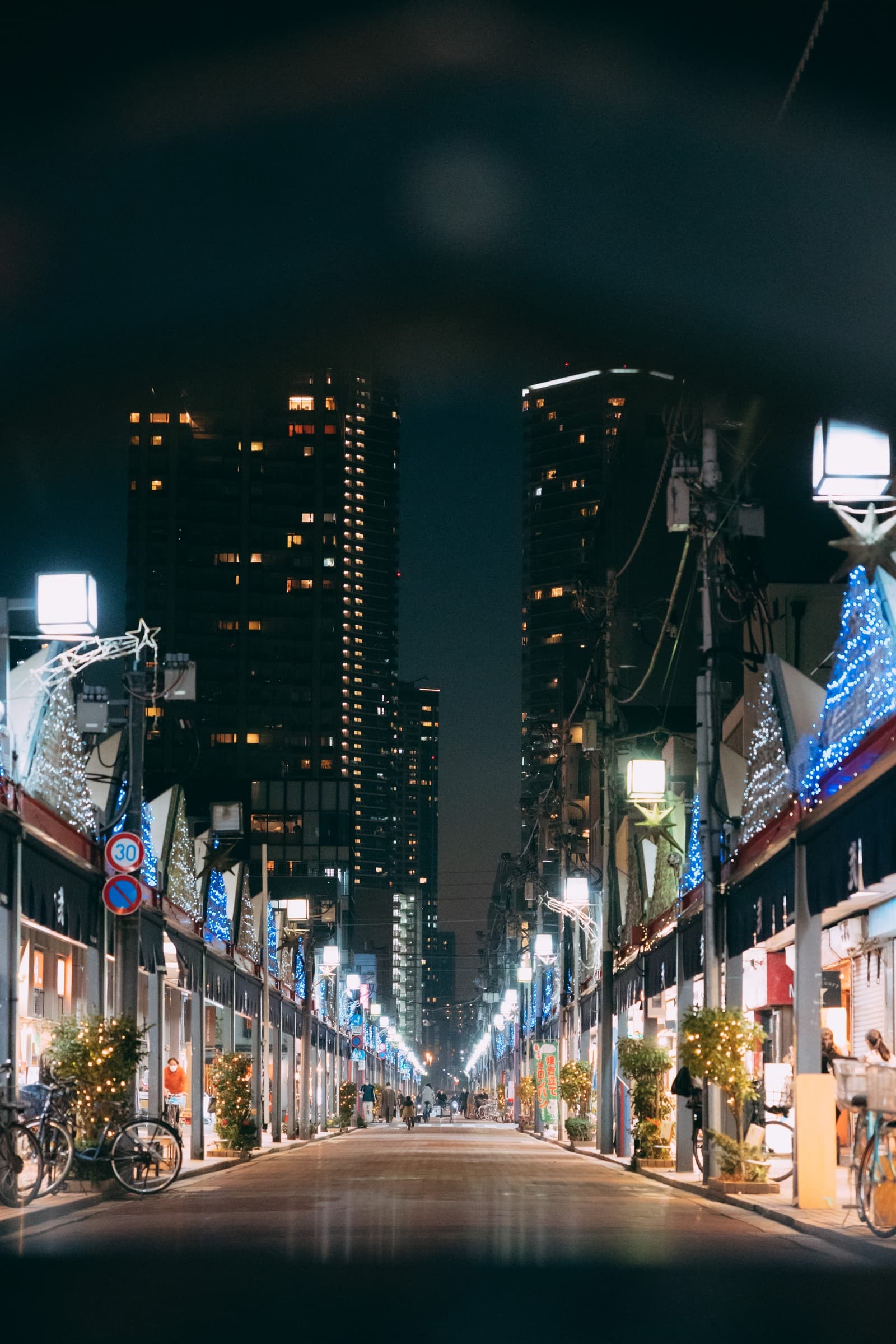
A Japanese evening is not a nightlife guide. It is the same city reorganizing — stations releasing commuters, shop signs switching on, restaurants filling, convenience stores holding light between apartments, side streets emptying at different speeds.
This visual essay follows five recognizable moments from dusk to quiet lane. Scroll the photographs first; read when you want detail. The images show how an ordinary urban evening looks. The text names what they cannot — and where to go next on Japan Atlas when you want practical help.
Nothing here ranks districts or recommends venues. The sequence fits many Japanese cities — commercial ground floor, residential above, a station within walking distance — without treating one city as the default.
Leaving the Station
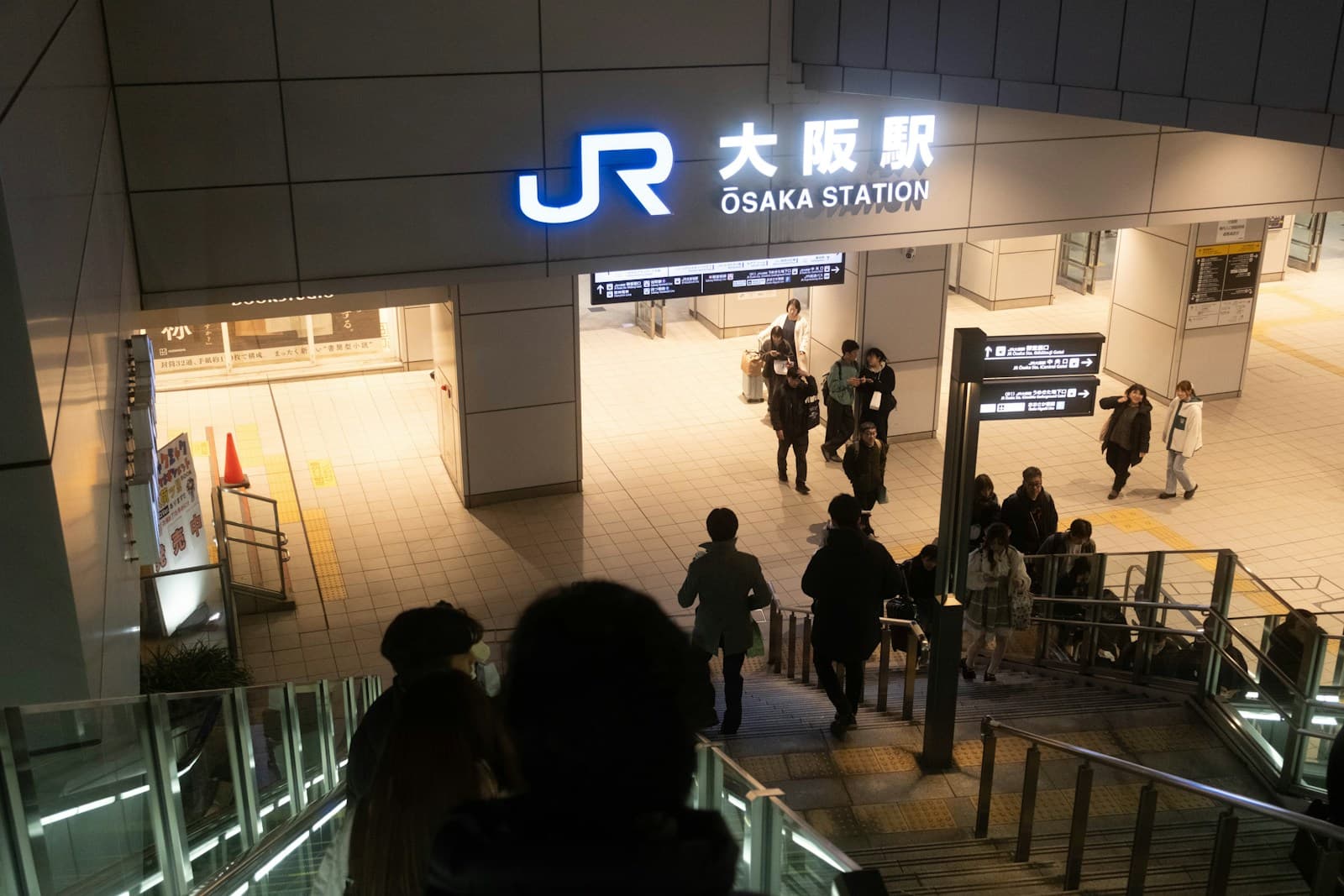
Photo by Harman Tatla on Unsplash (EVE-01) — Unsplash License.
Evening begins around transport. Between five and seven-thirty, the largest coordinated movement of the day ends — workers and students leaving exits, splitting toward buses, bicycle parking, or the residential grid beyond the commercial frontage.
The flow is repetitive, not scenic. Same exit, same corner konbini pause, same turn into a side street. A traveler standing aside is enough; the current passes around stillness.
The Street Lights Up
PAKUTASO (EVE-08) — PAKUTASO Terms, free commercial use.
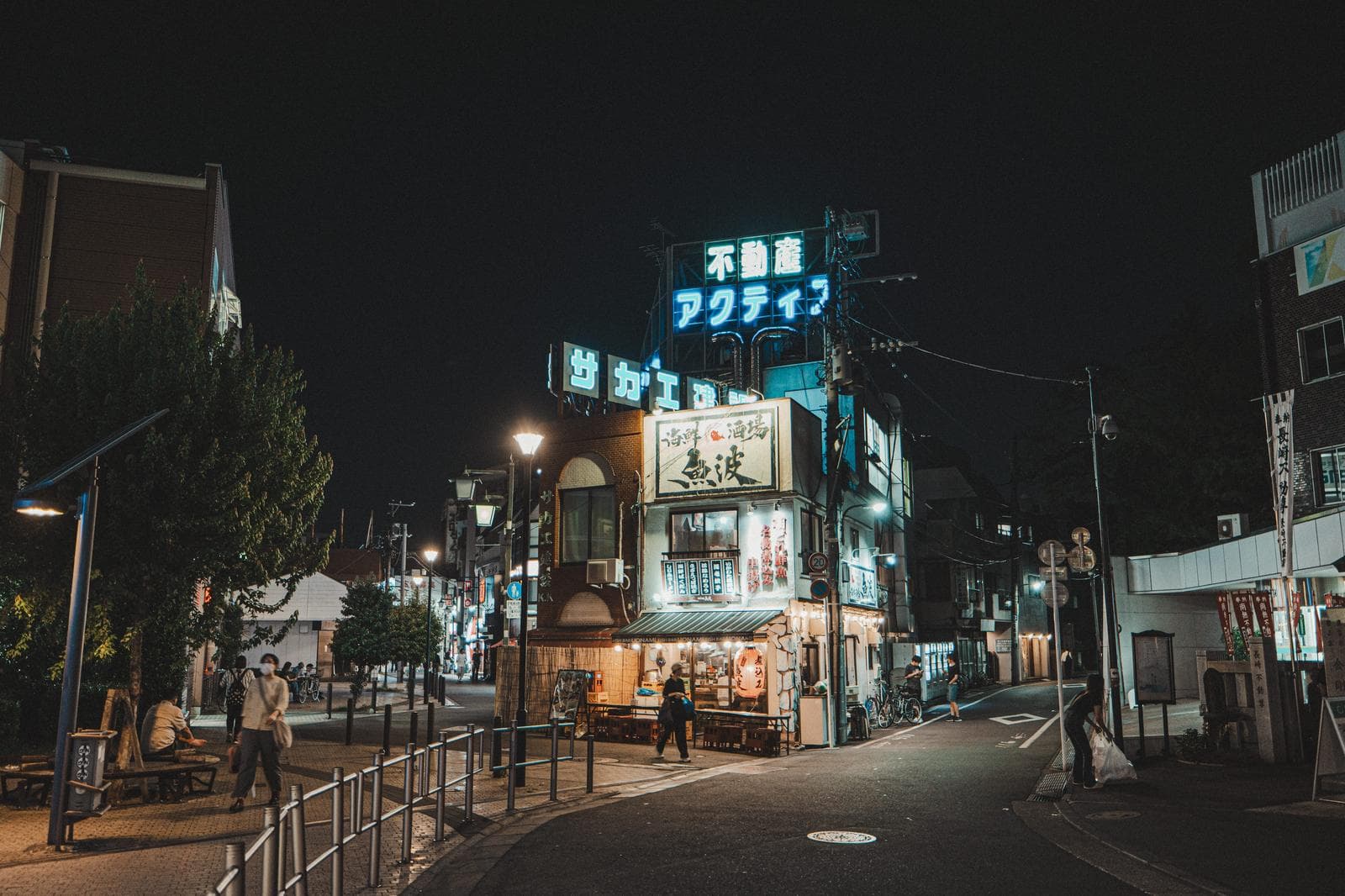
Once daylight thins, small commercial streets become easier to read. Shop signs and restaurant fronts switch on. Lanterns and fluorescent windows separate the street from the rooms above.
Rain doubles every sign on the pavement. Covered shopping streets keep the same roof while the light beneath them changes. Vending machines that were background at noon become fixed points on the block.
Dinner Behind the Door
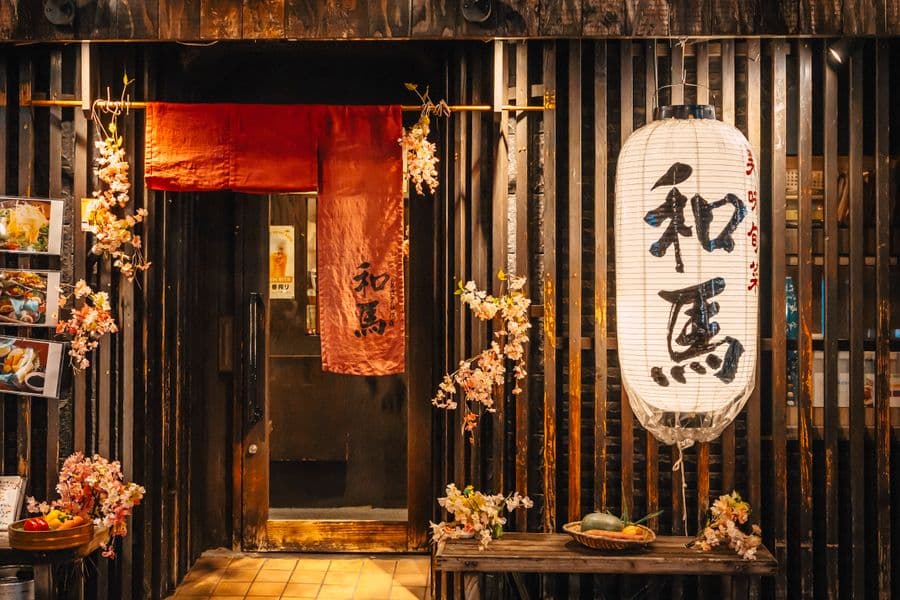
Photo by Musa Ortaç on Pexels (EVE-13) — Pexels License.
Between six and nine, narrow frontages carry steam, exhaust fans, and movement at the threshold.
An evening meal may mean ramen at a counter, a family-restaurant booth, izakaya lanterns, a café's last tables, or a convenience-store bento on a bench. Formats differ; proximity and habit often decide. For how to read a door before you enter, see Japanese Restaurants Explained.
Light Between Homes
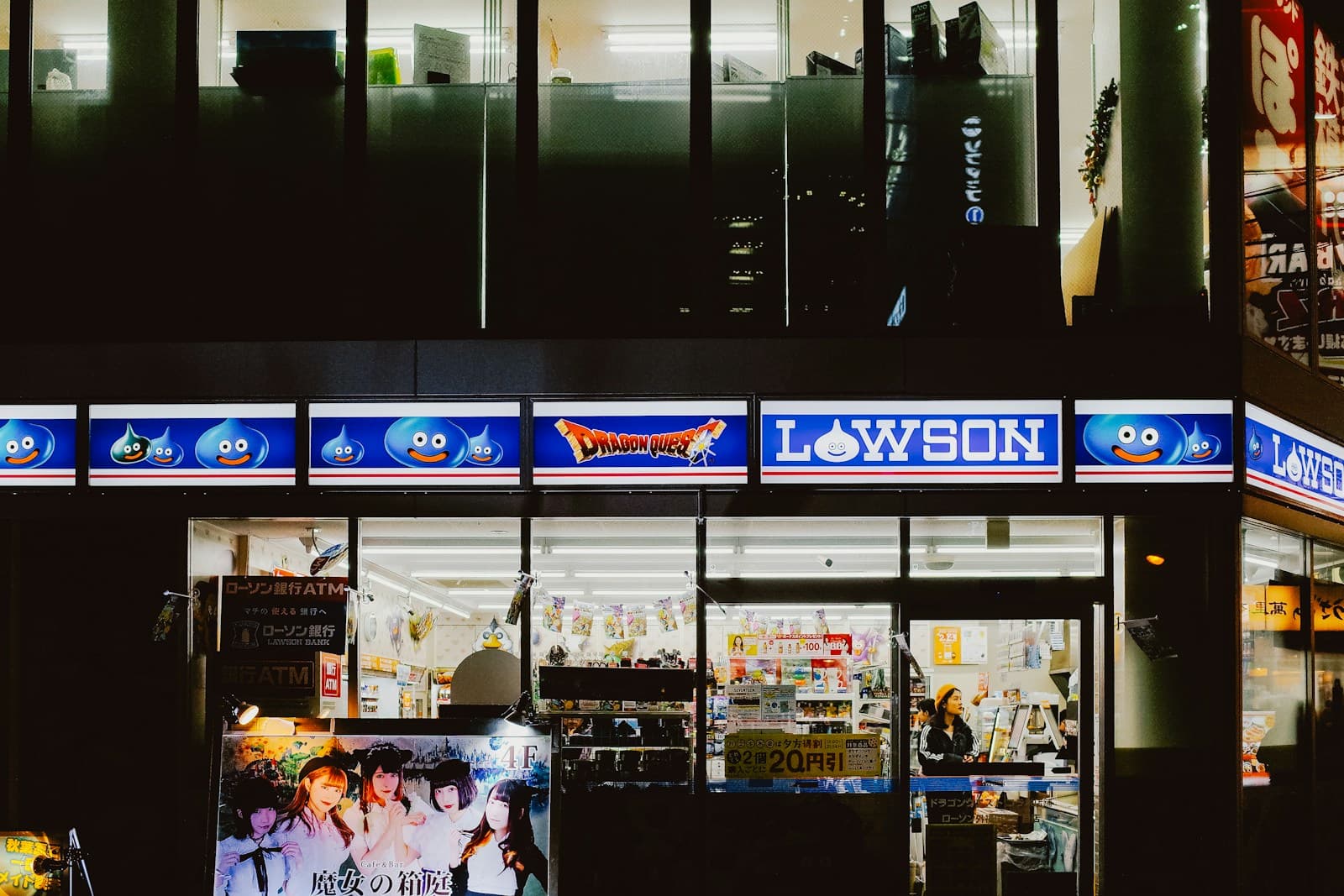
Photo by PJH on Unsplash (EVE-15) — Unsplash License.
Part of the evening happens where commerce meets housing — konbini light on sidewalks, vending machines on corners, bicycle rows, apartment windows showing kitchen lamps.
These blocks are not entertainment districts. They are where errands finish and late workers still pass through. For what that infrastructure offers beyond the walk-by moment, see Convenience Stores in Japan.
The City Becomes Unevenly Quiet
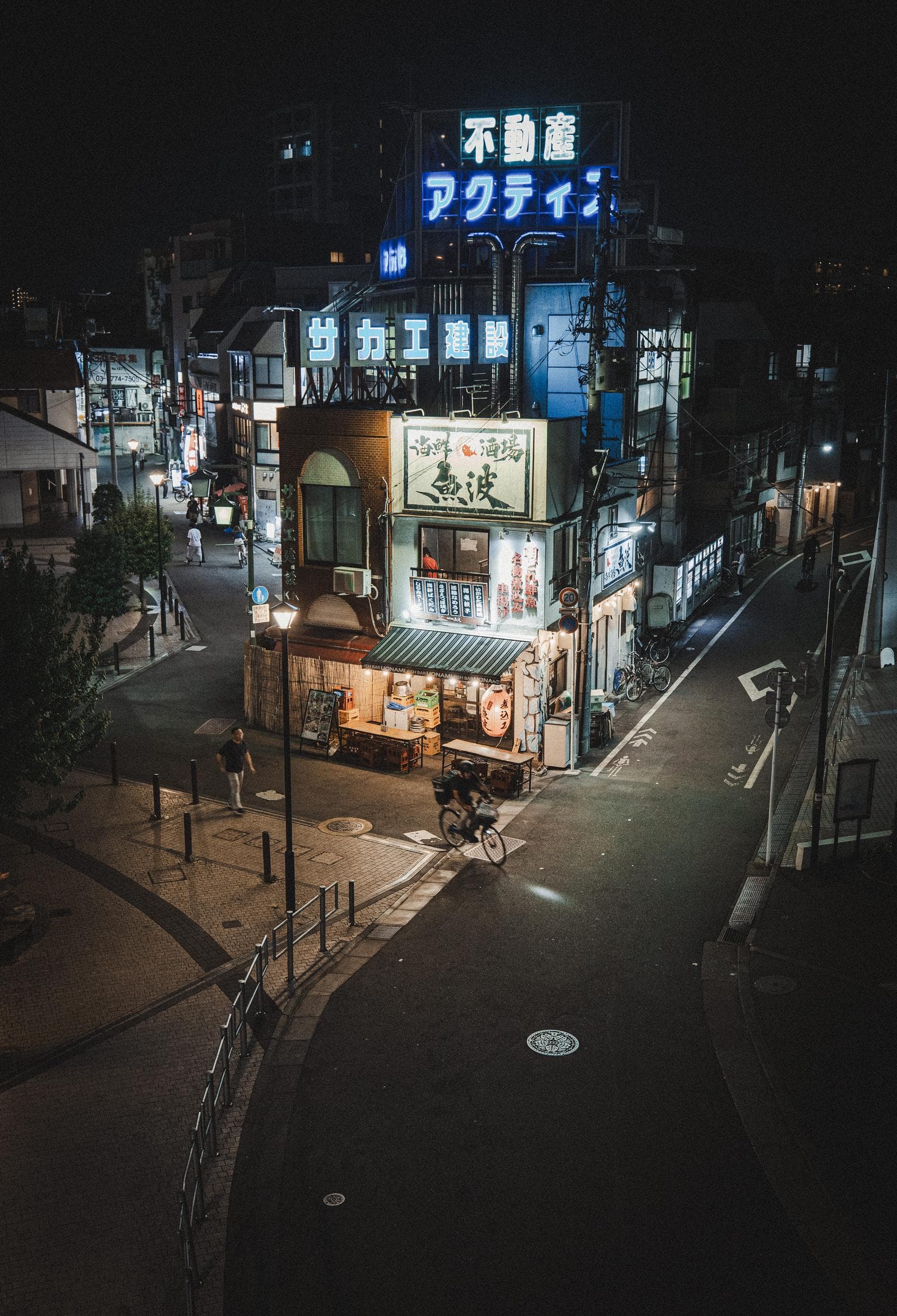
PAKUTASO (EVE-09) — PAKUTASO Terms, free commercial use.
After nine, foot traffic thins unevenly. One commercial spine still has a supermarket run; the parallel residential lane is mostly windows and vending-machine hum. Shutters close shop by shop, not all at once.
Late trains and taxis still move. A single lit restaurant can hold activity against an otherwise quiet block. The city redistributes light and sound rather than switching off entirely.
What to Notice
- Where artificial light comes from — tungsten shopfronts, fluorescent konbini, LED signage, apartment windows
- How station crowds split within a block of the exit
- Where commercial strips meet residential roads one turn away
- How people eat alone at counters and together in booths through the same hour
- How sound thins when you leave the main street — kitchen fans, bicycle bells, distant announcements
- How rain changes reflection and pace without changing the sequence
Plan Your Evening
When observation turns into action, these Travel guides remove friction without replacing what you came here to see.
Choose a street near where you are staying and walk past the first corner. You do not need a landmark list — only attention to what changed after dark.
Related Reading
Continue exploring this way of seeing Japan.