Safety in Japan: Practical Advice for First-Time Visitors
How do you prepare for ordinary travel risks without letting them dominate your trip?
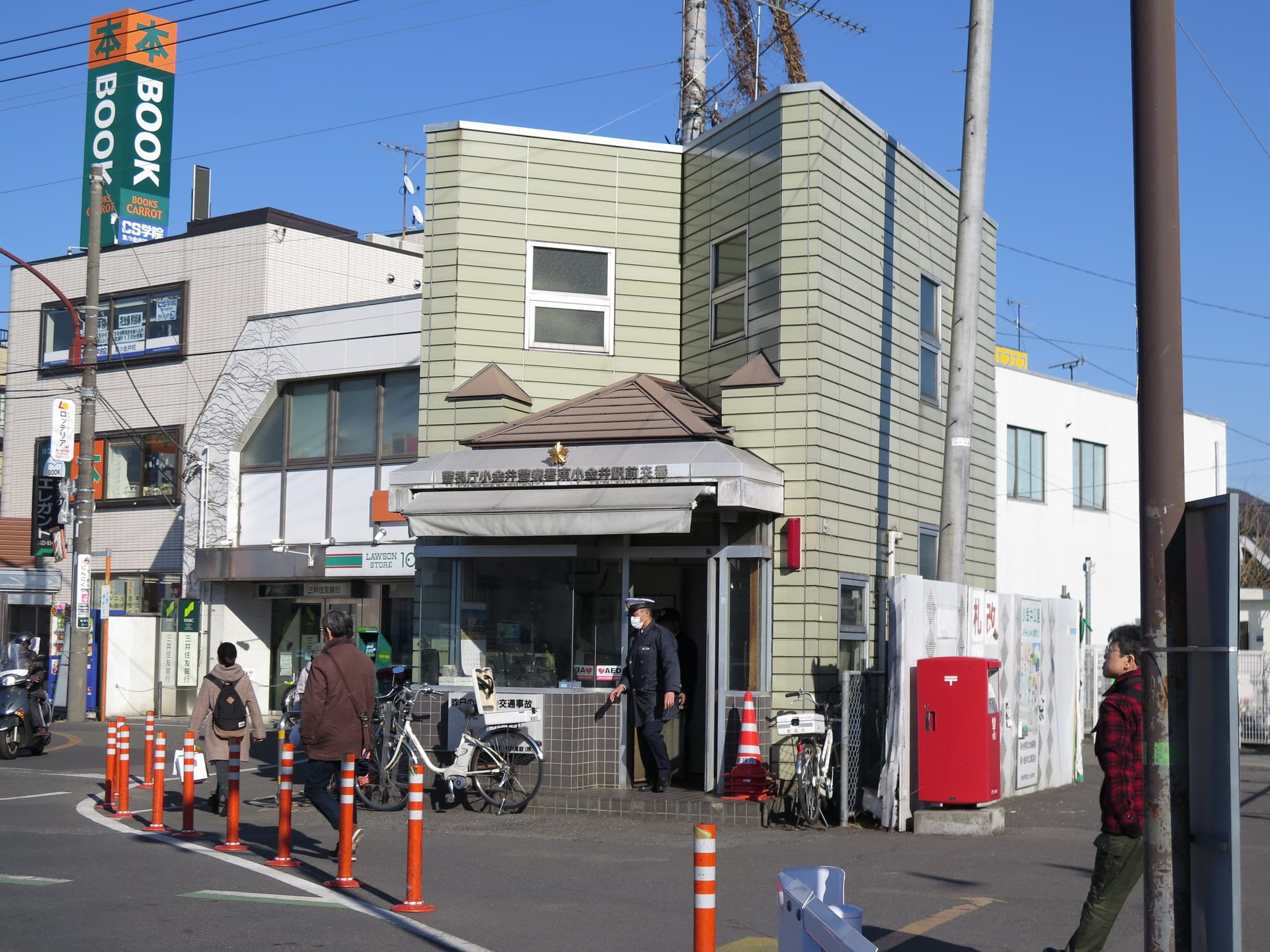
Photo: Douglas Perkins / Wikimedia Commons · CC BY 4.0 · Resized
- Category
- Travel
- Central Question
- How do you prepare for ordinary travel risks without letting them dominate your trip?
On a corner near a busy station, a small building sits beside the pavement — a green sign, a map on the wall, a uniformed officer visible through the window. Nothing is wrong. You are simply walking past, and for the first time you notice what the sign means: koban, a neighborhood police box.
That moment is common on a first Japan trip. The country feels orderly enough that safety rarely announces itself as a topic — until you wonder where to report a lost wallet, which number to call if someone needs an ambulance, or how to read a weather alert on your phone.
This article is a preparation guide for ordinary travel risks — not a disaster manual, not a crime briefing, and not a ranking of how safe Japan feels compared with anywhere else. The goal is practical: know the numbers, know where to ask, keep documents and belongings within reach, and follow official guidance when weather turns — then return attention to the trip itself.
Most days need none of this. That is exactly why a short, calm preparation pass before departure pays off on the one afternoon when something does.
The Short Answer
For first-time visitors, ordinary safety preparation in Japan comes down to a few stored numbers, one visible help point, and habits you already use elsewhere — kept close, not dramatized.
Save 110 for police emergencies and 119 for fire and ambulance. They are distinct services; use the one that matches the situation. The Japan Visitor Hotline at 050-3816-2787 offers 24-hour visitor support in English, Chinese, and Korean when you need guidance but are not in immediate danger — it does not replace 110 or 119.
For lost property, directions, or non-urgent police matters, a koban — neighborhood police box — or a larger police station is the practical first stop. For medical uncertainty short of an emergency, JNTO points travelers to official illness guidance and recommends travel insurance because language barriers at clinics remain real.
Follow official weather and hazard information rather than social media rumors. In summer, treat heat and hydration as seasonal travel logistics — see When Is the Best Time to Visit Japan? for seasonal framing, not repeated here.
Keep passport, copies of key documents, insurance details, and essential medication where you can reach them without opening checked or forwarded luggage — the same day-bag logic as What to Pack for Japan. Preparation is brief. It should sit quietly in the background until needed.
The essentials to store before an ordinary Japan trip — not a disaster checklist.
- 110
- Police emergencies
- Crime in progress, serious accidents requiring police response.
- 119
- Ambulance and fire
- Medical emergency or fire — distinct from police.
- Japan Visitor Hotline
- 050-3816-2787
- 24/7 visitor support in English, Chinese, and Korean — not a substitute for 110 or 119.
- Koban
- Local help for lost property, directions, non-urgent police matters
- Neighborhood police boxes appear near stations and busy corners.
- Official guidance
- Follow official weather and hazard guidance
- Japan Safe Travel, JMA, and NHK WORLD-JAPAN during alerts — not rumor threads.
- Documents
- Keep passport, document copies, insurance details, essential medication accessible
- On your person or in a day bag — not only in forwarded luggage.
Store numbers in your phone before departure. Most days you will not need them.
Prepare Before You Need Help
Safety preparation fits naturally into trip planning you may already be doing — not as a separate fear exercise.
Before departure, save 110, 119, and the Japan Visitor Hotline in your phone contacts. Add your embassy or consulate details if your government publishes them for Japan. Note your travel insurance policy number and emergency assistance line in the same note — JNTO strongly recommends insurance partly because medical conversations can be difficult without Japanese.
Carry passport on your person as Tokyo Metropolitan Police advises for foreign visitors, with copies or secure digital copies stored separately. Keep essential medication, glasses, and payment tools in the day bag that stays with you through immigration, hotel check-in, and locker days — see What to Pack for Japan for document and day-bag logic.
Test connectivity before you depend on it underground — eSIM vs Pocket Wi-Fi in Japan covers setup; this article only notes that alerts and maps require a working phone during travel days.
Skim one official hazard orientation page linked from JNTO's plan hub — enough to know where earthquake and typhoon guidance lives, not enough to rehearse every scenario. A future Natural Disaster guide will own depth; here the point is knowing which official sources to open when a notification appears.
If your first hours after landing still feel unstructured, Airport Arrival Guide: Your First Hours in Japan places connectivity, cash, and transport in order — the same hour when saving emergency numbers takes thirty seconds.
Emergency Numbers
Japan uses separate emergency lines for police and medical or fire response. Keeping them distinct prevents delay.
110 — police. Use when a crime is in progress, when you need immediate police assistance at a serious accident, or when police response is the urgent need. JNTO lists 110 alongside 119 in official visitor guidance.
119 — ambulance and fire. Use when someone is injured or seriously ill and needs emergency medical transport, or when there is a fire. JNTO directs travelers to call 119 when injured or seriously ill.
Japan Visitor Hotline — 050-3816-2787. Operated with JNTO involvement, available 24 hours a day in English, Chinese, and Korean for visitor inquiries and support. Use it when you need orientation, translation help, or guidance about which service to contact — not when immediate police or ambulance response is required.
Secondary numbers worth knowing in prose, not as substitutes: Tourism Information Center at 050-3416-0010 (9 a.m.–5 p.m. daily) for general travel questions; Tokyo Metropolitan Police foreign-language line at 03-3501-0110 (24 hours); #9110 in Tokyo for non-emergency police advisory; Lost and Found at 0570-550-142 for property inquiries after the fact.
If you are unsure whether a situation is an emergency, err toward 119 for medical symptoms and 110 for immediate safety threats. The Visitor Hotline can help interpret next steps when urgency is unclear — after you and those around you are safe.
Police Boxes and Asking for Help
Koban are small neighborhood police outposts — often near stations and busy intersections — where officers handle local matters: directions, lost-and-found reports, security advice, and non-urgent police business. JNTO and Tokyo Metropolitan Police both describe them as practical first stops for visitors who need police-related help without dialing 110.
For lost property, report at a koban or police station. Tokyo MPD distinguishes lost-and-found reporting from crimes and accidents, which go through 110. If you find an item, the same offices accept found-property reports.
Language support varies by location and hour. Many officers handle basic English in central tourist areas; elsewhere, showing a map, hotel address, or photo may move the conversation faster than speaking quickly. The Japan Visitor Hotline can assist when communication stalls — it does not replace face-to-face reporting for lost passports.
Asking nearby staff — station attendants, hotel front desks, shop employees, konbini clerks — is equally valid for ordinary uncertainty: which exit, which bus, whether a wallet was handed in at the register. That is the same reading-the-room skill as Japanese Etiquette Explained — staff answer short questions routinely.
Street touts in some entertainment districts and bar rip-offs are a known nuisance in Tokyo MPD visitor guidance — not a reason to avoid an area, but a reason to walk away from unsolicited invitations and inflated tabs. Decline, leave, and use 110 if you feel threatened.
Koban on a map are infrastructure — like IC card readers or konbini ATMs. Notice them once; use them when the day requires.
Medical Care
This section stays high level. It is not a clinic guide, a diagnosis tool, or an insurance sales page.
If someone is injured or seriously ill, call 119 for an ambulance — JNTO's direction for medical emergencies. For non-emergency illness — fever, stomach trouble, injury that is painful but stable — JNTO links travelers to official guidance such as the Japan Tourism Agency's materials on what to do when feeling ill; use the JNTO plan hub to reach current pages rather than relying on outdated URLs.
Language barriers at medical facilities remain real. JNTO notes that English-speaking staff are not guaranteed at every clinic or hospital. The Japan Visitor Hotline and Tokyo MPD's foreign-language line can help with orientation; AMDA International Medical Information Center (03-6233-9266) appears in JNTO-linked resources for medical interpretation support — confirm current services through official channels before you depend on them.
Travel insurance is strongly recommended by JNTO precisely because billing, referrals, and communication can become complicated quickly. Keep policy details accessible. This article does not link specific insurance products.
For packing prescription medicine within legal limits, see What to Pack for Japan. For onsen and bath-related health cautions, see How to Use Japanese Onsen. Ordinary city days rarely need more than knowing 119 and where your insurance card lives.
Weather and Natural Hazards
Japan experiences earthquakes, typhoons, heavy rain, and tsunami warnings. A dedicated Natural Disaster guide will cover depth later. Here the orientation is simple: know official sources, follow staff instructions, and avoid treating social posts as evacuation orders.
Earthquakes are common. JNTO advises staying calm, following staff or local guidance, knowing your evacuation route at accommodation, extinguishing flames when safe, keeping a charged phone, and moving to higher ground along coasts when tsunami warnings apply.
Typhoons peak around August and September and may disrupt trains and flights — hydrate and monitor forecasts during summer travel, per JNTO weather guidance. Living by the Calendar explains how seasons shape daily life; this section only notes that typhoon weeks can rearrange transport even when cities feel otherwise normal.
Official channels to bookmark through JNTO's hub: Japan Safe Travel for visitor-facing alerts; the Japan Meteorological Agency for weather and earthquake information; NHK WORLD-JAPAN for English news during major events. JNTO also references the Safety Tips app via its official materials — install from links JNTO provides rather than unverified download pages.
When a warning arrives, pause independent plans and read the official message first. Hotel staff and station announcements often precede perfect translation on your screen. Tsunami warnings mean higher ground — not photography at the waterfront.
None of this should dominate trip planning. It should sit beside timetables and hotel addresses — opened on the days when the sky or the phone tells you to.
Heat and Seasonal Conditions
Summer heat and humidity are travel logistics in Japan, not hidden emergencies — though they can become medical situations if ignored.
JNTO and the Ministry of the Environment both emphasize hydration, rest, and air-conditioned breaks during hot months. Plan slower mornings, carry water, and treat shade and convenience-store stops as legitimate itinerary elements — Convenience Stores in Japan covers what you can reliably buy on a hot afternoon.
WBGT heat-stress indices appear in official summer guidance; athletes and event organizers watch thresholds closely. For ordinary sightseeing, the practical rule is simpler: if you feel overheated, stop, hydrate, and move indoors — do not push through a full temple circuit to keep schedule.
Seasonal choice affects how heat and typhoon overlap with your dates — When Is the Best Time to Visit Japan? owns that decision. Winter brings different cautions — icy steps in mountain towns, early dusk — but not the same sustained humidity.
Clothing and sun protection belong in packing strategy, not safety drama — see What to Pack for Japan for seasonal layers.
Looking After Your Belongings
Most property loss on trips is ordinary — left on a train, open in a crowded car, forgotten at a konbini counter — not dramatic theft. Tokyo Metropolitan Police advises keeping belongings close, zipping bags, and wearing backpacks in front on crowded trains.
Evening walks through quieter residential lanes are not unsafe by default — they are streets where daily life has moved indoors. The same belongings discipline applies: passport on your person, bag zipped, phone not left on a vending-machine shelf while you step away. For the sensory rhythm of those hours — lit konbini, thinning foot traffic, apartment windows — An Evening in Japan offers observation without replacing this preparation layer.
Passport loss requires a police report for reissue and insurance claims — JNTO and Tokyo MPD both describe reporting lost passports through police channels. Carry passport as required for foreign visitors; keep copies separately so replacement moves faster.
Split valuables across person and room safe when hotels provide one. Never store passport, all cash, cards, phone, and medication together in a forwarded suitcase — Luggage Forwarding in Japan assumes essentials stay in your day bag by design.
Coin lockers and station storage work best when the day bag holds what you cannot replace overnight — see Using Coin Lockers in Japan for mechanics; this section only repeats that passports and medicine stay with you.
Cash and cards deserve the same physical attention — Cash or Card in Japan covers payment strategy; here the note is simple: one pocket for daily spending, one secure place for backup card and copies.
Belongings discipline is boring until checkout day. It is also the safety habit travelers control most completely.
If Something Goes Wrong
When a moment turns uncertain, three responses cover most visitor situations — none requires perfect Japanese.
Ask nearby staff when the problem is orientation or ordinary practical uncertainty: which platform, whether a wallet was found at the register, how to reach your hotel street. Station staff, hotel desks, and shop employees answer these questions daily.
Visit a police box or station for lost property, theft reports, directions that need official confirmation, and non-urgent police help. Bring passport or copy for lost-document reports.
Call emergency services when urgency is real: 110 for crimes and immediate police needs; 119 for fire and medical emergencies. If you are safe but unsure which line applies, the Japan Visitor Hotline at 050-3816-2787 can orient you — after any immediate danger is addressed.
The decision tree is not a personality test. The same traveler may ask staff at noon and visit a koban at 6 p.m. if a bag fails to appear. Flexibility beats memorizing one correct door.
Three equal ways to get help when something goes wrong — match urgency to the channel.
Ask nearby staff
Orientation, ordinary practical uncertainty — which exit, which line, whether an item was found at the register.
Station attendants, hotel desks, konbini staff, and shop employees answer short questions routinely.
Visit a police box
Lost property, theft reports, directions needing official confirmation, non-urgent police matters.
Koban and police stations handle lost-and-found and documentation for passport reissue — not ambulance calls.
Call emergency services
Crime in progress, serious accident, fire, urgent medical need — 110 for police, 119 for ambulance and fire.
Japan Visitor Hotline (050-3816-2787) supports visitors when safe but unsure which service applies — it does not replace 110 or 119.
When in immediate danger, call 110 or 119 first. Visitor Hotline assists once urgency is clear.
Common First-Time Questions
Should I call 110 for a lost wallet?
Usually no. Report lost property at a koban or police station. Call 110 if a theft is in progress or you need immediate police response.
Is the Japan Visitor Hotline the same as 110?
No. The hotline supports visitors in English, Chinese, and Korean around the clock for guidance. Police emergencies still use 110; medical and fire emergencies use 119.
Do all koban speak English?
Not guaranteed. Central areas often manage basic English; elsewhere use maps, photos, or the Visitor Hotline for help. Do not assume one koban experience applies nationwide.
Do I need to carry my passport everywhere?
Tokyo MPD advises foreign visitors to carry passport. Hotel check-in requires it for foreign guests without a Japan address, per JNTO FAQ guidance cited elsewhere in this library. Keep copies separately.
What if I feel ill but it is not an emergency?
Use JNTO-linked illness guidance for orientation; consider clinics through hotel help or official medical information lines. Call 119 if symptoms are severe or worsening quickly.
Should I download a disaster app?
JNTO references Safety Tips through official materials — install via JNTO-linked sources. Pair with Japan Safe Travel and JMA for alerts; this article does not duplicate app setup steps.
Is summer heat a safety issue?
It can be if ignored. Hydrate, rest, use air conditioning — same as any hot-climate trip, with higher humidity in most cities.
Where does etiquette end and police help begin?
Etiquette questions go to staff and observation — Japanese Etiquette Explained. Lost documents, theft reports, and emergencies go to koban or 110/119.
Practical Tips
Save 110, 119, and 050-3816-2787 in your phone before departure — not on the plane when signal is uncertain.
Screenshot hotel address in Japanese and English; add nearest station exit.
Keep passport, insurance details, and daily medication in the bag that never leaves your person on forwarding days.
Wear backpacks in front on crowded commuter trains — Tokyo MPD's simple habit.
Check Japan Safe Travel or JMA when a typhoon date approaches — adjust trains before stations crowd with rebooking lines.
Buy water before long outdoor summer walks; konbini stops are part of heat planning.
Photograph passport and visa page; store separately from the physical document.
If a bar invitation feels wrong, leave — Tokyo MPD visitor guidance on entertainment-district touts.
Pair safety prep with arrival workflow — Airport Arrival Guide: Your First Hours in Japan — so numbers are saved before the first city day.
Leave headroom in the itinerary for weather delays — Planning Less, Seeing More reduces the pressure to push through unsafe conditions.
Why Preparation Creates Freedom
Safety preparation is not the opposite of enjoying Japan. It is what lets attention return to the meal, the neighborhood walk, and the museum block without a background hum of what-if.
When numbers are saved, koban are recognizable, and documents sit in the right bag, the rare difficult hour has a first step — call, ask, report — instead of a blank search screen. That is freedom in the practical sense: not ignoring risk, but refusing to let risk rent space in every ordinary moment.
Japan's official visitor guidance assumes you will travel independently — which means you will sometimes solve small problems yourself and sometimes hand them to staff or police who handle them daily. Both are normal.
The trip does not need a safety narrative. It needs a quiet file in your phone and habits you already understand from travel elsewhere — kept close, used once if necessary, then forgotten again until the city reclaims your attention.
Before You Go
Save 110, 119, and Japan Visitor Hotline 050-3816-2787 in phone contacts.
Confirm travel insurance and store policy emergency line with passport copies — JNTO recommendation.
Pack day-bag essentials per What to Pack for Japan — passport, medication, connectivity, payment tools on your person.
Set up phone data per eSIM vs Pocket Wi-Fi in Japan so alerts and maps work underground and on travel days.
Bookmark JNTO plan hub links for Japan Safe Travel, JMA, and illness guidance — open official pages, not unverified copies.
If landing at a major airport, read Airport Arrival Guide: Your First Hours in Japan so arrival hour includes saving numbers after connectivity works.
Note seasonal heat or typhoon overlap with dates from When Is the Best Time to Visit Japan?.
Choose Tokyo or Kyoto bases with late-arrival realism — Where to Stay in Tokyo and Where to Stay in Kyoto — station exits you can reach with luggage matter on night one.
Skim Japanese Etiquette Explained for asking staff calmly — the same skill supports non-emergency help requests.
The koban on the corner was never a warning. It was a map point — a place the city already provided before you needed it.
Most trips use none of the numbers in this article. That is the expected outcome. Preparation is not pessimism. It is the thirty minutes that lets the other days stay unremarkable in the best sense.
Save the lines. Keep documents where your hand can find them. Follow official guidance when the sky or the phone insists. Ask staff when the question is ordinary; call 110 or 119 when it is not.
Then walk on. The station, the meal, and the neighborhood you chose are still the point.
Related Reading
Continue exploring this way of seeing Japan.
- Airport Arrival Guide: Your First Hours in Japan
- What to Pack for Japan: Choosing What Is Worth Carrying
- Japanese Etiquette Explained: Everyday Cues for First-Time Visitors
- When Is the Best Time to Visit Japan? Choosing the Season That Fits Your Trip
- Cash or Card in Japan?
- How to Use Luggage Forwarding in Japan
- Where to Stay in Tokyo: Choosing the Neighborhood That Fits Your Trip
- Where to Stay in Kyoto: Choosing the Neighborhood That Fits Your Trip
- Planning Less, Seeing More
- Convenience Stores in Japan: What Travelers Can Actually Use Them For
- eSIM vs Pocket Wi-Fi in Japan: Which Should You Choose?