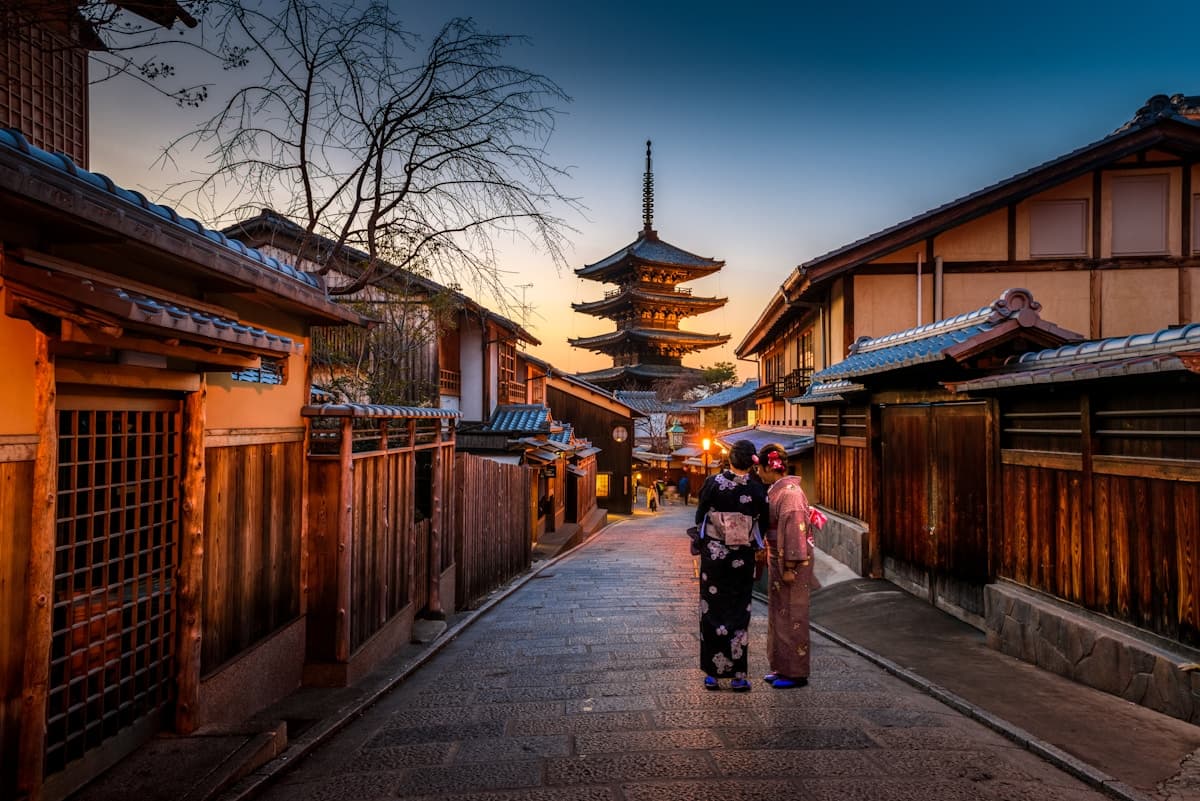
Kyoto
Where tradition still shapes everyday life.
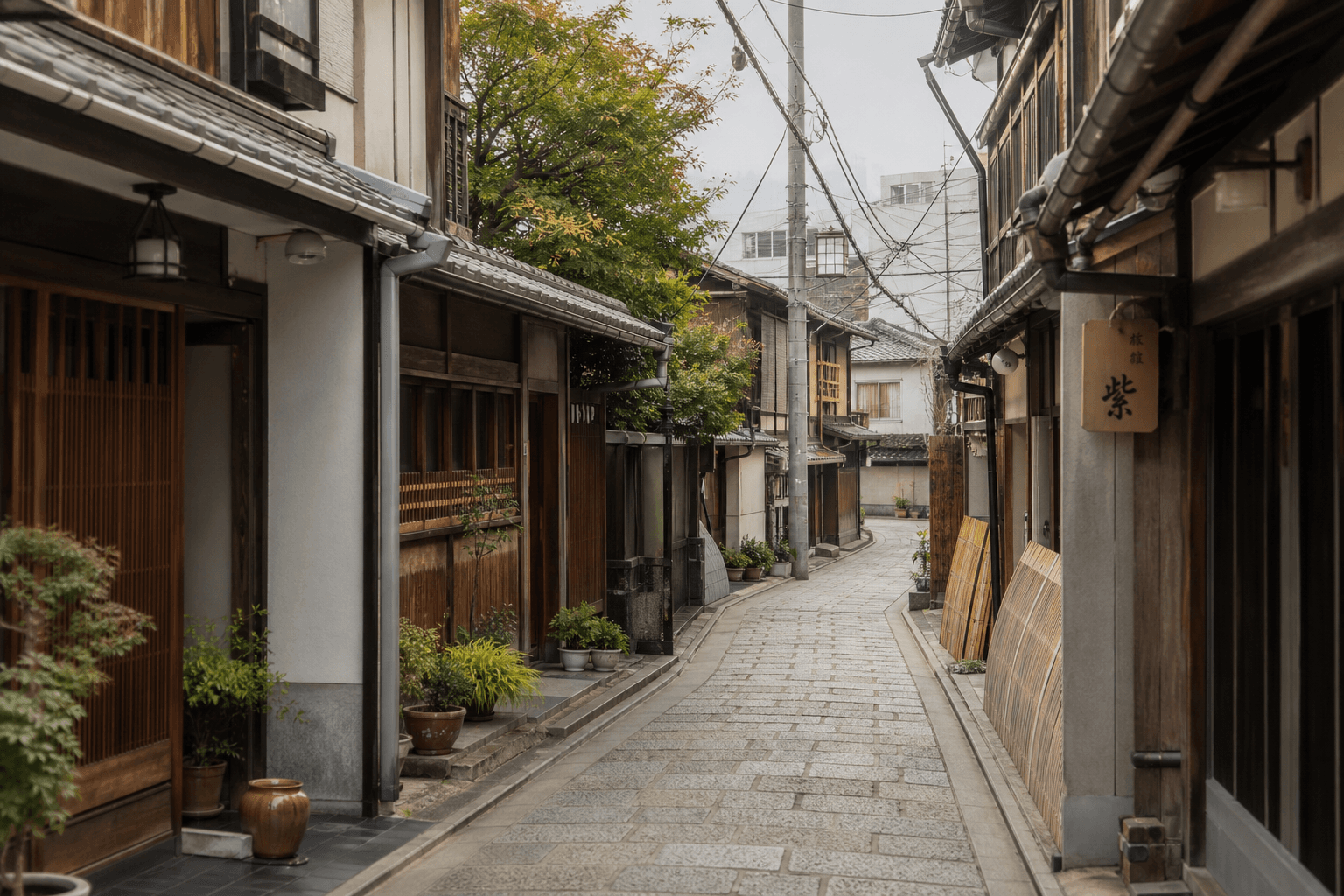
Which part of Kyoto best matches the way you want to travel — and what trade-offs come with that choice?
Choose the atmosphere that feels right to you before reading further.
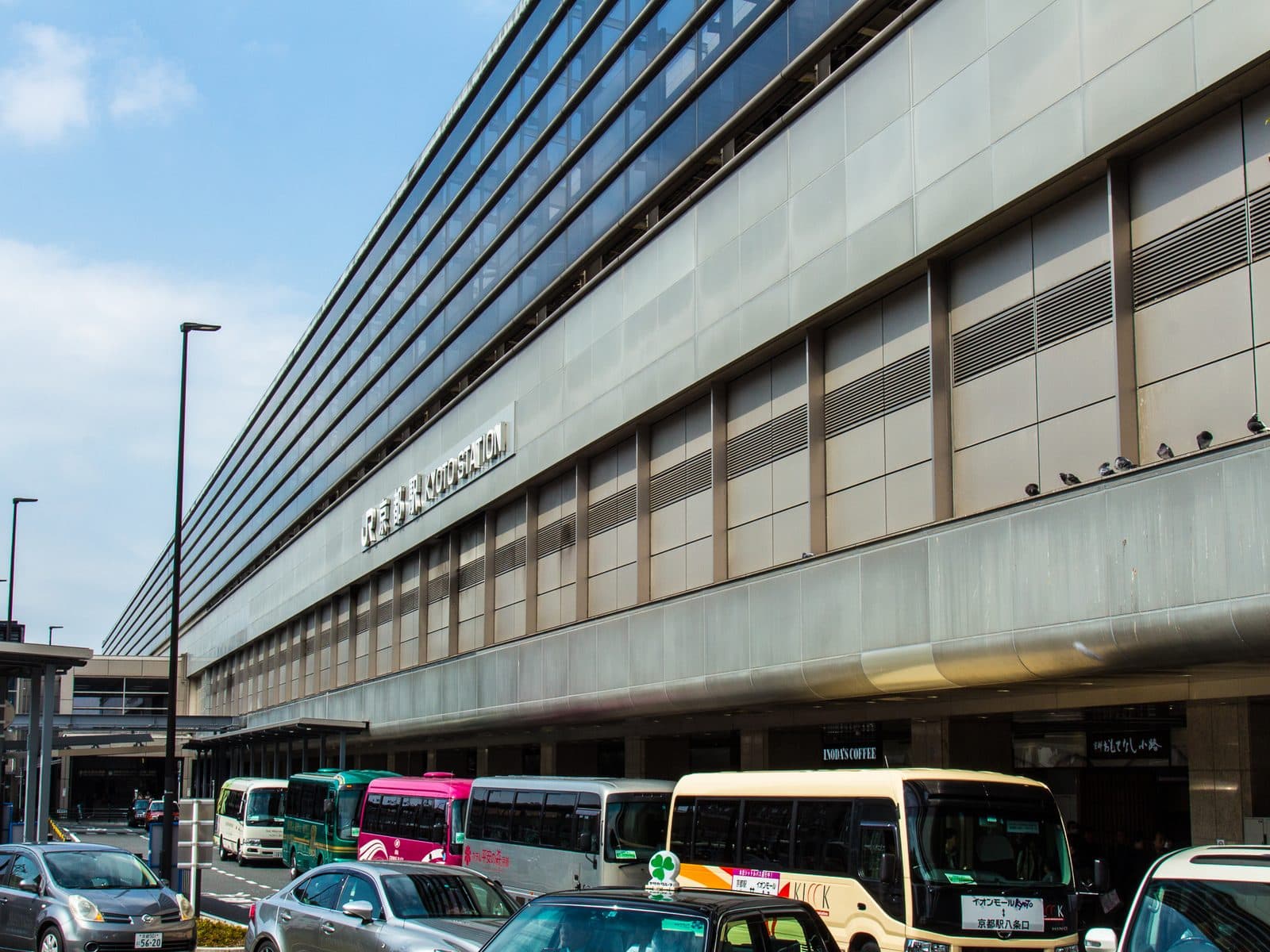
Kyoto Station
The city's rail gateway — Shinkansen and airport trains steps away, with less machiya-lane atmosphere at the door.
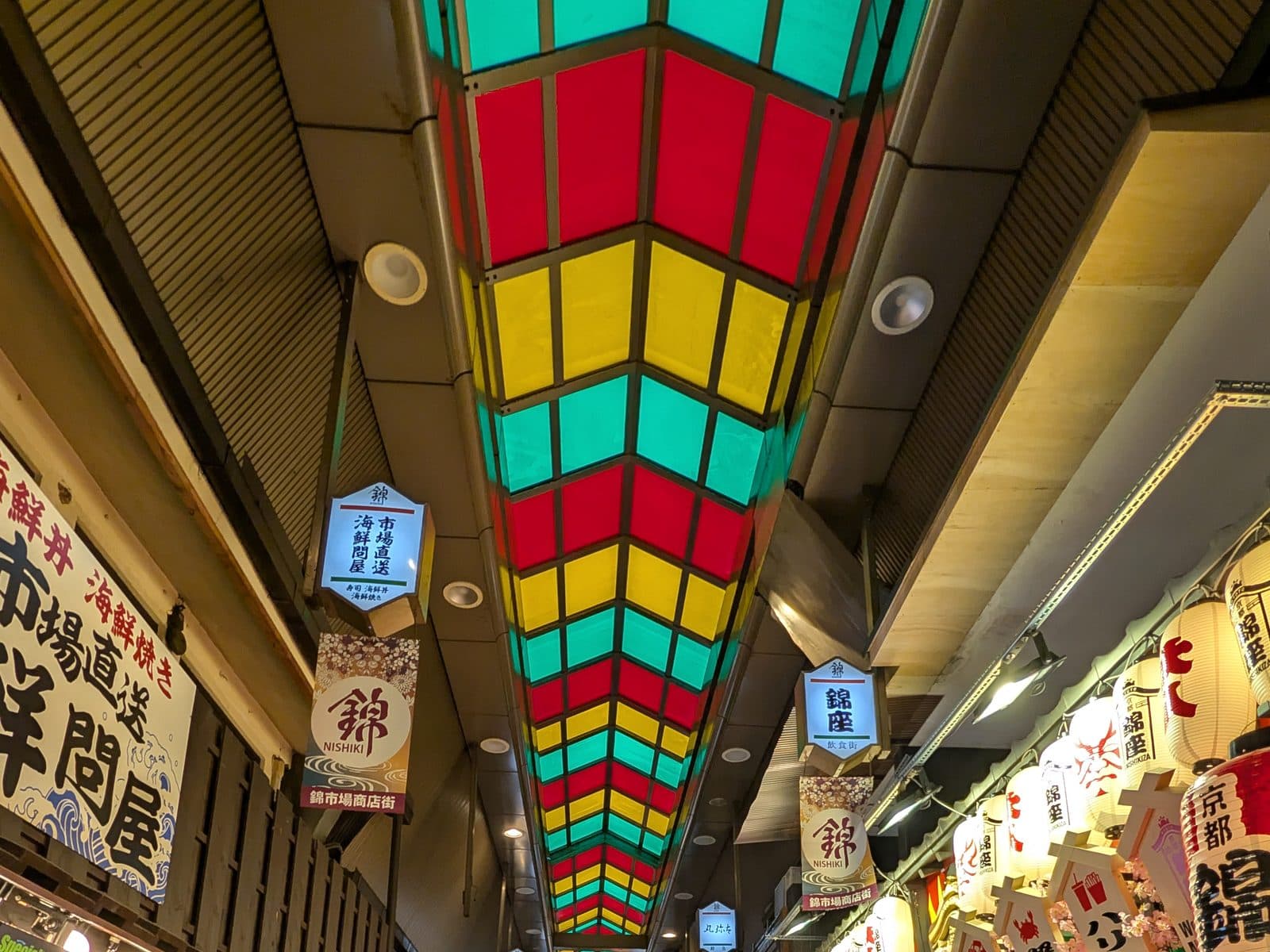
Downtown Kyoto
The commercial heart around Shijo-Kawaramachi — markets, river bridges, and evening dining within walking distance.
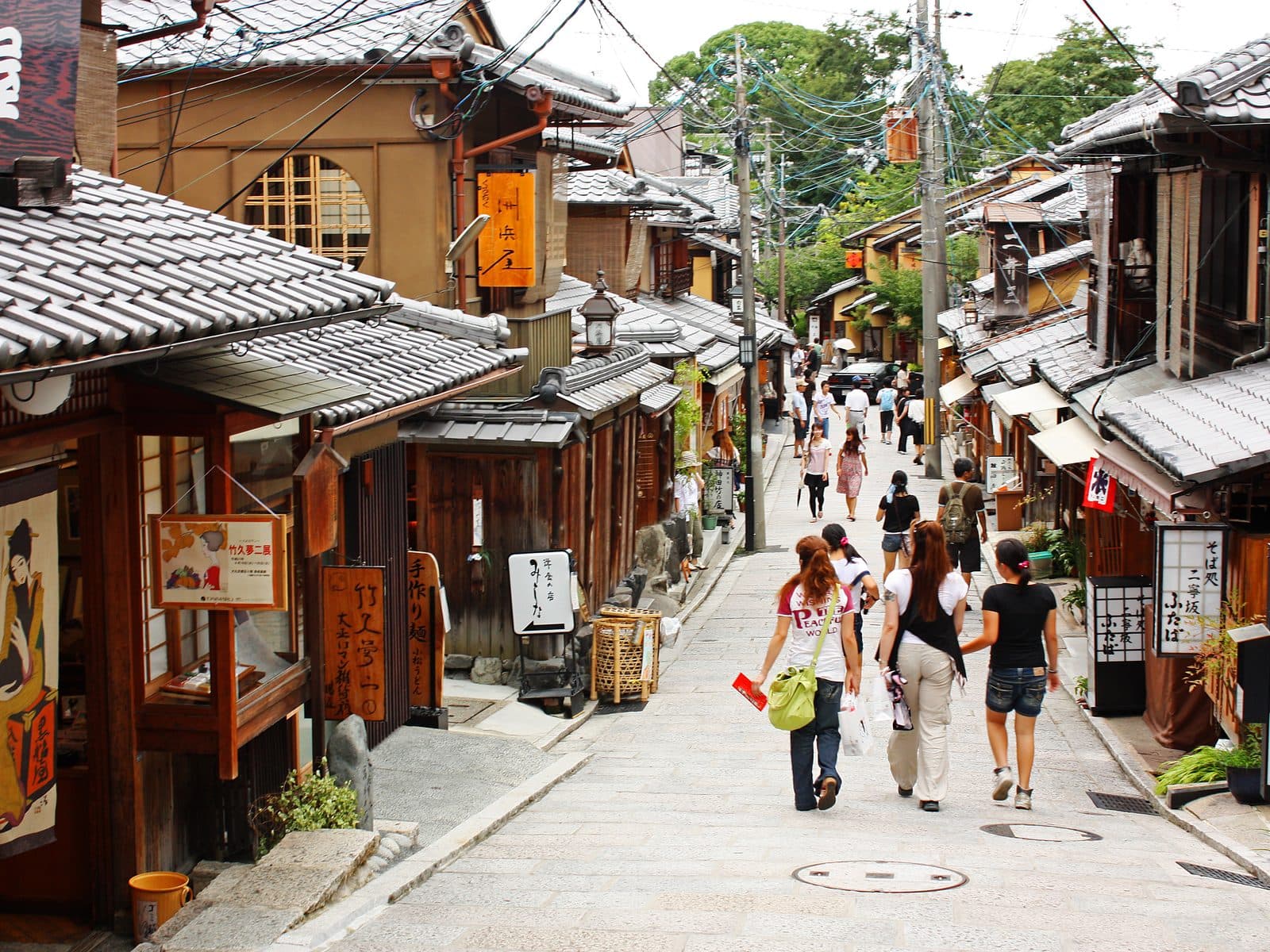
Gion & Higashiyama
Eastern hills temple streets — early mornings and lantern-lit evenings, with steeper lanes and less transit convenience.
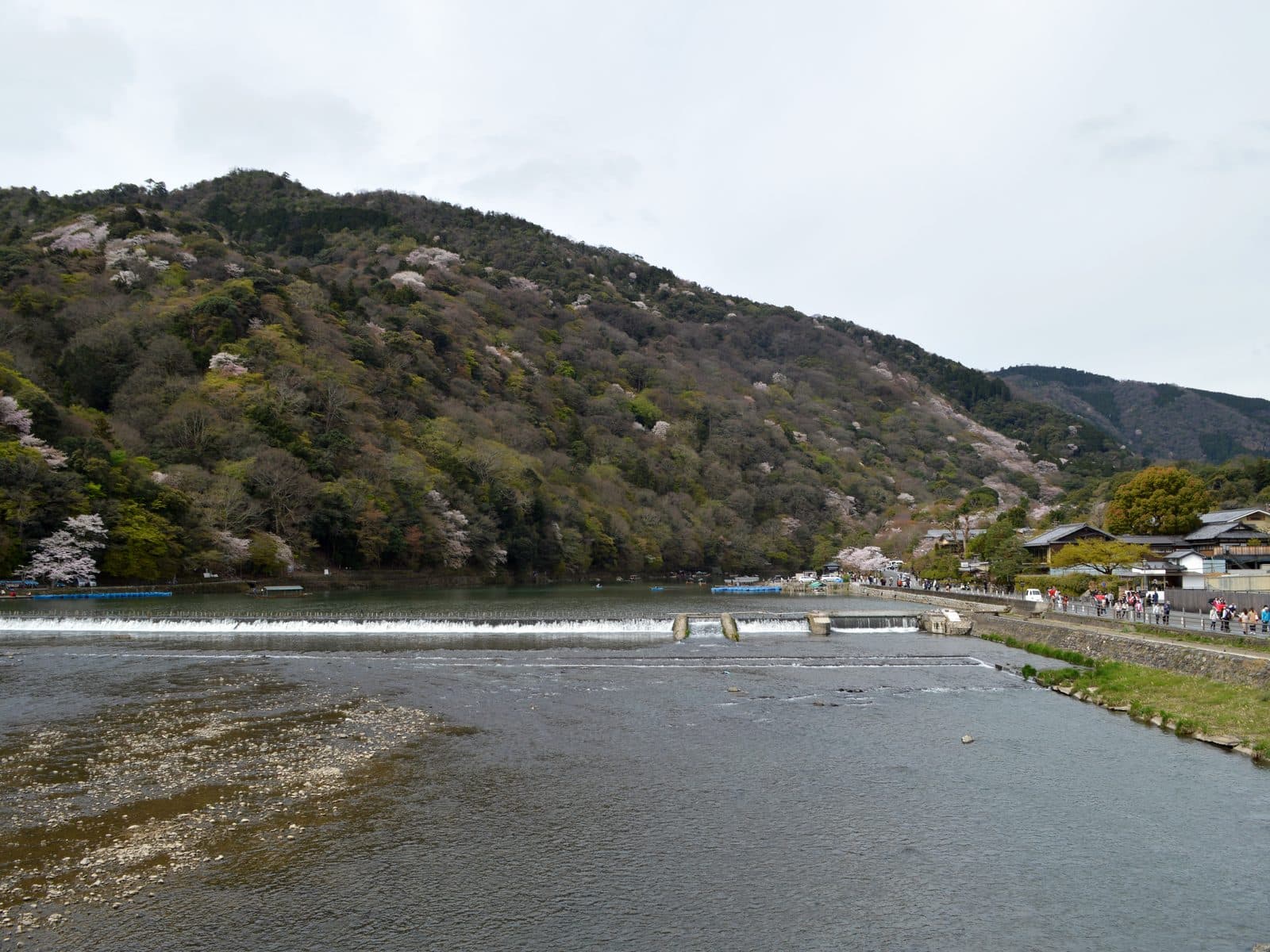
Arashiyama
Northwestern riverside quiet — a slower pace, with cross-city travel required for central sights.
Kyoto Station
The city's rail gateway — Shinkansen and airport trains steps away, with less machiya-lane atmosphere at the door.
Downtown Kyoto
The commercial heart around Shijo-Kawaramachi — markets, river bridges, and evening dining within walking distance.
Gion & Higashiyama
Eastern hills temple streets — early mornings and lantern-lit evenings, with steeper lanes and less transit convenience.
Arashiyama
Northwestern riverside quiet — a slower pace, with cross-city travel required for central sights.
Image credits
You open a map and drop three hotel pins. All are in Kyoto. All look plausible. One sits above Japan's second-largest train station, where Shinkansen departures and airport trains converge before breakfast. One rests in a covered market street where dinner might begin at Nishiki and end along the Kamogawa. One anchors a lane where temple slopes and machiya rooftops shape the hour you step outside.
The question is not which pin wins a ranking. It is which daily pattern fits the trip you are actually building — the walks you want before coffee, the station you can reach with luggage, the hour you expect to come home, and how much bus congestion you are willing to tolerate on the way.
Kyoto is compact enough to visit widely from almost anywhere, but not flat enough to treat every base as interchangeable. The useful work is matching where each day begins and ends to the way your days will move — the same decision logic as Where to Stay in Tokyo, applied to a city whose geography runs east–west between hills and rivers rather than around a loop line.
There is no single best neighborhood for every Kyoto trip. Match your base to how you move, what you want within walking distance, and how much station scale or hillside walking you can tolerate without friction.
Start with movement: Will you depart on Shinkansen from Kyoto Station, spend evenings along Kawaramachi and Pontocho, or want Kiyomizu slopes and Gion lanes outside your door? Then match atmosphere: modern gateway energy, grid downtown with markets and river walks, eastern temple-town mornings, or northwestern riverside calm.
Accommodation type is a separate decision. Ryokan vs Hotel in Japan covers the rhythm of the stay itself — hosted evening versus flexible checkout. This article covers where in Kyoto that stay should sit.
Specific hotel recommendations belong elsewhere. The decision here is neighborhood — the part of the city whose mornings and evenings you will inherit for several days.
Four common bases cover many first-time and return itineraries. None is universally better. Each trades one kind of convenience for another.
Stay near Kyoto Station when Shinkansen legs, airport trains, or multi-city day trips shape your calendar. The Tokaido Shinkansen stops here; KIX reaches the station in roughly an hour and fifteen minutes via Haruka, and Tokyo in about two hours and twenty minutes on the fastest Shinkansen. The station building is Japan's second largest after Nagoya — powerful for departures, less atmospheric at the doorstep.
Stay in Downtown Kyoto when Nishiki Market, Kawaramachi, Pontocho, and the Kamogawa should sit within evening walking distance. The Karasuma subway reaches Shijo in about four minutes from Kyoto Station — Kyoto City recommends subway over city bus for this leg because buses on key corridors stay congested.
Stay in Gion and Higashiyama when temple-town mornings and hillside lanes should begin steps from your room. Kiyomizu, Yasaka, Maruyama, and the Philosopher's Path reward unhurried days; walking from Shijo-Kawaramachi to Gion takes roughly fifteen minutes — often more pleasant than a crowded bus from the station.
Stay in Arashiyama when western riverside scenery and Sagano/Randen travel matter more than nightly returns through central Kyoto. JR Sagano reaches Saga-Arashiyama in about eleven minutes from Kyoto Station; the bamboo-grove core is crowded, but quieter Okusaga lies beyond.
Fushimi, Northern Kyoto, and Demachiyanagi appear in a later section as optional context — not as competing defaults.
Four common base areas — each fits a different daily rhythm.
Stay near Kyoto Station
Shinkansen legs, airport trains, or multi-city day trips shape your calendar; you want maximum rail connectivity and can navigate a large station.
Strong for arrival/departure days, Nara/Osaka/Hiroshima legs, and luggage services at the gateway; evenings feel modern and transit-oriented rather than lane-quiet.
Stay in Downtown Kyoto
You want Nishiki, Kawaramachi, Pontocho, and Kamogawa within evening walking distance and prefer subway-first movement over station buses.
Strong for food, shopping, and central grid walks; eastern temples and western Arashiyama remain reachable by train — usually not from the same doorstep.
Stay in Gion / Higashiyama
Temple-town mornings, hillside lanes, and Yasaka–Kiyomizu walks should begin steps from your room — and you accept slopes, crowds, and less station convenience.
Strong for eastern-hills rhythm and on-foot Gion evenings; weaker for same-day Shinkansen friction and rolling luggage on stone paths.
Stay in Arashiyama
Western riverside scenery, Sagano/Randen travel, and a slower northwestern pace matter more than nightly returns through central Kyoto.
Strong for Togetsu-kyo and temple walks nearby; cross-city days to Kiyomizu or Nishiki add transit time — bus-heavy routes from elsewhere are often slow.
No area is universally better. Match the base to how your days actually begin and end.
Four major bases illustrate how Kyoto neighborhoods differ in daily feel — not in quality. Use this table to compare trade-offs in parallel. Fushimi, Northern Kyoto, and Demachiyanagi appear in a dedicated section; they are optional alternatives rather than omissions.
Kyoto Station offers gateway rail centrality. Downtown Kyoto offers market-and-river evenings. Gion and Higashiyama offer eastern-hills temple rhythm. Arashiyama offers northwestern scenery with cross-city cost for central sights.
None of these columns declares a winner. A base that simplifies your mornings may complicate your evenings, and the reverse is equally true.
Four major bases compared by travel rhythm — not ranked.
| Criteria | Kyoto Station | Downtown Kyoto | Gion / Higashiyama | Arashiyama |
|---|---|---|---|---|
| Atmosphere | Modern gateway, towers and station concourses; historic temples a short range away | Grid downtown, covered arcades, river bridges, Pontocho lanes | Eastern hills temple streets, machiya lanes, Yasaka–Kiyomizu slopes | Northwestern riverside and temple scenery; busy core, quieter Okusaga beyond |
| Transport | Tokaido Shinkansen, Haruka, JR lines, Karasuma subway; many bus lines but crowded | Shijo subway, Hankyu Kawaramachi, Keihan Gion-Shijo; subway from station ~4 min | Keihan Gion-Shijo / Kiyomizu-Gojo; subway to Higashiyama; congested buses if defaulting from station | JR Sagano ~11 min from station; subway+Randen alternative; Hankyu via Katsura from Kawaramachi |
| Walking | Hongan-ji, To-ji, museum corridor nearby; downtown not walkable for most | Nishiki, Kamogawa, Pontocho, into Gion on foot; central sights mixed | Kiyomizu slopes, Ninenzaka, Yasaka, Maruyama largely on foot within district | Togetsu-kyo and temple lanes walkable locally; eastern Kyoto requires transit |
| Evenings | Station dining floors, urban tone; less machiya-lane quiet | Pontocho, Kawaramachi dining, Kamogawa riverbank energy | Gion lanes and eastern-hills dining; residential manners matter | Riverside calm compared with Kawaramachi; farther from central nightlife |
| Day trips | Strongest for Nara, Osaka, Hiroshima, Kanazawa Shinkansen legs | Central for city days; day trips still start from station rail | Eastern temples at doorstep; west and north require cross-city legs | Western temples local; central and eastern sights become daily transits |
| Best for | Rail-heavy itineraries, early departures, hands-free luggage at gateway | Food, markets, river evenings, subway-first city rhythm | Temple-dawn mornings, hillside walks, Gion-at-night stays | Western scenery, Randen atmosphere, slower northwestern days |
Atmosphere
Transport
Walking
Evenings
Day trips
Best for
Fushimi, Northern Kyoto, and Demachiyanagi are discussed in prose. Match any base to your actual daily route, not to a reputation.
Kyoto Station is the city's largest gateway and lies on the Tokaido Shinkansen line. JNTO describes the surrounding area as modern and urbanized compared with much of Kyoto — a contrast that becomes obvious the moment you exit into the station building, Japan's second-largest train station structure after Nagoya Station.
The station itself is complex: multiple levels, Shinkansen gates on the second floor, conventional-line transfer gates, and several bus stop clusters. Kyoto City publishes guidance on navigating without getting lost inside the building. Karasuma subway serves the station; city buses from the north side reach downtown in roughly fifteen to twenty minutes, though Kyoto City explicitly does not recommend city bus to the central and Nishiki area because stops, onboard crowding, and road congestion make the subway faster and more predictable.
Nearby within a short range: To-ji, Higashi and Nishi Hongan-ji, the Kyoto National Museum corridor, and Umekoji with its aquarium and railway museum. Fushimi Inari sits about ten minutes away by train — a visit destination, not a walk from most station hotels.
As a base, Kyoto Station suits itineraries where How to Use the Shinkansen in Japan departures recur — Nara, Osaka, Kobe, Hiroshima, Kanazawa — and where arrival and departure days matter more than machiya-lane evenings. Luggage storage and delivery services cluster at the gateway; sub-gate stations such as Nijo, Enmachi, Tofukuji, and Yamashina can reduce congestion when your destination allows.
The trade-off is tone. Evenings feel transit-oriented — station dining floors and urban energy rather than Pontocho lanes. If your trip is temple mornings followed by early nights in preserved streets, downtown or Gion may feel more natural. If your trip is defined by rail geography, Kyoto Station earns its place on the map.
Downtown Kyoto centers on Shijo-Kawaramachi — the commercial grid where covered arcades, river bridges, and narrow dining alleys meet. This is not a single hotel district name on a booking site, but the practical heart of central Kyoto for many travelers.
Nishiki Market stretches roughly four hundred meters as a covered arcade — the Kitchen of Kyoto. Eating while walking through the market is prohibited; eat at the shop or take food away. Kamogawa River and Shijo Ohashi bridge link west toward Kawaramachi and east toward Gion. Pontocho runs about five hundred meters as a narrow dining alley parallel to the river. Shinkyogoku shopping arcade adds dense retail within the same grid.
From Kyoto Station, the Karasuma subway reaches Shijo in about four minutes; a five-minute walk east brings you toward Nishiki. Kyoto City recommends this subway route over city bus. Hankyu Kyoto-Kawaramachi and Keihan Gion-Shijo stations sit at or near the intersection — useful when your day moves north on Keihan toward Gion or south toward Fushimi without returning to Kyoto Station.
Walking is the downtown advantage. Riverbank strolls, market browsing, and an evening walk into Gion via Hanamikoji and Yasaka often outperform a bus stuck in congestion. Central sights such as Nijo-jo, Kyoto Gosho, and Shimogamo-jinja remain reachable by subway, Keihan, or bus — typically as visits rather than from every downtown hotel pin.
The trade-off is cross-city geometry. Eastern temple slopes and western Arashiyama both require trains from here — manageable, but not from the same doorstep. Downtown suits travelers who want food, markets, and river evenings at the center of their rhythm.
Gion and Higashiyama occupy Kyoto's eastern hills — Kiyomizu slopes, Yasaka Shrine, Maruyama Park, and northward toward the Philosopher's Path and Ginkaku-ji. JNTO recommends at least one full day here, ideally two days and an evening, because temple clusters and preserved townscapes reward unhurried pacing.
The character is temple-town and residential overlap. Kiyomizu area streets hold ceramics and souvenir shops; Gion developed near Yasaka-jinja as an entertainment district of machiya and teahouses. Within the district, most sites sit a leisurely walk apart — until slopes and crowds enter the calculation.
From Kyoto Station, direct city bus to Gojo-zaka is often congested. Kyoto City recommends train plus bus, or subway to Higashiyama Station followed by about a thirty-five-minute scenic walk via Nene-no-michi, Ninenzaka, and Sannenzaka. Keihan Kiyomizu-Gojo sits about twenty-five minutes on foot from Kiyomizu-dera. From Shijo-Kawaramachi, walking east through Gion is the recommended approach — roughly fifteen minutes along Shijo and Gojo.
Morning rhythm favors early temple visits; Kyoto City promotes off-peak hours to avoid corridor congestion. Evening rhythm brings Gion dining lanes and Yasaka area energy — with residential friction. Photography of geiko and maiko without permission is prohibited; Hanamikoji traffic manners matter in a district where people live beside the sights. For broader shared-space cues — voice, photography, queue behaviour in residential lanes — see Japanese Etiquette Explained.
Luggage practicality is the hidden cost. Steep stone lanes on Ninenzaka and Sannenzaka punish rolling bags on arrival day. A Gion base suits travelers who accept slopes and transit complexity in exchange for temple-town mornings and on-foot evenings — and who may forward luggage rather than wheel it uphill. For city context beyond neighborhood choice, see the Kyoto destination page.
Arashiyama sits in northwestern Kyoto — the Saga and Arashiyama district known for Togetsu-kyo Bridge and the bamboo grove, with quieter Okusaga beyond the crowded core. Kyoto City notes that the bamboo grove draws heavy foot traffic and preservation concerns; the district's appeal extends into less congested western lanes when you walk farther from the bridge.
Historic western retreat of aristocrats; riverside and temple scenery define the pace. As a sleep base, mornings and evenings stay local — cormorant fishing in summer, temple walks along the river — while central and eastern Kyoto require cross-city transit on other days.
From Kyoto Station, JR Sagano Line rapid service reaches Saga-Arashiyama in about eleven minutes, plus roughly eight minutes on foot to Togetsu-kyo. Kyoto City does not recommend bus from the station — crowded and slow on this corridor. A less congested rail alternative runs subway Karasuma to Tozai, then Uzumasa Tenjingawa, then Keifuku Randen to Arashiyama. From Kawaramachi, Hankyu via Katsura transfer reaches Hankyu Arashiyama; Randen from Shijo-Omiya offers a scenic private-line approach.
As a visit from downtown or Gion, Arashiyama fits a dedicated day. As a base, it suits travelers who want western scenery at their door and accept that Kiyomizu, Nishiki, and Gion become daily transits rather than evening walks.
The trade-off is distance. Cross-city movement to eastern sights adds time every day you split your itinerary between west and east. Arashiyama works when the northwestern pace is the point — not when it is one item on a temple checklist centered elsewhere.
Three areas appear often on maps but rarely serve as a whole-trip base for first-time visitors. They belong here as optional context — not as a fifth column competing with Kyoto Station, Downtown, Gion, or Arashiyama.
Fushimi, in southern Kyoto, is a historic canal and sake-brewery town. Fushimi Inari lies about ten minutes from Kyoto Station by train — strong as a morning visit or a single-night sake focus, not as a general base when most sights sit north and east.
Northern Kyoto — Kurama, Kibune, Ohara — offers hills, riverside dining, and onsen access via Eizan line and bus. Kyoto City's access map shows Ohara about sixty minutes from Kyoto Station. Quiet and nature-forward; poor fit if daily plans center on central grid and eastern temples.
Demachiyanagi, the Keihan terminus, gates Shimogamo and northern Eizan lines. Useful as a transit reference when reading maps; rarely the best anchor for an entire itinerary.
If one of these areas matches a specific passion — sake breweries, mountain walks, a remote ryokan night — it can earn a night or two. For most trips, the four primary bases above carry the daily rhythm more cleanly.
Trip style narrows the map faster than hotel filters.
First-time visitors who expect Shinkansen or airport trains on day one often lean toward Kyoto Station. First-time visitors who want market streets and river evenings often lean toward Downtown. First-time visitors who prioritize Kiyomizu and Gion on foot often lean toward Higashiyama — accepting slopes and luggage friction.
Temple-heavy itineraries reward Gion and Higashiyama when dawn visits and hillside walks repeat daily. Food-focused trips reward Downtown — Nishiki, Pontocho, and Kawaramachi within walking radius. Day-trip-heavy calendars reward Kyoto Station — Nara, Osaka, Hiroshima, and Kanazawa depart from the gateway rail spine.
Slow walkers benefit from bases where main sights sit inside one walkable district — Gion for eastern hills, Downtown for grid and river, Arashiyama for western lanes. Families may prefer Downtown's flat grid or Kyoto Station's straightforward logistics over steep stone paths with strollers.
Shinkansen-heavy itineraries reward station proximity. Japan Rail Pass holders still face the same geography — the pass does not change which station your hotel faces. A ryokan night in Kyoto belongs where arrival timing and evening rhythm fit; see Ryokan vs Hotel in Japan before choosing a machiya lane over a station exit.
Planning Less, Seeing More applies when choosing one base versus splitting a long Kyoto stay — station nights for arrival, downtown or Gion for the middle — if luggage and checkout logistics are manageable.
Kyoto rewards travelers who combine trains and buses deliberately rather than defaulting to one mode.
Kyoto City's Getting Around guidance recommends using trains and buses together. The Subway and Bus One-Day Pass covers city bus, subway, and some private buses — useful on days that mix modes. An IC card handles taps on subway and many bus lines without calculating each fare separately.
Buses matter — and frustrate. Kyoto City repeatedly warns that city buses on key corridors stay congested and slow: Kyoto Station to central/Nishiki, Kyoto Station to Kiyomizu, Shijo to Arashiyama. Subway-first legs where available — Karasuma from Kyoto Station to Shijo, JR Sagano to Arashiyama — often outperform bus-only routes. For rear-board payment, numbered tickets, and stop buttons on Kyoto City Bus, see Taking the Bus in Japan.
Walking fills gaps buses cannot improve. Kawaramachi to Gion, Nene-no-michi to Kiyomizu from Higashiyama subway, riverbank paths downtown — these walks are part of the itinerary, not failures of planning.
Sub-gate stations reduce station congestion when your destination allows: Nijo, Enmachi, Tofukuji, Yamashina depending on direction. Kyoto City encourages avoiding JR Kyoto Station as a sightseeing disembark point when a closer stop exists.
For intercity legs, How to Use the Shinkansen in Japan covers boarding and luggage; neighborhood choice determines how often you return to Kyoto Station versus living from Kawaramachi or Keihan lines.
Luggage shapes arrival day more than any sightseeing plan.
Kyoto Station offers many storage points and delivery services between station and accommodation — Kyoto City and JNTO both promote hands-free sightseeing rather than dragging suitcases through crowded buses. The same hub also hosts signed restrooms inside and outside the ticket area, which makes arrival day easier when your room is not ready — see Using Public Toilets in Japan for how station facilities typically work. Luggage forwarding in Japan between hotels can turn a travel morning into a light-bag Shinkansen day rather than a porter exercise.
Gion and Higashiyama punish wheels. Ninenzaka and Sannenzaka are steep stone lanes — poor fit for rolling bags after a long flight. Downtown and Kyoto Station tolerate luggage more gracefully; forwarding to a hillside hotel before you walk uphill is often the calmer choice.
Arrival time matters. A late KIX arrival via Haruka may favor a hotel directly on a known Kyoto Station exit — regardless of district charm — more than a Gion pin you cannot reach comfortably after dark with two suitcases. Save emergency numbers and note koban locations near your station exit — Safety in Japan — before hillside navigation after dark. Pair first-hour needs with Convenience Stores in Japan for water, cash, and a charged phone before neighborhood character dominates.
Checkout day follows the same logic. Store bags at Kyoto Station, forward to Osaka or Tokyo, or carry only an overnight bag into temple slopes — choose based on tomorrow's movement, not today's hotel address alone.
Is Gion the same as downtown?
No. Downtown centers on Shijo-Kawaramachi — flat grid, markets, arcades, river bridges. Gion and Higashiyama sit east in the hills — temple slopes, machiya lanes, different morning and evening rhythm. They connect by a walk of roughly fifteen minutes from Kawaramachi, but they feel like different daily patterns.
Can I walk everywhere in Kyoto?
Within a district, often yes — Gion to Kiyomizu slopes, Nishiki to Pontocho, Arashiyama riverside lanes. Across the city, no — eastern and western sights require trains or buses, and buses on congested corridors are slower than maps suggest.
Should I stay near Fushimi Inari?
Usually as a visit, not a base. Fushimi Inari is about ten minutes from Kyoto Station by train — close for a morning, distant from Nishiki, Gion, and most central sights. Fushimi suits a sake-focused night, not a general first trip anchor.
Is Kyoto Station too far from the sights?
Not by train — subway to Shijo is about four minutes. By bus, often yes — congestion makes station buses to central areas unrecommended. Station works when rail matters more than doorstep atmosphere.
Do I need a bus pass?
The Subway and Bus One-Day Pass helps on mixed-mode days. Many travelers combine it with an IC card for flexibility. Neither replaces planning which legs should be subway or walk instead of bus.
Should I split my stay across two neighborhoods?
Sometimes. Arrival at Kyoto Station, culture nights in Gion, or a western day cluster in Arashiyama can justify two pins if checkout and luggage forwarding are manageable — see Planning Less, Seeing More for when one base beats two.
List your non-negotiable movements first — which station, which line, which hour — then sketch east–west geography before you filter hotels.
Stay near the stop you will actually use, not the stop that sounds most picturesque. Verify whether your hotel means Kyoto Station, Shijo, Kawaramachi, or a bus stop on a congested corridor.
Default to subway and train for Kyoto Station to downtown; treat city bus as a planned leg, not an automatic choice.
Consider Kyoto Station for arrival and departure nights and a different rhythm for the middle of your stay if the trip is long enough to justify one checkout.
Pair blossom or foliage plans with official forecasts rather than historical peak guesses — accommodation demand rises in both seasons; see When Is the Best Time to Visit Japan?.
Forward luggage before climbing Gion slopes — hands-free travel is promoted locally for good reason.
Evening dining near your base differs between downtown grids and hillside lanes — see Japanese Restaurants Explained for how restaurant types change what to expect at the door.
If you already chose ryokan versus hotel, place that stay where the evening rhythm fits — a ryokan night rarely belongs in a district you chose only for station transfer convenience.
Once accommodation type is settled, neighborhood choice matters more than brand name — the same logic applies in Tokyo and Kyoto alike.
Name what each Kyoto day must accomplish: a Shinkansen departure, a Nishiki morning, a Kiyomizu dawn, an Arashiyama riverside walk, a Nara day trip.
Mark those needs on a simple east–west sketch. Notice which stop repeats — Kyoto Station, Shijo, Gion-Shijo, Saga-Arashiyama.
Choose neighborhood before hunting specific hotels — filters hide trade-offs this article is meant to surface.
Confirm KIX or Tokyo arrival time and whether night one requires a known station exit rather than a hillside lane.
Read How to Use the Shinkansen in Japan if Kyoto Station anchors your departures.
Book ahead for cherry blossom and autumn foliage weeks — Kyoto City notes seasonal accommodation pressure during peak foliage and blossom periods.
Load an IC card plan before you depend on station Wi-Fi underground.
Leave one Kyoto day deliberately open — a neighborhood to revisit after you have walked your first choice — so the base can prove itself before the rest of Kansai pulls you onward.
The right Kyoto neighborhood is not the one with the most recommendations. It is the one whose mornings and evenings match the trip you are already building — the station you can reach with luggage, the streets you want after dinner, and the pace you can keep without fighting bus congestion every day.
Kyoto Station, Downtown, Gion and Higashiyama, and Arashiyama each offer a real daily rhythm. Each collects a different cost in transfer time, slope walking, or evening atmosphere. None is universally correct.
Choose the area the way you would choose a train seat: not because it is famous, but because it fits what comes before and after. When the neighborhood matches the way you travel, the hotel becomes infrastructure again — and Kyoto becomes the point.
If you have compared Kyoto neighborhoods and know which base fits your trip, the next step is choosing a specific place within that area.
Stay near the places you will actually spend time — the station you will use most days, the streets you want after dinner, and the walks you want before coffee. Japan Atlas will add curated area collections here when editorial vetting is complete. For now, your neighborhood decision is the planning work that matters.
Future: neighborhood hotel collections by area — editorial picks chosen for station access and daily rhythm, not commission rankings.
Continue exploring this way of seeing Japan.