Where to Stay in Takayama: Best Areas for First-Time Visitors
Which Takayama area fits your trip — station and bus convenience, old-town atmosphere, riverside access, quiet surroundings, or a separate onsen stay?
- Category
- Travel
- Central Question
- Which Takayama area fits your trip — station and bus convenience, old-town atmosphere, riverside access, quiet surroundings, or a separate onsen stay?
Which Takayama feels like your trip?
Choose the atmosphere that feels right to you before reading further.
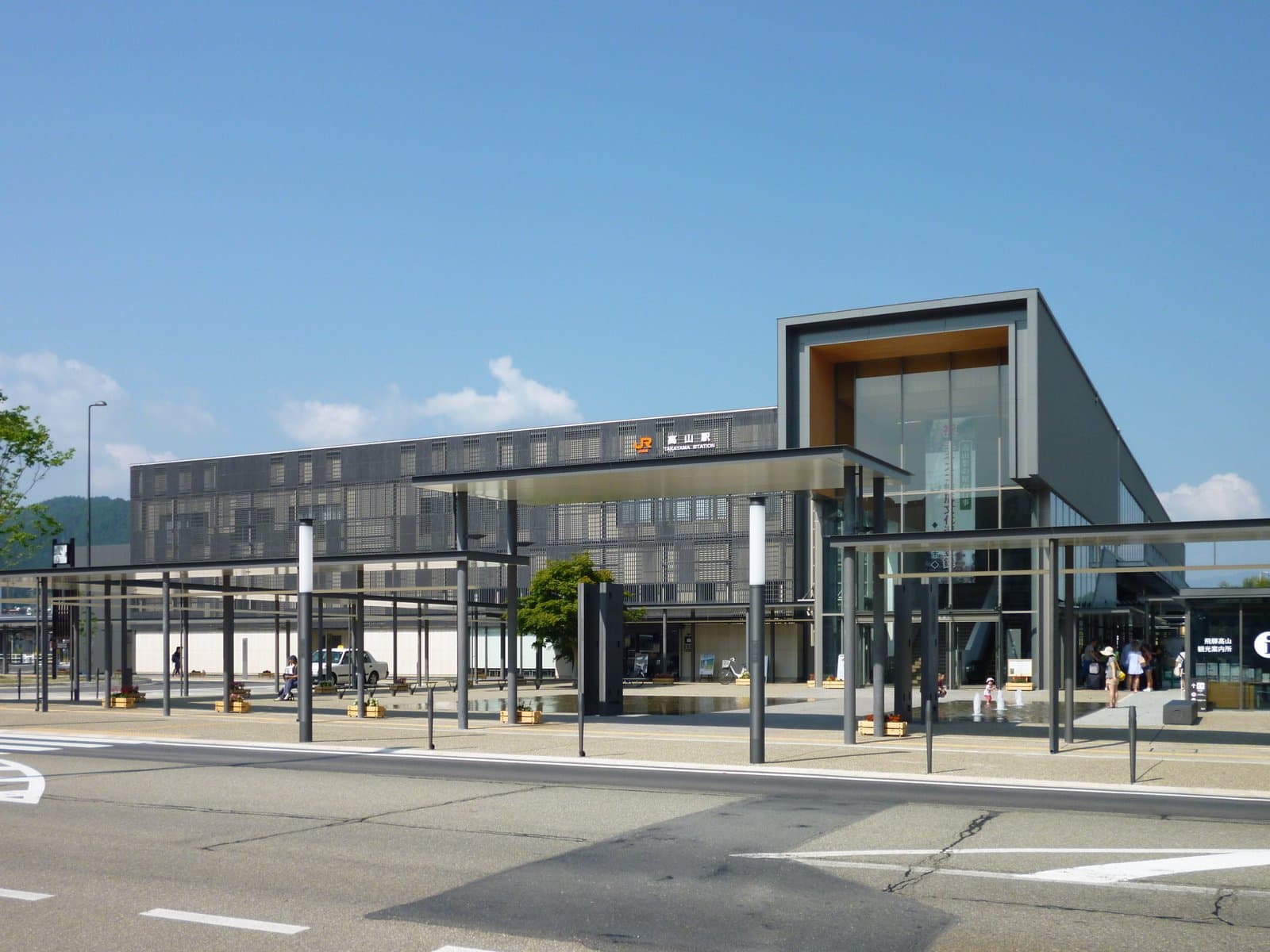
Takayama Station / Hanasatomachi
The functional core of the city — Takayama Station and the Nohi Bus Center sit side by side, with residential Hanasatomachi just beyond.
- Transport hub
- Practical
- Short stays
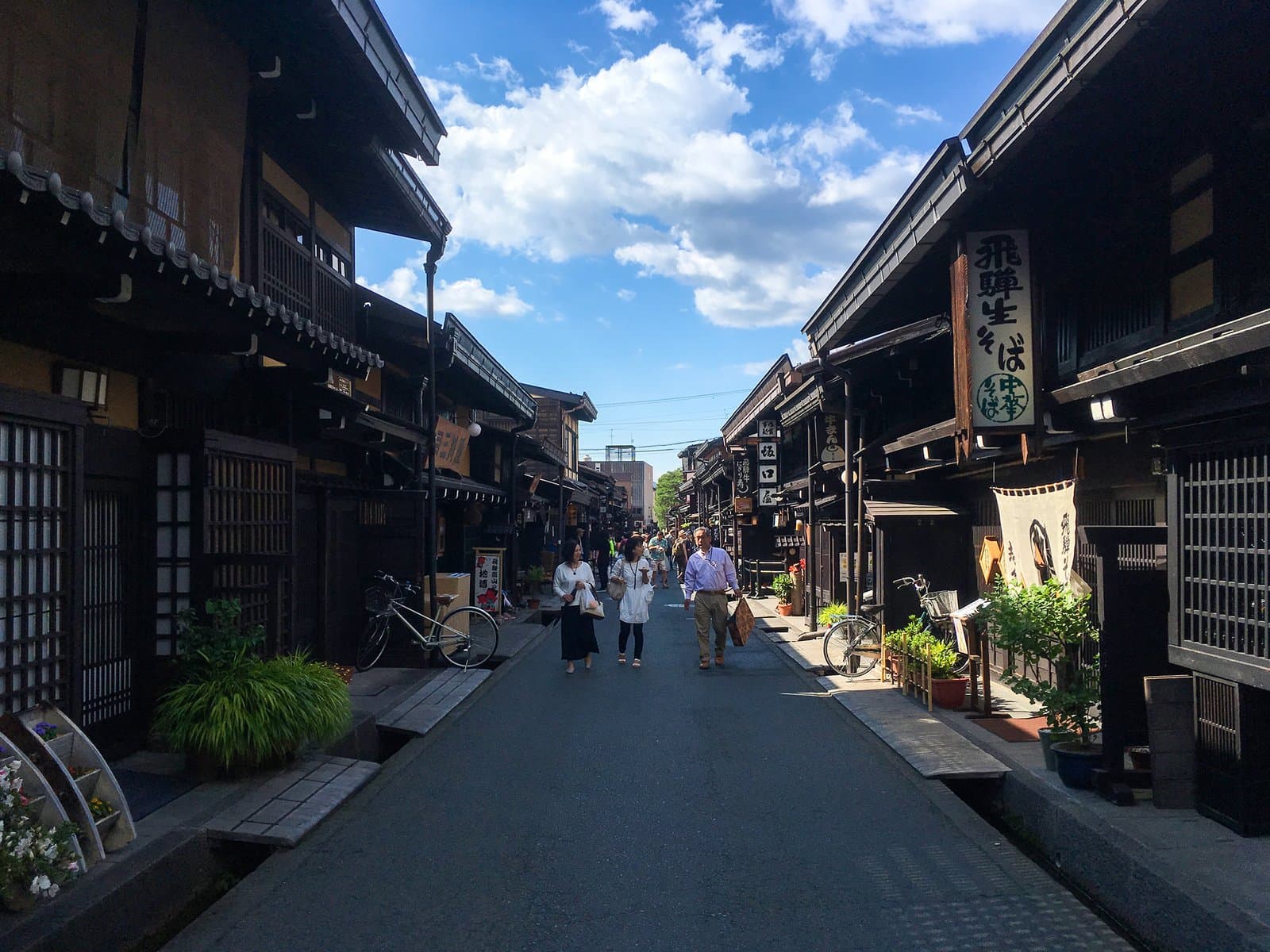
Sanmachi / Nakabashi
Takayama's preserved merchant district — dark-wood facades, sake breweries, and craft shops along streets built for walking, not driving.
- Old town
- Preserved streets
- Evening walks
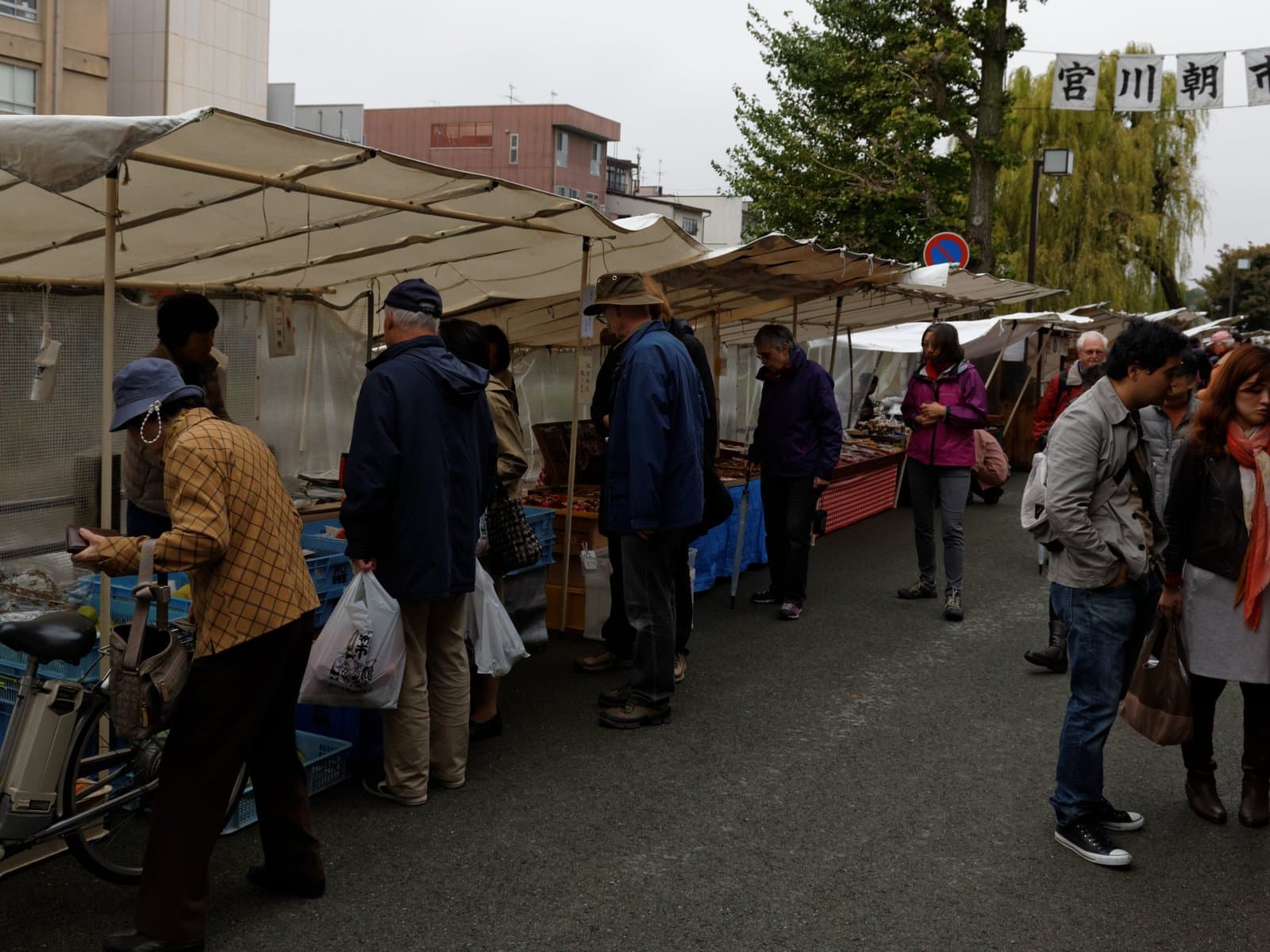
Honmachi / Miyagawa
A working riverside street — the Miyagawa Morning Market's stalls, dining, and shopping between the station and the old town.
- Riverside
- Morning market
- Central
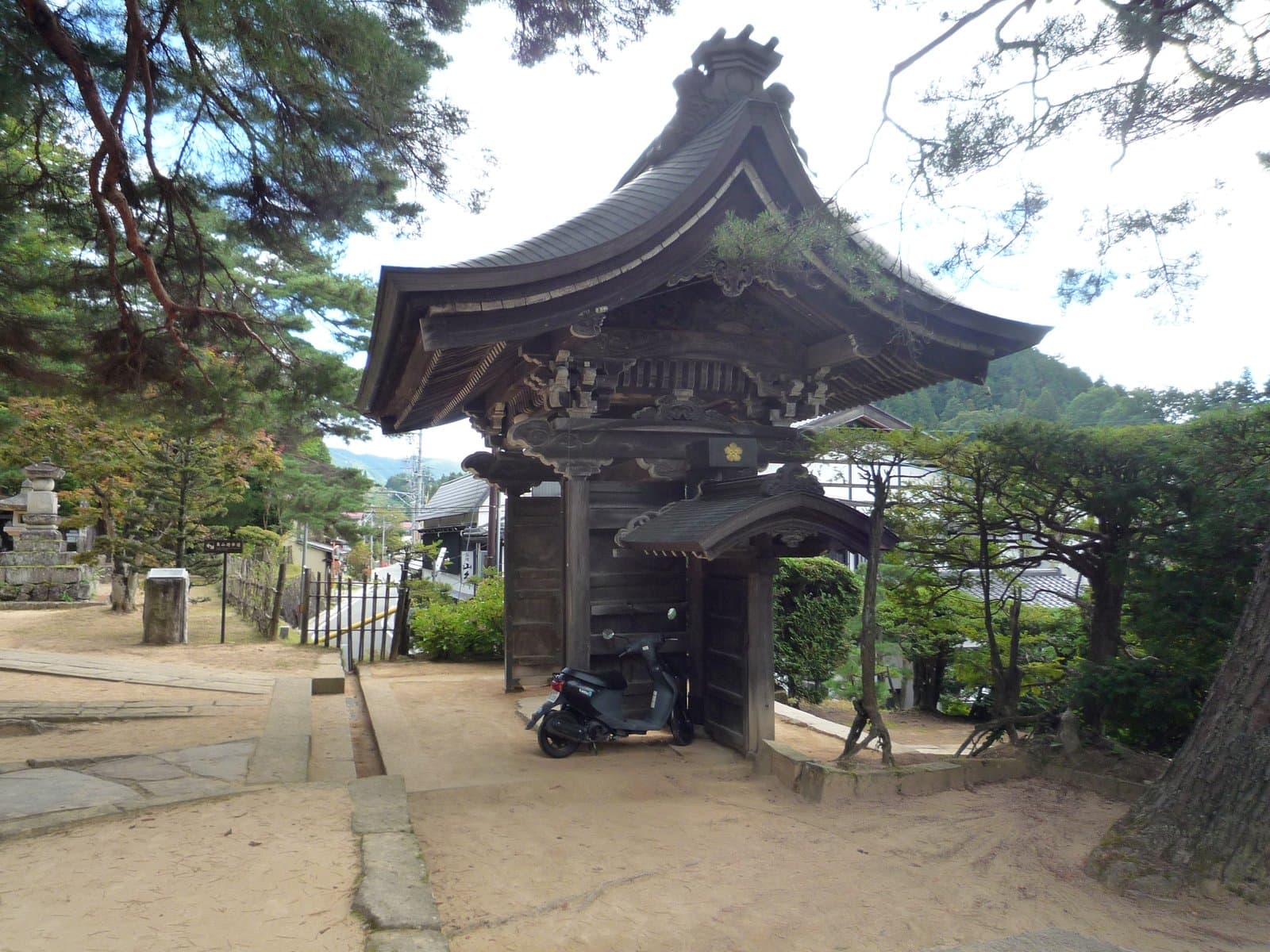
Higashiyama / Teramachi
Temple streets and wooded quiet on the hillside above the old town — Takayama's slowest, least-visited walking course.
- Quiet
- Temples
- Hillside
Takayama Station / Hanasatomachi
The functional core of the city — Takayama Station and the Nohi Bus Center sit side by side, with residential Hanasatomachi just beyond.
- Transport hub
- Practical
- Short stays
Sanmachi / Nakabashi
Takayama's preserved merchant district — dark-wood facades, sake breweries, and craft shops along streets built for walking, not driving.
- Old town
- Preserved streets
- Evening walks
Honmachi / Miyagawa
A working riverside street — the Miyagawa Morning Market's stalls, dining, and shopping between the station and the old town.
- Riverside
- Morning market
- Central
Higashiyama / Teramachi
Temple streets and wooded quiet on the hillside above the old town — Takayama's slowest, least-visited walking course.
- Quiet
- Temples
- Hillside
Image credits
- Takayama Station / Hanasatomachi — Wikimedia Commons (Takayama Station.jpg) by EXECUTOR — CC0
- Sanmachi / Nakabashi — Wikimedia Commons (Sanmachi Takayama 201706.jpg) by Wpcpey — CC BY-SA 4.0
- Honmachi / Miyagawa — Wikimedia Commons (Morning market, 11272886764.jpg) by KimonBerlin — CC BY-SA 2.0
- Higashiyama / Teramachi — Wikimedia Commons (20131010 51 Takayama - Higashiyama Walking Course, 10491225116.jpg) by Sjaak Kempe — CC BY 2.0
Takayama's old town is compact enough to reach on foot from almost anywhere in the city center, but where you sleep still changes the trip. This is a town built around a single station and bus hub, a preserved merchant district a short walk away, and a mountain onsen region an hour further out — three different kinds of stay that get lumped together as "Takayama" in most searches.
The station handles nearly every regional connection: the Nohi Bus Center sits beside it, and the Shirakawa-go and Kamikochi routes, along with the Hida limited express to Nagoya, all start there. The old town has no station of its own, so accommodation choice becomes a trade-off between arrival convenience and walking distance to the streets you came to see — a gap that widens in winter, when snow adds real time to that walk.
The Short Answer
Stay at Takayama Station / Hanasatomachi if you're arriving by train or bus, staying briefly, carrying heavy luggage, or catching an early regional departure. It's the most functional base — level ground, short taxi rides — but some streets read as ordinary rather than historic, and old-town evenings are a walk away.
Stay in Sanmachi / Nakabashi for the strongest old-town atmosphere: preserved merchant streets, morning and evening walks before the day-trip crowds arrive or after they've left. Accommodation choice is narrower here, some streets restrict vehicle access, and dinner options thin out earlier than expected.
Stay in Honmachi / Miyagawa for a central balance — closer to the station than Sanmachi, still an easy walk to the old town, with riverside paths and the Miyagawa Morning Market nearby. It's less visually distinctive than Sanmachi, and much of its activity is concentrated in the morning.
Stay in Higashiyama / Teramachi for quiet mornings among temple streets and residential lanes, away from the busiest paths. Expect a longer walk with luggage, fewer evening dining choices, and streets that get harder to move on after snowfall.
None of these is the default right answer — it depends on how you're arriving, how much you're carrying, and what you want your evenings to feel like.
Which Area Fits Your Takayama Trip?
Four areas, one trade-off — station and bus convenience against old-town atmosphere, riverside access, and quiet.
Four areas — each trades convenience for atmosphere differently.
Stay at Takayama Station / Hanasatomachi
Arriving by train or bus, staying one or two nights, heavy luggage, or an early regional departure.
Most functional base; some streets feel practical rather than historic.
Stay in Sanmachi / Nakabashi
Old-town atmosphere and walking the preserved streets before or after the crowds matter most.
Fewer rooms and vehicle limits; some dining closes early.
Stay in Honmachi / Miyagawa
A central balance between station access and old-town proximity, with riverside walks and the morning market nearby.
Less distinctive than Sanmachi; market activity is mostly daytime.
Stay in Higashiyama / Teramachi
Quiet mornings, temple streets, and a slower pace matter more than convenience.
Longer walk with luggage; winter conditions add difficulty.
Comparing Takayama Areas
Read the columns side by side. Each area solves a different visit, not a better one.
Four areas compared on the same criteria — not ranked.
| Criteria | Takayama Station / Hanasatomachi | Sanmachi / Nakabashi | Honmachi / Miyagawa | Higashiyama / Teramachi |
|---|---|---|---|---|
| Station and bus access | Direct — hub itself | 10–15 min walk | 5–10 min walk | 15–20 min walk |
| Old-town access | 10–15 min walk | Immediate | 5–10 min walk | 10–15 min walk, uphill |
| Dining | Widest, includes everyday options | Concentrated, early closing | Moderate, mixed local | Sparse, early closing |
| Evening atmosphere | Functional, transit-town | Quiet once crowds leave | Ordinary, riverside-commercial | Quietest, residential |
| Luggage ease | Best | Fair — some vehicle limits | Good | Limited, more walking |
| Quiet | Moderate, some traffic | Quiet at night | Moderate | Quietest |
| Winter walking | Cleared regularly, flat | Flat but narrower lanes | Flat | Slopes and steps add difficulty |
| Main drawback | Feels functional, not historic | Fewer rooms, vehicle limits | Less visually distinctive | Farthest with luggage |
Station and bus access
- Takayama Station / Hanasatomachi
- Direct — hub itself
- Sanmachi / Nakabashi
- 10–15 min walk
- Honmachi / Miyagawa
- 5–10 min walk
- Higashiyama / Teramachi
- 15–20 min walk
Old-town access
- Takayama Station / Hanasatomachi
- 10–15 min walk
- Sanmachi / Nakabashi
- Immediate
- Honmachi / Miyagawa
- 5–10 min walk
- Higashiyama / Teramachi
- 10–15 min walk, uphill
Dining
- Takayama Station / Hanasatomachi
- Widest, includes everyday options
- Sanmachi / Nakabashi
- Concentrated, early closing
- Honmachi / Miyagawa
- Moderate, mixed local
- Higashiyama / Teramachi
- Sparse, early closing
Evening atmosphere
- Takayama Station / Hanasatomachi
- Functional, transit-town
- Sanmachi / Nakabashi
- Quiet once crowds leave
- Honmachi / Miyagawa
- Ordinary, riverside-commercial
- Higashiyama / Teramachi
- Quietest, residential
Luggage ease
- Takayama Station / Hanasatomachi
- Best
- Sanmachi / Nakabashi
- Fair — some vehicle limits
- Honmachi / Miyagawa
- Good
- Higashiyama / Teramachi
- Limited, more walking
Quiet
- Takayama Station / Hanasatomachi
- Moderate, some traffic
- Sanmachi / Nakabashi
- Quiet at night
- Honmachi / Miyagawa
- Moderate
- Higashiyama / Teramachi
- Quietest
Winter walking
- Takayama Station / Hanasatomachi
- Cleared regularly, flat
- Sanmachi / Nakabashi
- Flat but narrower lanes
- Honmachi / Miyagawa
- Flat
- Higashiyama / Teramachi
- Slopes and steps add difficulty
Main drawback
- Takayama Station / Hanasatomachi
- Feels functional, not historic
- Sanmachi / Nakabashi
- Fewer rooms, vehicle limits
- Honmachi / Miyagawa
- Less visually distinctive
- Higashiyama / Teramachi
- Farthest with luggage
Takayama Station / Hanasatomachi
Takayama Station and the Nohi Bus Center sit beside each other — regional buses to Shirakawa-go, Kamikochi (via a transfer at Hirayu Onsen), Matsumoto, and Kanazawa all depart from the same building the JR Hida limited express arrives into from Nagoya. Hanasatomachi, the residential district just south and west of the station, absorbs most of the area's hotels: quieter than the station forecourt itself, with restaurants and small shops that serve residents as much as visitors.
Staying here means the shortest version of every regional transfer — checking a bus schedule, storing luggage, or catching an early departure all happen within a few minutes' walk. The trade-off is atmosphere: Hanasatomachi's streets are practical rather than historic, and few properties here put you near a preserved building or a river view.
Luggage is the most straightforward of any area in this comparison — flat ground, short taxi rides, and station lockers if you arrive before check-in. Winter changes little for this base specifically, since the station area is cleared ahead of the old town's narrower lanes.
Practical nuance: the old town itself has no station — reaching Sanmachi, Honmachi, or Higashiyama from here always means the same walk or a short taxi, so factor that into how early a dinner reservation you can realistically make.
Sanmachi / Nakabashi
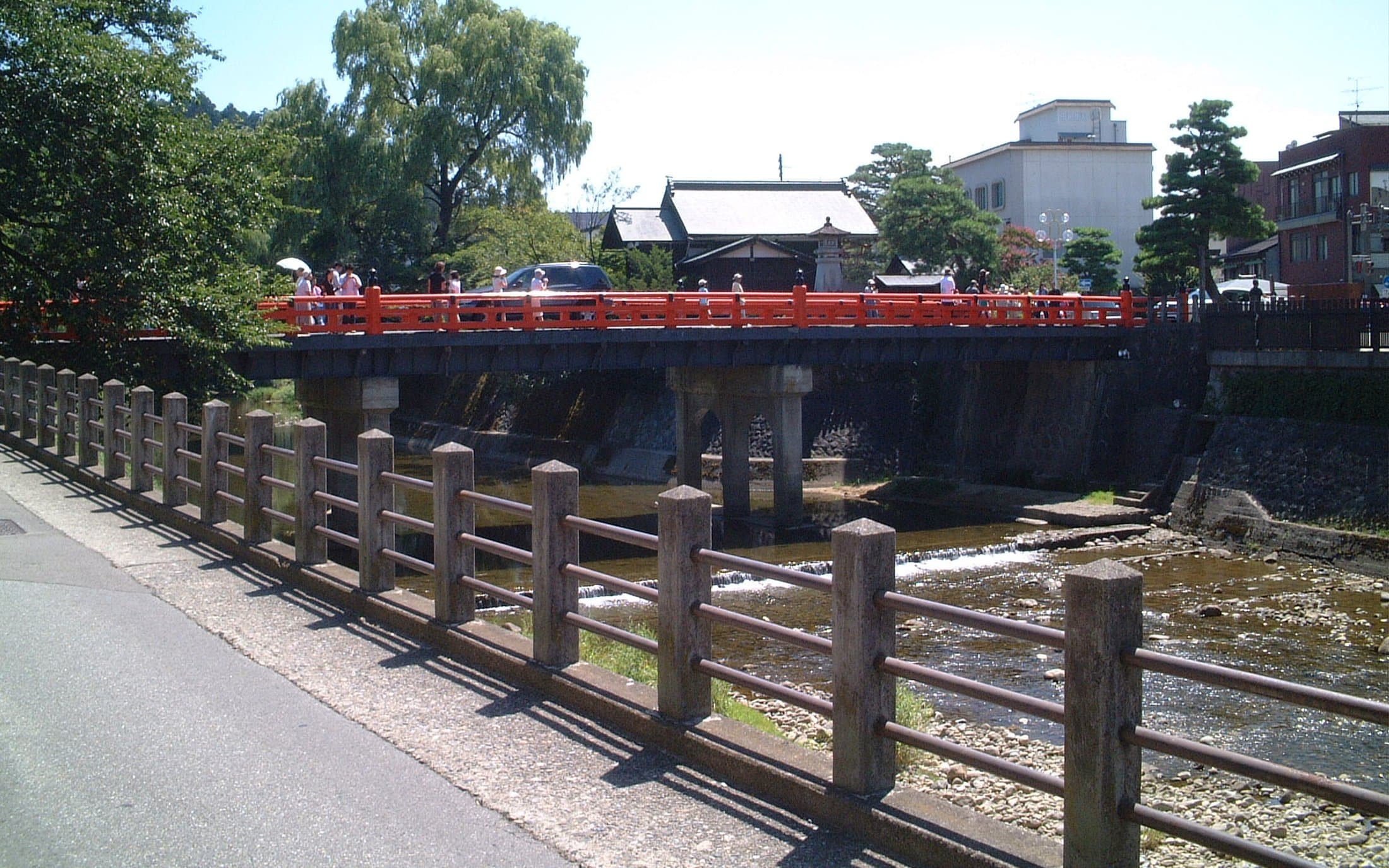
Sanmachi Suji's three parallel streets, plus Nakabashi — the vermillion bridge over the Miyagawa River connecting the old town to Takayama Jinya on the opposite bank — form the most visually consistent stretch of preserved Takayama. Staying inside this district means morning and evening walks past sake breweries, merchant houses, and craft shops without needing to travel to reach them.
The trade-off is real: fewer properties operate inside the historic streets themselves, some restrict vehicle access, and larger luggage sometimes means a short taxi drop at the district's edge rather than the door. Shops here mostly close in the late afternoon, and while some restaurants stay open later, the widest dinner selection depends on being seated well before the evening rush rather than after it.
Evenings are the appeal of staying here rather than day-tripping: once the tour groups clear out, the same streets that were crowded at midday empty into quiet lanes lit by a handful of open businesses. Mornings work the same way in reverse, before the first buses arrive.
Winter adds snow to lanes that aren't always cleared as promptly as the station district, and moving a suitcase over uneven or snow-packed paving is harder here than anywhere else in this comparison.
Practical nuance: confirm whether a listed property is actually inside Sanmachi Suji or simply nearby — "old town" addresses on booking sites sometimes mean a few minutes' walk outside the preserved streets themselves.
Honmachi / Miyagawa
Honmachi runs along the Miyagawa River on the station side of Nakabashi Bridge, close enough to the Miyagawa Morning Market's riverside stalls to reach on foot before breakfast and close enough to the station to keep arrival simple. It functions as a shopping and dining street in its own right rather than a preserved district, with less of the old town's density of historic facades. Readers connecting this area to Hyouka or planning a Hida-Furukawa day trip alongside it can see how the two towns fit together in Anime Travel in Hida and Takayama.
Staying here trades Sanmachi's concentrated atmosphere for a more central position: the walk to the old town's preserved streets is short, the walk back to the station is shorter still, and the riverside path itself makes for an easy walk regardless of which direction you're headed.
The market itself is a daytime draw — stalls operate in the morning, and the street reverts to an ordinary riverside road by afternoon, so basing a stay here for the market alone without accounting for the rest of the day undersells what the area offers.
Luggage and winter conditions are both easier here than in Sanmachi or Higashiyama — flatter ground, fewer restricted lanes, and a shorter walk regardless of season.
Practical nuance: the market runs on its own daily rhythm worth checking before settling on which morning to plan around it, since stall numbers vary through the week and by season.
Higashiyama / Teramachi
Higashiyama sits on the hillside east of the old town, reached along the Higashiyama Walking Course through Teramachi's cluster of temples and Shiroyama Park, the wooded former castle site above them. Accommodation here leans toward smaller ryokan and guesthouses rather than hotels, set among residential streets that see a fraction of the old town's foot traffic even in peak season.
The appeal is quiet rather than convenience: mornings without tour groups, temple grounds rather than shopfronts, and a genuinely different pace than the streets below. That comes with real costs — dining thins out fast this far from the center, and an evening out usually means walking back down into Sanmachi or Honmachi rather than finding dinner nearby.
Luggage is the area's clearest drawback. The walk up from the station or old town includes real elevation change, manageable with a light bag and considerably less so with a full suitcase — a taxi to the door is worth the cost here more than anywhere else in this comparison.
Winter conditions matter more here than anywhere else: slopes and stone steps that are easy in other seasons become a genuine hazard under snow or ice, and travelers with mobility limits should weigh this area's incline before booking.
Practical nuance: the full Higashiyama Walking Course takes roughly ninety minutes to two hours at an unhurried pace — treat a stay here as a walking-course commitment, not just a place to sleep.
Central Takayama versus Okuhida Onsen
Okuhida Onsen-go — Hirayu, Fukuji, Shin-Hirayu, Tochio, and Shin-Hotaka — sits roughly an hour from central Takayama by hourly bus or car, high in the mountains rather than inside the city itself. Hirayu functions as the region's transport hub, sitting on the route that continues to Kamikochi and on to Matsumoto, which makes it a genuine transfer point as much as a destination in its own right.
Treat Okuhida as a separate stay, not a Takayama neighborhood. None of it is walkable from the old town, the transport connecting it runs on its own schedule, and winter access depends on conditions that don't affect the city center the same way. Central Takayama is the practical base for the old town, regional buses, and a short stay; Okuhida is the base for onsen ryokan nights and the mountains beyond the city.
Combining both works well on a longer trip — a night or two in the old town, then a transfer out to Okuhida for the onsen stay — but they answer different needs, and booking one expecting the other's convenience is the most common mistake tied to this comparison. See Ryokan vs Hotel in Japan for how to plan the onsen night itself.
Common Mistakes
Assuming the old town and the station are the same area. They're a walk apart, and "Takayama" accommodation searches return both without distinguishing them.
Booking Higashiyama or another quiet edge of the center without checking dinner options or the walk back — some evenings there depend entirely on what's still open nearby.
Underestimating how much winter changes luggage movement, especially on Higashiyama's slopes and Sanmachi's narrower lanes — a taxi that seems unnecessary in other seasons can be the easier call in winter.
Treating Hirayu or another Okuhida village as a walkable Takayama neighborhood. It's a separate onsen region roughly an hour out, not a district of the city.
Common First-Time Questions
Do I need a reservation for the Shirakawa-go bus?
Roughly half of the daily departures require one; reserving ahead matters most in peak seasons and around midday runs, less so for the earliest or latest buses.
Is the Kamikochi bus the same as the Shirakawa-go bus?
No — Kamikochi is reached via a transfer at Hirayu Onsen, a different route from the direct Shirakawa-go service, and reservations generally aren't required on that leg.
How much does luggage actually change where I should stay?
Most for Higashiyama, where elevation adds real difficulty; least for Takayama Station/Hanasatomachi, where flat ground and short taxi rides absorb most of the inconvenience.
Is Takayama walkable without a car?
Yes for everything in this comparison — the old town, the station, and Higashiyama are all connected on foot; Okuhida is not.
Does winter close off any of these areas?
Not entirely, but it adds real walking time and some hazard on Higashiyama's slopes and Sanmachi's narrower lanes — build in more transfer time than a summer visit would need.
Before You Go
Read Ryokan vs Hotel in Japan before booking an Okuhida onsen night.
Luggage Forwarding in Japan is worth considering if winter or Higashiyama's slopes are part of your plan.
Load an IC card before relying on regional buses where accepted — see IC Cards in Japan.
If Kanazawa is also on your route, compare its own areas in Where to Stay in Kanazawa.
If Nagoya bookends the trip, see Where to Stay in Nagoya.
If Matsumoto is also part of the same Alps-region trip, compare where to stay in Matsumoto — a rail-and-castle base built around different logistics than Takayama's preserved old town.
Takayama rewards a specific kind of decision-making: how you're arriving, how much you're carrying, and whether quiet mornings or old-town atmosphere matter more than convenience. Station and bus access, preserved streets, a central riverside position, and quiet hillside temples each solve a different version of this trip — and Okuhida solves a different trip entirely, one built around the mountains rather than the town.
Decide that first, and the choice between these four areas — and whether an onsen night belongs in the same itinerary — follows.
Ready to choose a specific place?
If you have compared Takayama areas and know which base fits your trip, the next step is choosing a specific place within that area.
Stay near the places you will actually spend time — the station you will use most days, the streets you want after dinner, and the walks you want before coffee. Japan Atlas will add curated area collections here when editorial vetting is complete. For now, your neighborhood decision is the planning work that matters.
Future: neighborhood hotel collections by area — editorial picks chosen for station access and daily rhythm, not commission rankings.
Related Reading
Continue exploring this way of seeing Japan.