Anime Travel in Hida and Takayama
Can a traveler meaningfully connect the real towns associated with Your Name and Hyouka in one practical, respectful day trip?
- Category
- Anime Travel
- Central Question
- Can a traveler meaningfully connect the real towns associated with Your Name and Hyouka in one practical, respectful day trip?
Two animated stories have drawn travelers to a corner of Gifu Prefecture that most itineraries skip entirely: Your Name (2016), whose fictional mountain town shares a visual kinship with Hida-Furukawa, and Hyouka (2012), set in a fictional city built on the real geography of Takayama. Neither film is a documentary of these places, and neither town is presented here as a movie set. This guide connects that interest to a practical one-day trip through two real towns fifteen minutes apart by train — what to actually see, how the connection to each work is documented, and how to visit without turning a lived-in street into a photo backdrop. The towns are worth the day on their own merits; the anime interest is one reason to go, not the whole reason.
Why Hida-Furukawa and Takayama Work as One Trip
Hida-Furukawa and Takayama sit on the same JR Takayama Main Line, about fifteen minutes and three stops apart — closer than many neighborhoods within a single large city. That proximity, not the anime connection, is what makes a combined day realistic: a traveler can spend a morning in one town and an afternoon in the other without a long transfer eating into either visit.
The two towns also complement each other in character. Takayama is the regional hub — larger, better served by buses and the JR Hida limited express to Nagoya, with more accommodation, dining, and onward connections toward Shirakawa-go, Kanazawa, and Matsumoto. Hida-Furukawa is smaller and quieter, built around a canal lined with traditional storehouses rather than a shopping district, and rewards an unhurried couple of hours more than a full separate overnight for most itineraries.
For most travelers, Takayama makes the more practical accommodation base: it has the wider range of places to stay and the better onward transport, and Hida-Furukawa becomes a short, easy excursion from it rather than a place that needs its own overnight to be worthwhile. Travelers building a slower, quieter trip may still prefer a Hida-Furukawa night — that trade-off is explained in the Where to Stay section below, not assumed here.
What Is Actually Confirmed
Two different kinds of evidence are easy to blur together, so it helps to separate them plainly.
Neither Your Name nor Hyouka has a location confirmed directly by its rights holder — CoMix Wave Films has not named Hida-Furukawa as the definitive real basis for Your Name's fictional town, and Kyoto Animation has not issued a location statement for Hyouka. Both cases are best described as widely documented visual inspiration, officially promoted by the relevant local tourism authority — not as an official collaboration with the studios themselves.
For Hida-Furukawa, that local promotion is concrete: Hida City's own tourism board publishes a self-guided walking itinerary naming the station and several nearby streets, the station itself carries city-installed signage acknowledging the connection, and the station's information center hosts a visitor notebook and map. The city's own language stays deliberately careful — it describes the town as "one of the inspirations," not the location.
For Takayama, the connection to Hyouka rests substantially on the author's own background: Hyouka's novelist, Honobu Yonezawa, is from Takayama, and the fictional Kamiyama City is built on his hometown's real geography. Takayama City has distributed official pilgrimage maps, and the Anime Tourism Association — an industry body, not Kyoto Animation itself — included Takayama in its 2018 list of 88 recognized anime pilgrimage sites.
In both cases, the honest description is: a real, official, currently-active local tourism relationship exists, but it is not the same as a statement from the people who made the films. Every location below is treated the same way — as a real place worth visiting, with a documented rather than declared connection to the story.
A Practical One-Day Route
Start in Takayama. Its morning market, preserved streets, and river bridges are easiest to see before tour groups arrive, and the town's cafés and lunch options are more reliable than Hida-Furukawa's smaller selection. Three to four hours is enough to cover the locations below without rushing.
Take the JR Takayama Main Line north to Hida-Furukawa in the early-to-mid afternoon; the ride itself takes roughly fifteen minutes. Hida-Furukawa rewards a slower two to three hours rather than a quick photo stop — the canal walk, the storehouse street, and the town's quieter pace are the point, not a checklist.
Reverse the order if an early start favors Hida-Furukawa's quieter morning light, or if a same-day return toward Nagoya or Toyama makes finishing in Takayama more convenient. Neither direction is more correct — match it to what the rest of the day requires.
Hida-Furukawa
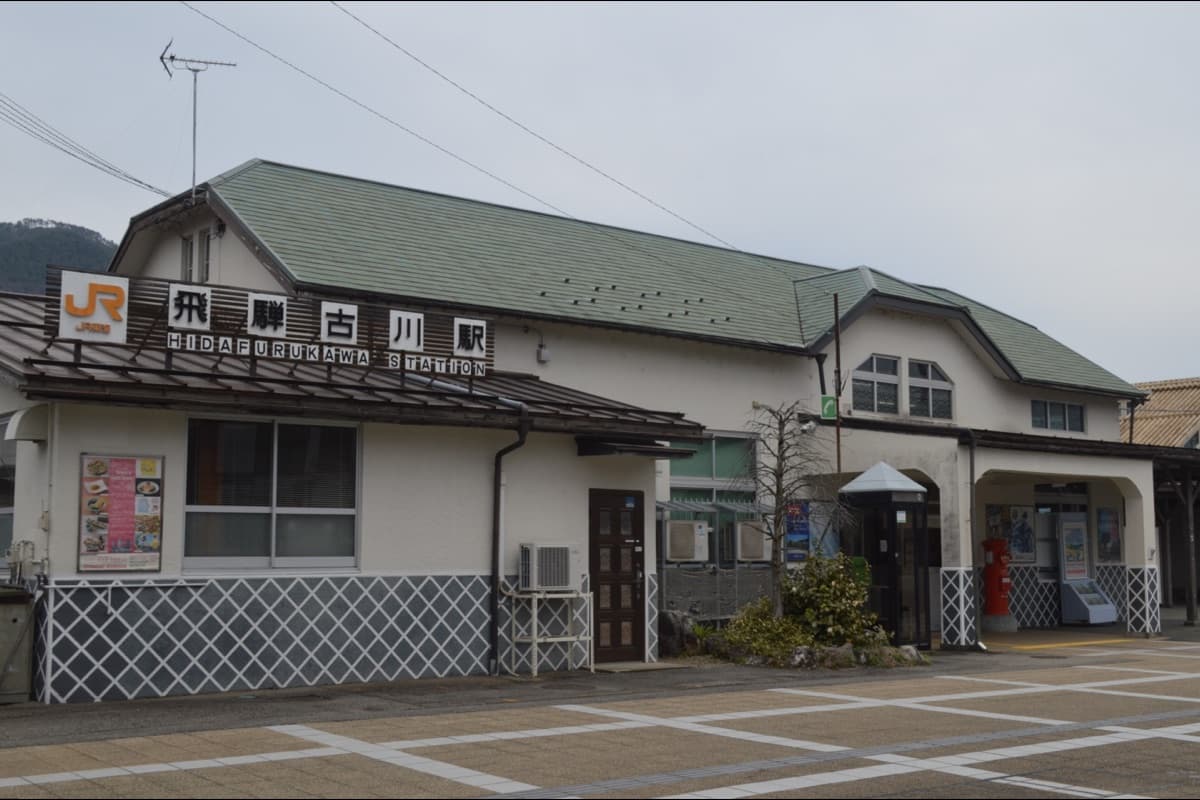
Hida-Furukawa Station and the town beyond it. The station is the town's practical starting point and its most visibly acknowledged connection to Your Name — city-installed signage inside the station names the film, and the tourist information center beside it distributes a self-guided map. The station building itself, with its green tile roof and bilingual signage, is worth a look before walking into town; the view many visitors describe as most memorable is from a nearby pedestrian overpass, looking down the platform toward the surrounding mountains.
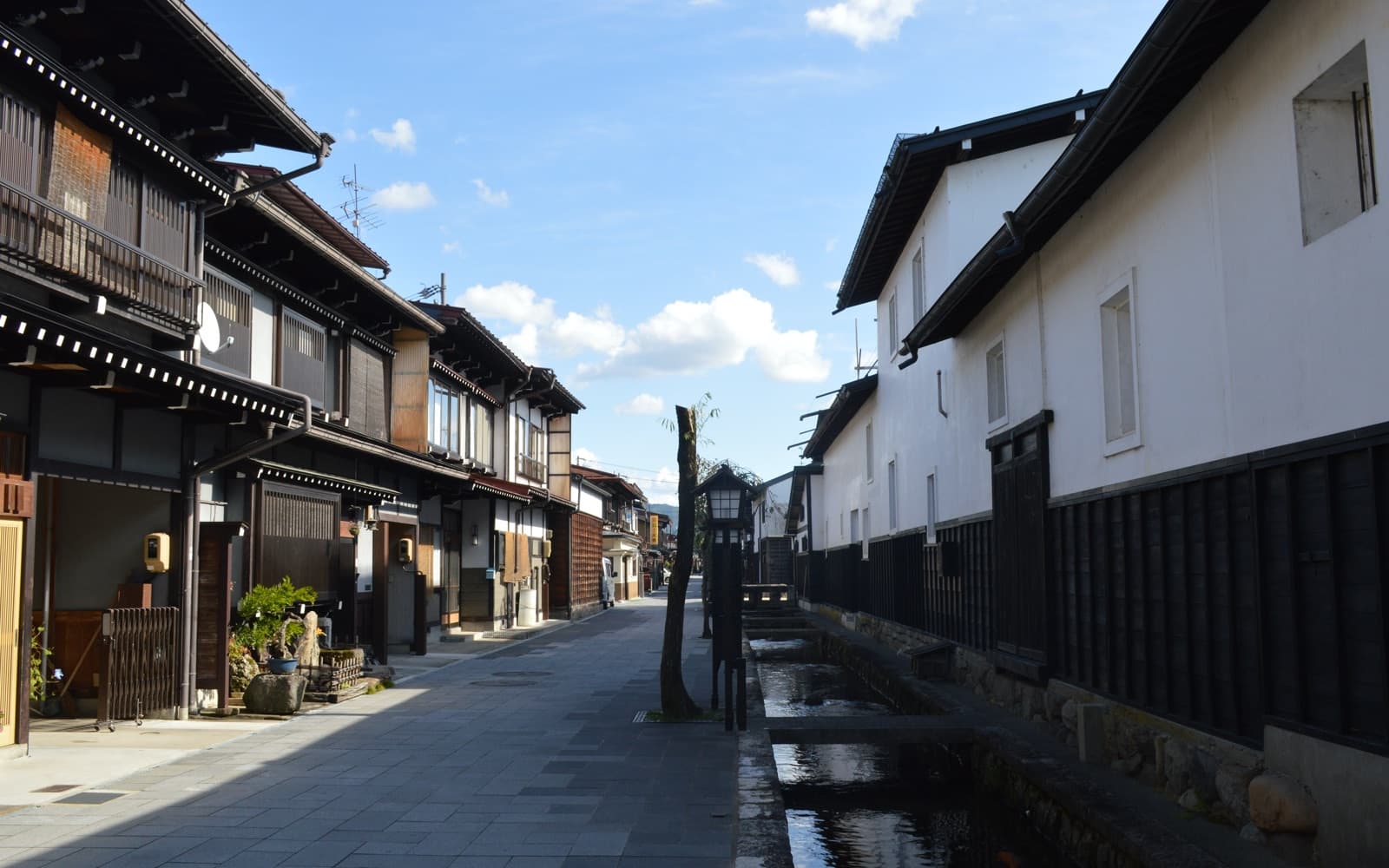
The Seto Canal and Shirakabe Dozogai. A five-minute walk from the station, the Seto Canal runs beside a row of white-walled storehouses (Shirakabe Dozogai) that give the town its most photographed street. Between April and November the canal holds roughly a thousand koi carp, fed by visitors who leave a small donation for a bag of food at boxes along the walk. This street is regional heritage independent of any film — it is the town's own preserved merchant district, not a set built for one.
Keta Wakamiya Shrine. A short walk from the storehouse street, this working Shinto shrine appears in local pilgrimage materials as part of the town's connection to Your Name. Treat it as an active place of worship first: move quietly, and follow any posted guidance on where photography is appropriate.
Hida-Furukawa's appeal does not depend on the film. It is one of the better-preserved small towns in the Hida region, with a working sake-brewery district, seasonal festivals, and a noticeably slower pace than Takayama's more visited streets — reasons enough to spend an afternoon here even without the connection.
Wikimedia Commons (JR Hida-Furukawa Station ac (1).jpg) by Asturio Cantabrio — CC BY-SA 4.0
Takayama
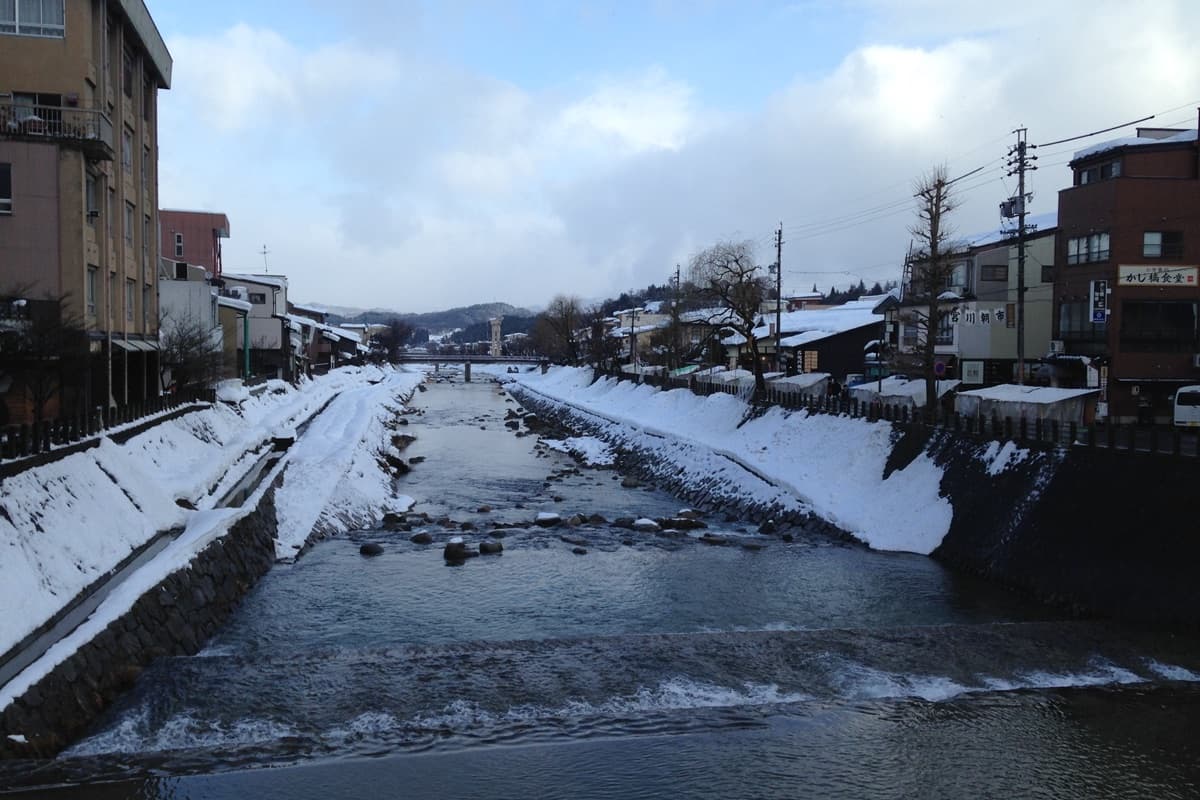
Kajibashi Bridge and the Miyagawa River. A few minutes' walk from the old town, Kajibashi is the quieter of Takayama's two well-known river crossings — less photographed than the vermillion Nakabashi Bridge nearby, but the one more consistently cited in Hyouka location guides, alongside the neighboring Yayoihashi Bridge. The river view here, lined with traditional buildings, is worth a few minutes regardless of the connection.
Miyagawa Morning Market. Running along the riverside near the old town every morning, this is one of Japan's longest-running morning markets and appears in Hyouka's opening sequence. It is a working market first — vendors selling produce, pickles, and crafts to residents as much as visitors — so browse and buy rather than treating the stalls as a photo backdrop.
Takayama City Library and Minashi Shrine, both further from the center, appear in Hyouka as the fictional Kamiyama City Library and a shrine sequence; both are optional additions for travelers with a full day rather than the morning-and-afternoon route above.
None of these locations require special access or fees. All are places Takayama residents use every day — a market, a bridge, a library — which is exactly why they hold up as a reason to visit independent of the show.
Wikimedia Commons (Miyagawa River from Kajibashi Bridge (north).JPG) by そらみみ — CC BY-SA 4.0
Transport and Walking
Both towns are walkable from their stations. Takayama's old town, river bridges, and morning market sit within about a fifteen-minute walk of Takayama Station; Hida-Furukawa's canal street and shrine are within a similar distance of its own station. Neither town requires a car or taxi for this itinerary.
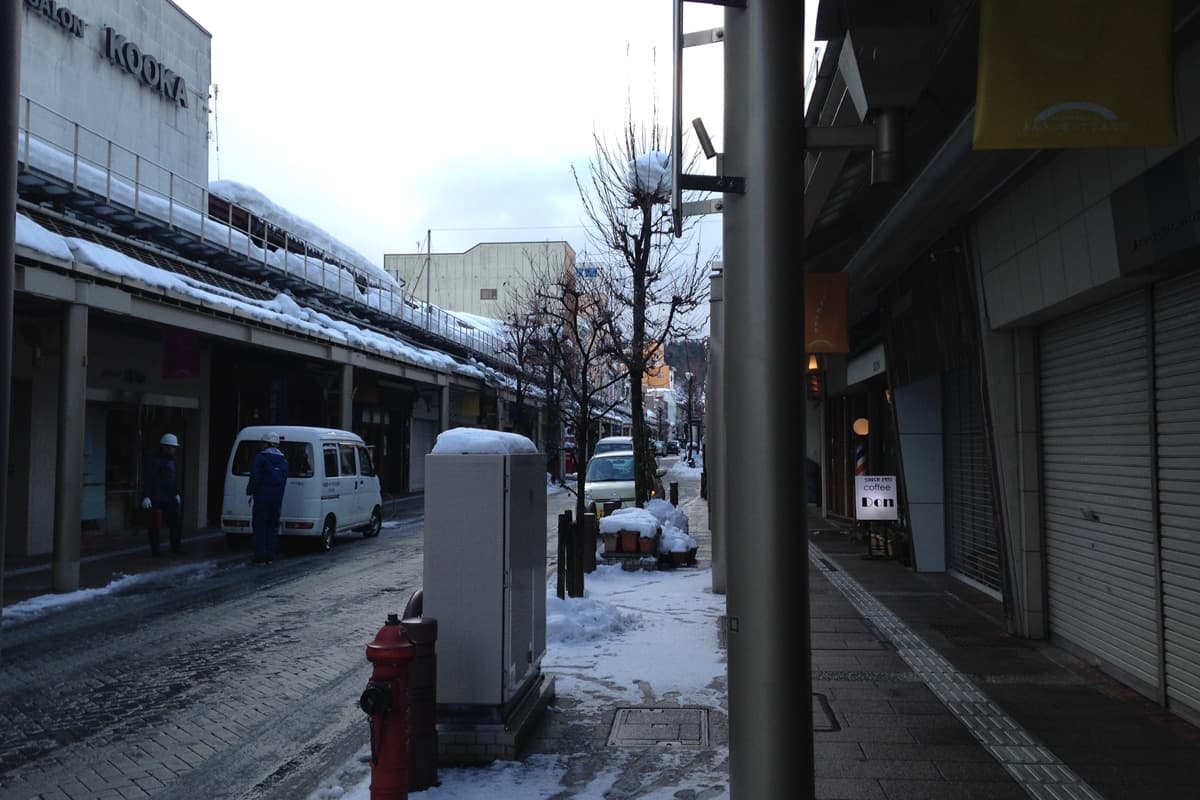
Winter changes the walk more than the distance. Snow and ice are common from December through February, and narrow stone-paved lanes in both towns become slower and less even underfoot — sturdy, non-slip footwear matters more here than in most Japan itineraries. Spring and autumn are the more comfortable seasons for an unhurried walking day; summer is manageable but humid.
The Takayama–Hida-Furukawa train ride is short and frequent enough for same-day travel in both directions; check current JR Takayama Main Line timetables before finalizing timing, since schedules are adjusted seasonally.
Where to Stay
Takayama is the more practical base for most itineraries: it has the widest range of accommodation, the better onward transport, and puts both towns' locations within a short train ride. Where to Stay in Takayama compares the station area, the preserved old town, and the riverside and temple districts by trip style.
Sleeping in Hida-Furukawa instead can suit a slower, quieter itinerary — fewer accommodation options, but an evening and morning inside the town's own quiet pace after day-trippers leave. This guide does not recommend individual properties in either town; that decision follows from the area choice, not the reverse.
Photography and Local Respect
Both towns are lived-in, not staged. A few habits keep a visit welcome rather than disruptive.
Kajibashi, Nakabashi, and Yayoihashi are footbridges people use to get to work and school — pause for a photo, then keep moving rather than occupying the crossing. The same applies to Hida-Furukawa's canal walk, which is narrow enough that a stopped group blocks it entirely.
Miyagawa Morning Market is a working market. Photograph the stalls with the same courtesy you would use anywhere someone is trying to run a business — ask before photographing a vendor directly, and buy something if a stall has held your attention.
Treat any shrine along the route, including Keta Wakamiya, as an active place of worship rather than a photo location; move quietly and follow posted guidance. For the same reason, Hida Senior High School in Takayama — a working school sometimes cited in Hyouka location lists — does not appear as a stop in this guide: its own posted guidance asks visitors to keep off school grounds and not photograph students, and that request should be the last word on the subject.
Skip repeated reenactment poses at any single spot if others are waiting to pass or photograph the same view — a quick photo is welcome; an extended set of poses at a narrow bridge or lane is not. None of this makes anime travelers unusually disruptive — it is the same courtesy any visitor owes a small town whose streets are someone else's daily route to work.
What Else the Region Offers
Both towns hold up without any interest in either work. Takayama's preserved Edo-period merchant district, sake breweries, and seasonal festivals — the spring and autumn Takayama Matsuri are among Japan's most celebrated — are destinations in their own right. Hida-Furukawa's koi-filled canal, working sake breweries, and quieter pace make it a worthwhile half-day even for travelers who have never seen either film. The anime connection is one reasonable way into a trip most visitors would enjoy regardless.
Wikimedia Commons (Hommachi Street Shopping Area from Kajibashi Crossroads 20150123.JPG) by そらみみ — CC BY-SA 4.0
A day spent this way is not a tour of a fictional world — it's a visit to two real Gifu towns that happen to have inspired something many travelers already know. The bridges, the canal, and the market are there for the towns' own reasons, not because a film passed through. Go for the connection if that's what brought you here, and stay for the ordinary Tuesday-morning version of both towns that has nothing to do with either story.
Ready to plan the trip itself?
Now that you know what's confirmed and what a realistic day looks like, the next step is choosing a base and fitting the day into a wider itinerary.
Takayama is the practical base for most itineraries — wider accommodation choice and better onward transport, with Hida-Furukawa a short train ride away. Kanazawa is the most common regional extension for travelers continuing past Takayama.
Future: official museum or exhibition links, and vetted regional tours, added only after confirming a specific, currently-operating, official or clearly-identified organizer. No commercial links exist here yet.
Related Reading
Continue exploring this way of seeing Japan.