When It Rains in Japan
Five ways an ordinary day changes when the rain begins
Rain is common on Japan trips — enough that most visitors should plan around it, not treat it as a surprise failure. This page covers ordinary rain: showers and steady wet weather that still leave streets, food, shops, and trains usable if you adjust pace and route.
It is not a severe-weather guide. Typhoons, flooding, landslides, evacuation orders, and transport shutdowns follow official warnings from the Japan Meteorological Agency, local authorities, and operators — not suggestions in a travel essay. When those warnings apply, they override everything here.
Five photographs show changes you may notice once rain begins. Scroll first; read when you want detail. The images show what continues. The text adds context and points to Travel guides for packing, payment, transport, and safety thresholds.
Umbrellas Appear
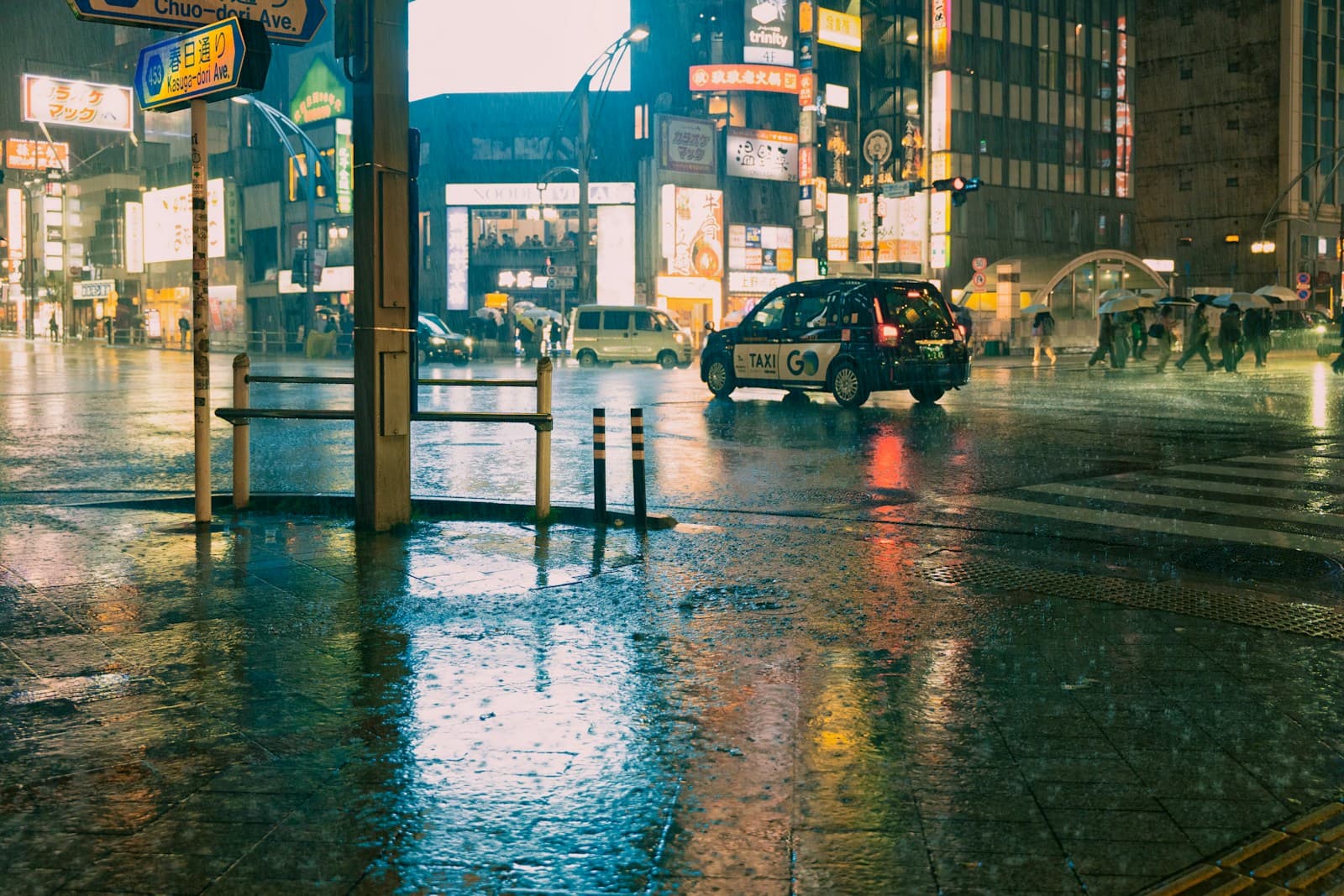
Photo by ayumi kubo on Unsplash (RAIN-07) — Unsplash License.
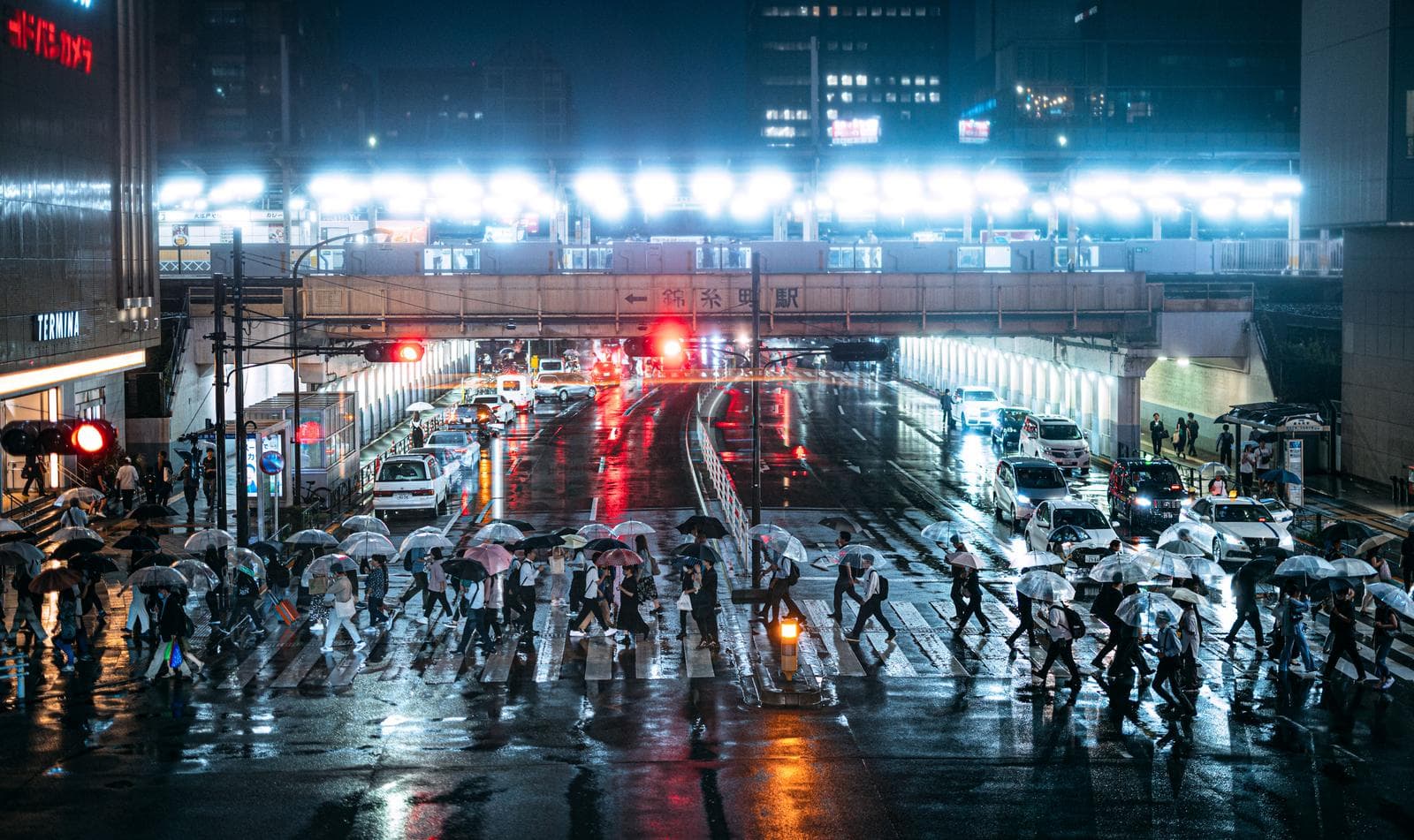
When rain starts, movement adapts within minutes. People leave stations and crossings with clear or colored umbrellas open. Some exits sell cheap umbrellas; convenience stores stock them as well.
Pace slows slightly. Shoulders narrow on sidewalks. Bags shift closer to the body. Disposable plastic, compact folding, and office umbrellas share the same block — a practical change, not a uniform custom.
The Shopping Street Stays Active
PAKUTASO (RAIN-02) — PAKUTASO Terms, free commercial use.
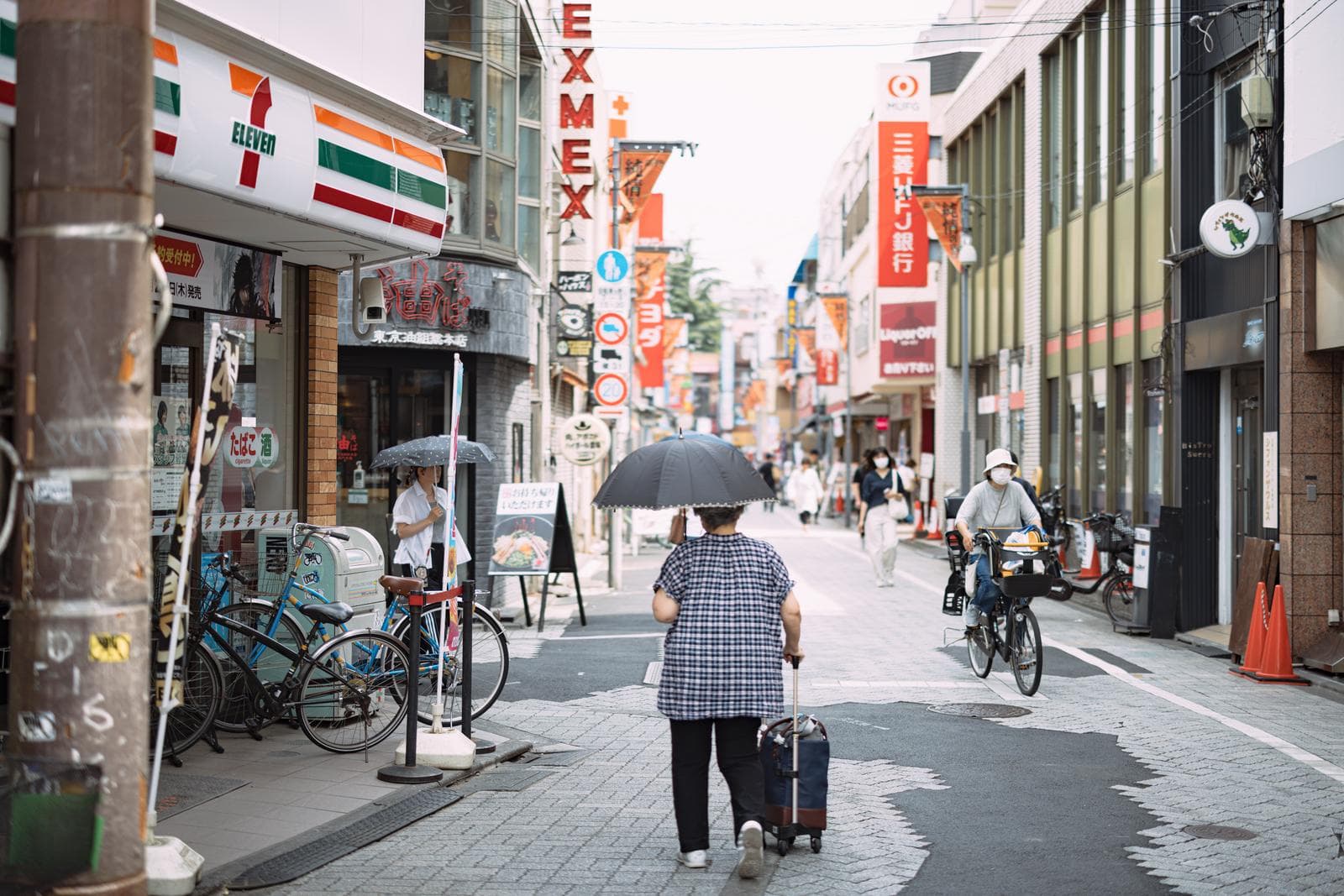
A shotengai — a covered neighborhood shopping street — offers partial shelter when rain is steady but not severe. Shop entrances stay open. Bicycles and delivery carts continue under the roof.
Not every commercial street in Japan is covered, and rain thins traffic on exposed lanes. Where an arcade exists, it often remains the most practical place to walk, browse, and eat without abandoning the day.
The Pavement Changes the City
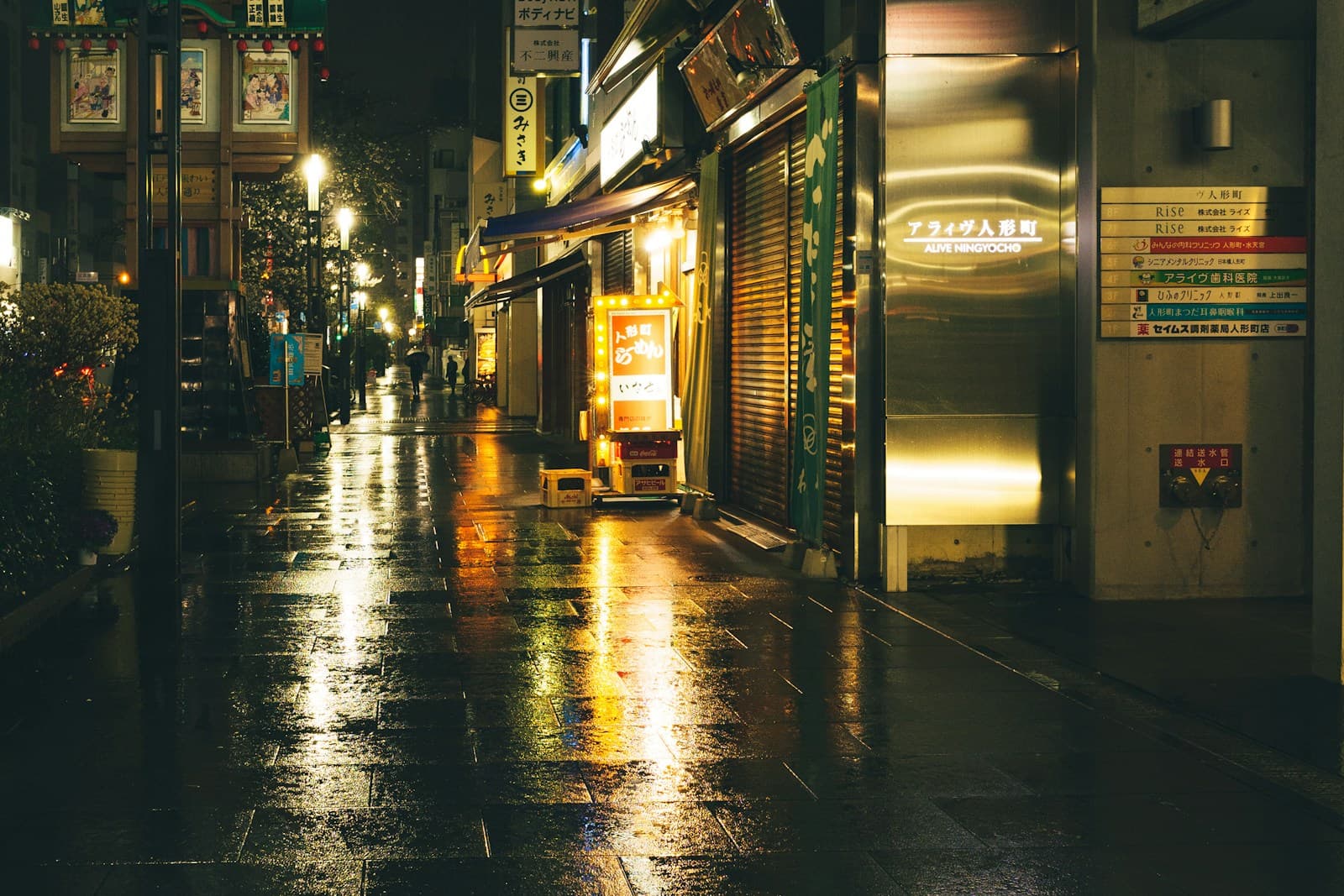
Photo by Red Shuheart on Unsplash (RAIN-08) — Unsplash License.
Wet asphalt and stone mirror shop signs, signals, and station light. Colors stack in the pavement — a visible shift in how the street delivers information, not a change in layout.
Footing needs more attention at crossings and curb edges. Photography exposure changes too. The map is the same; the surface reads differently.
Short Stops Become Part of the Day
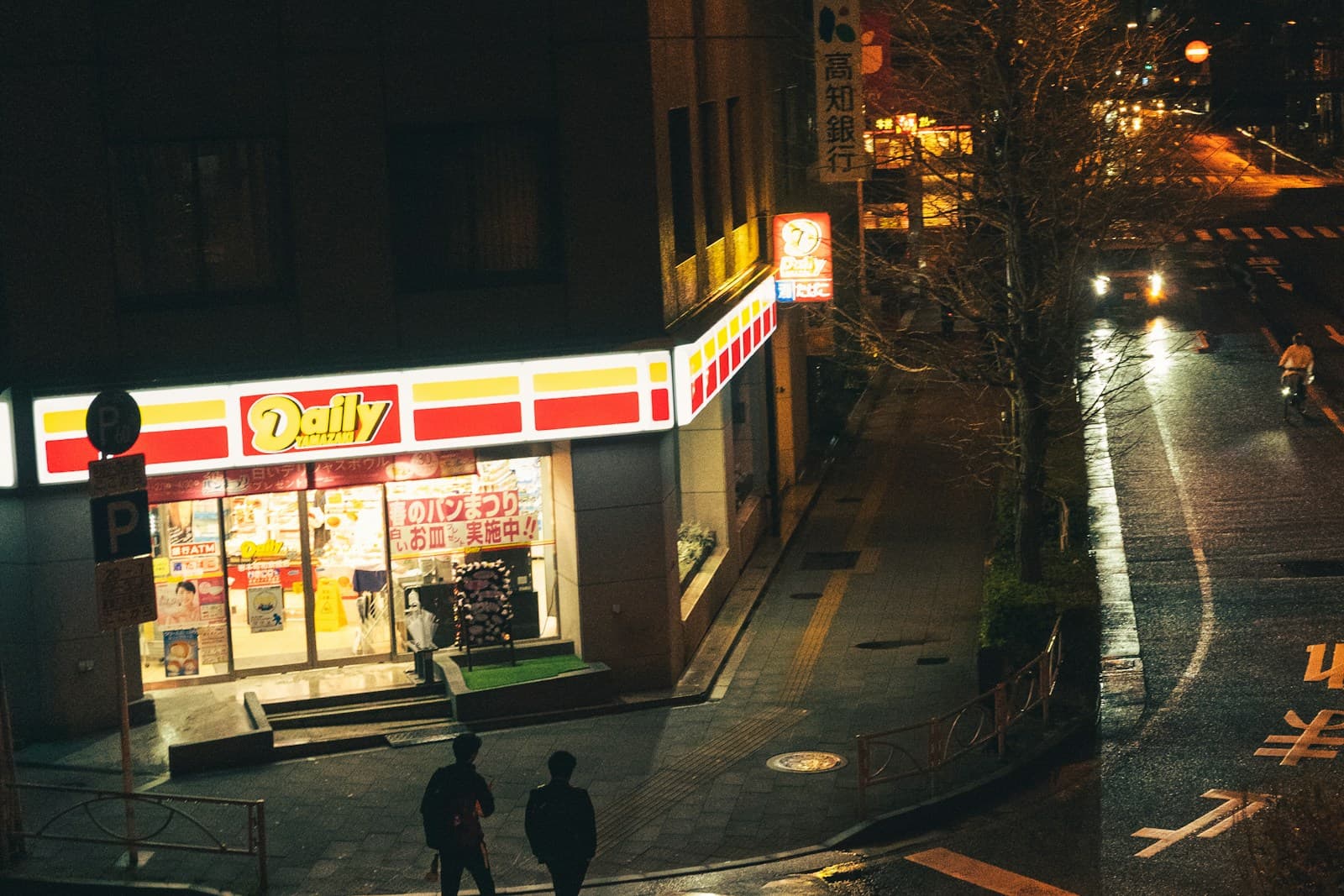
Photo by Red Shuheart on Unsplash (EVE-04) — Unsplash License.
Rain extends the role of brief indoor pauses — konbini doors, café windows, station concourses, restaurant entrances with umbrella racks. A short stop to dry a sleeve or buy a drink often becomes the next leg of the itinerary.
For what convenience stores handle beyond shelter, see Convenience Stores in Japan. To read restaurant types before stepping inside, see Japanese Restaurants Explained.
The Route Changes, Not the Trip
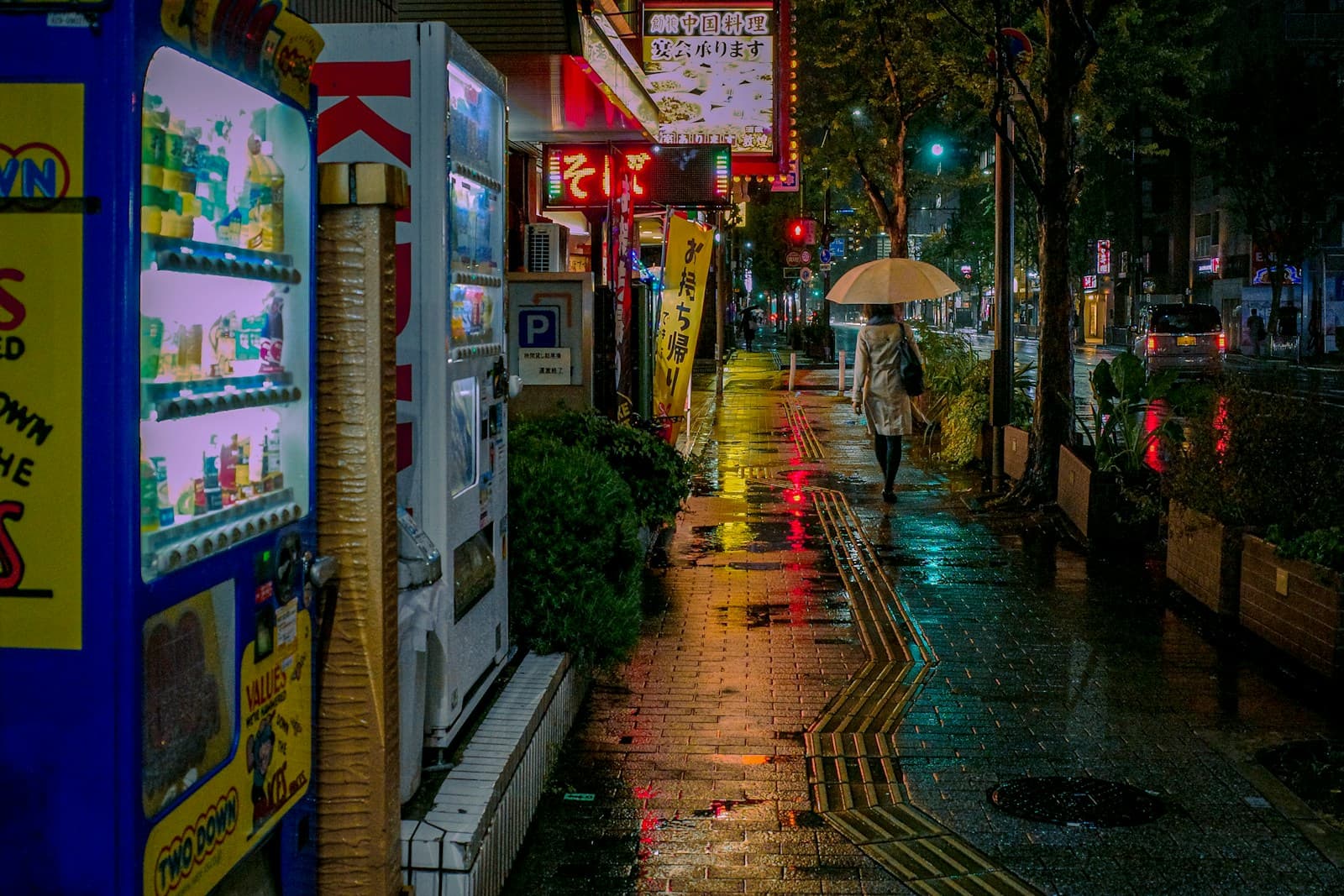
Photo by masahiro miyagi on Unsplash (RAIN-11) — Unsplash License.
Most ordinary rainy days still allow trains, buses, and neighborhood walking — with a revised path. Covered station links, shorter outdoor segments, and indoor destinations replace long exposed walks when surfaces are slick.
That is adjustment, not cancellation. Build buffer time, choose sheltered segments where you can, and treat official weather warnings as overriding any suggestion here.
What Changes in the Rain
- Walking pace and route — more covered passages, fewer long exposed segments
- Umbrellas opening, closing, and dripping at shop and station entrances
- Wet pavement reflecting signs, signals, and storefront light
- Indoor stops — konbini, cafés, station concourses — becoming planned steps, not interruptions
- Slippery surfaces at crossings, metal plates, and tiled station floors
- Photography exposure shifting in low light and heavy reflection
- Official alerts replacing ordinary rain plans when warnings escalate
Plan a Rainy Day
When you move from observation to preparation, these Travel guides handle the practical layer this article deliberately skips.
Carry what you need, choose a sheltered route when you can, and keep the day moving at a slower pace. Ordinary rain rarely requires cancelling Japan — only adjusting it.
Related Reading
Continue exploring this way of seeing Japan.