Okinawa
Where identity continues through change.
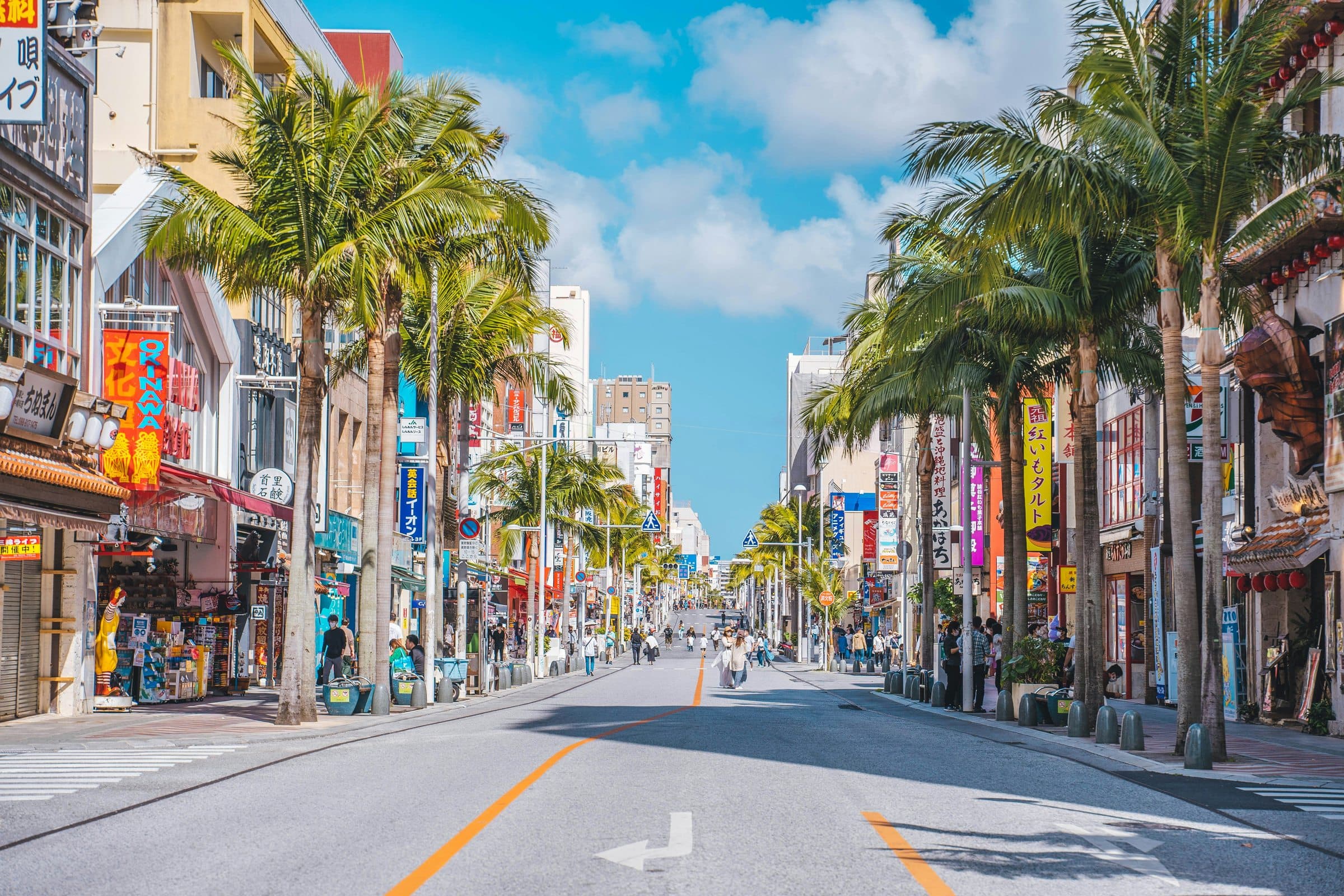
Choose between a walkable capital and a more transport-dependent resort coast — two approaches that create very different Okinawa Island trips.
Choose the atmosphere that feels right to you before reading further.
Naha
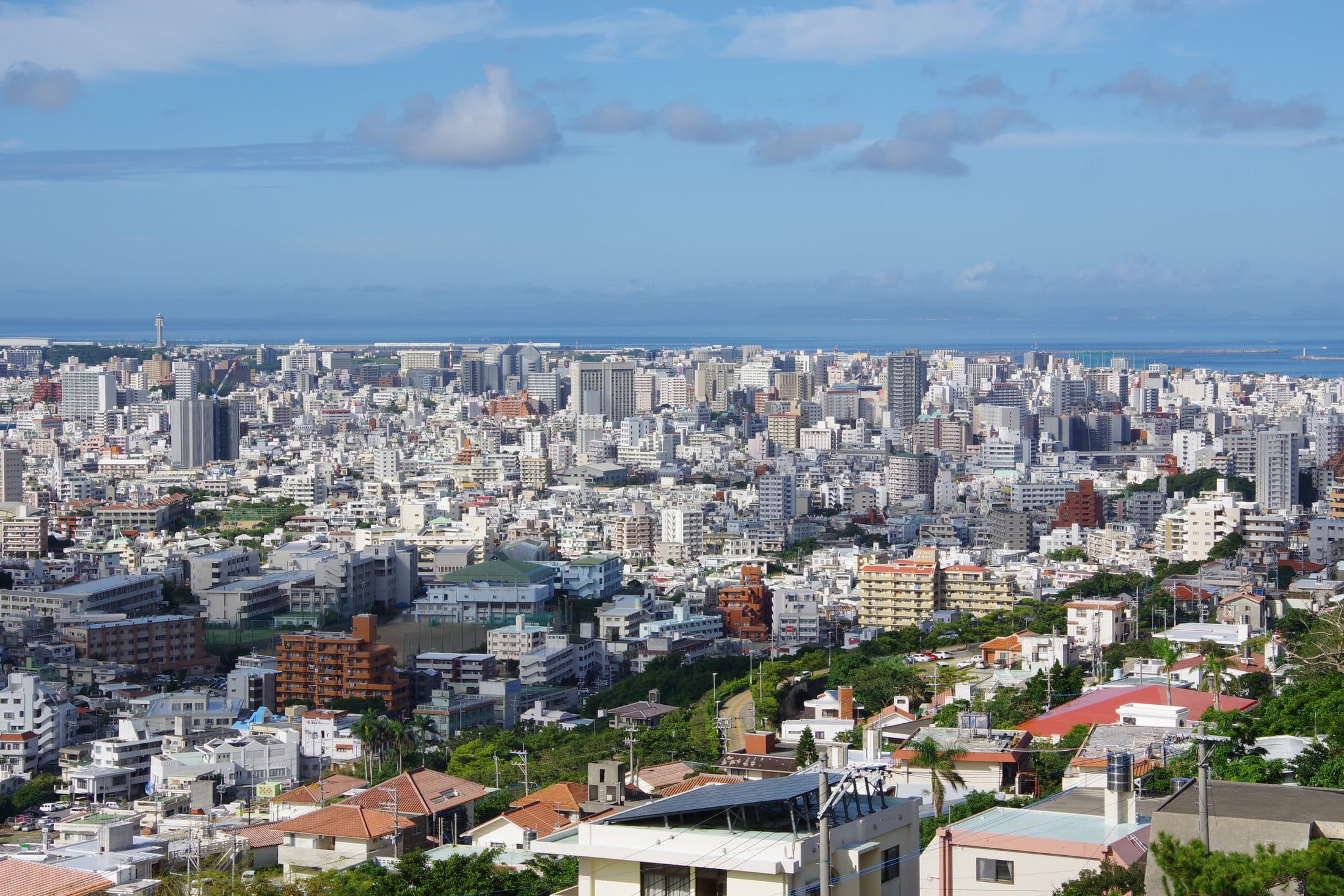
Walkable streets, Yui Rail access, restaurants, and the island's easiest arrival and departure rhythm.
Chatan and Mihama
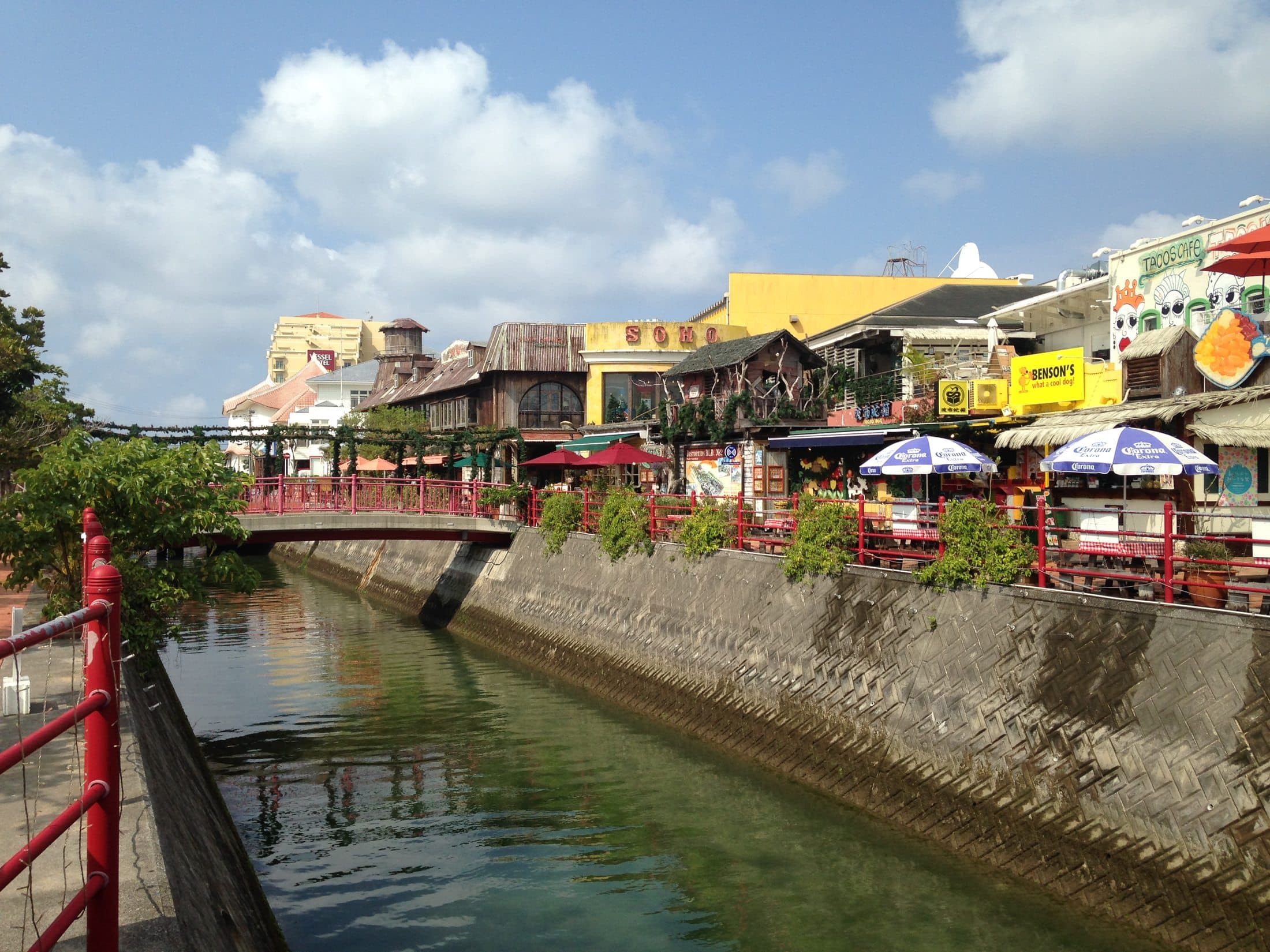
A city-adjacent coastal base combining beach access, shops, dining, and evening activity.
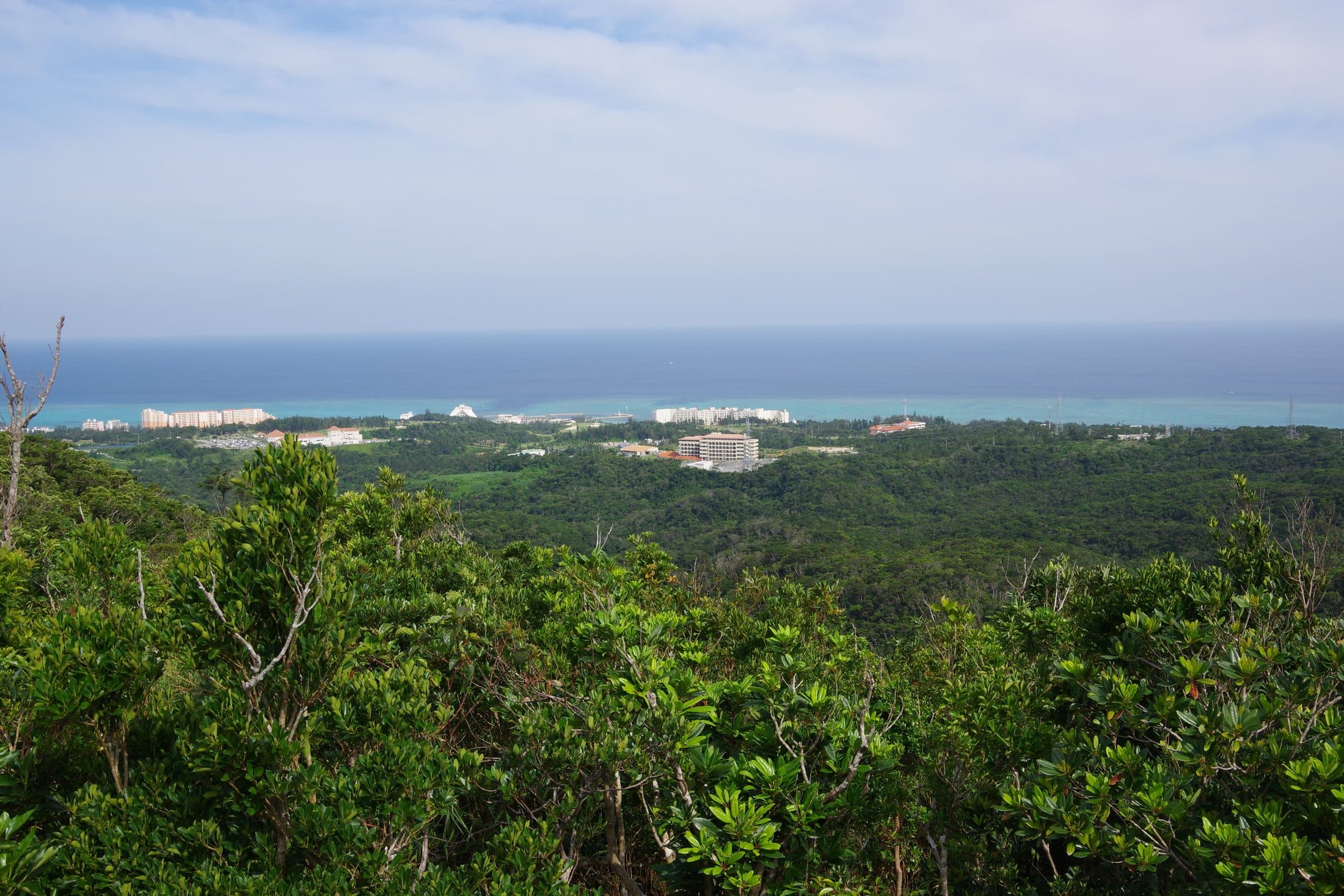
Onna
A spread-out west-coast resort corridor for beach-centered stays, couples, and families.
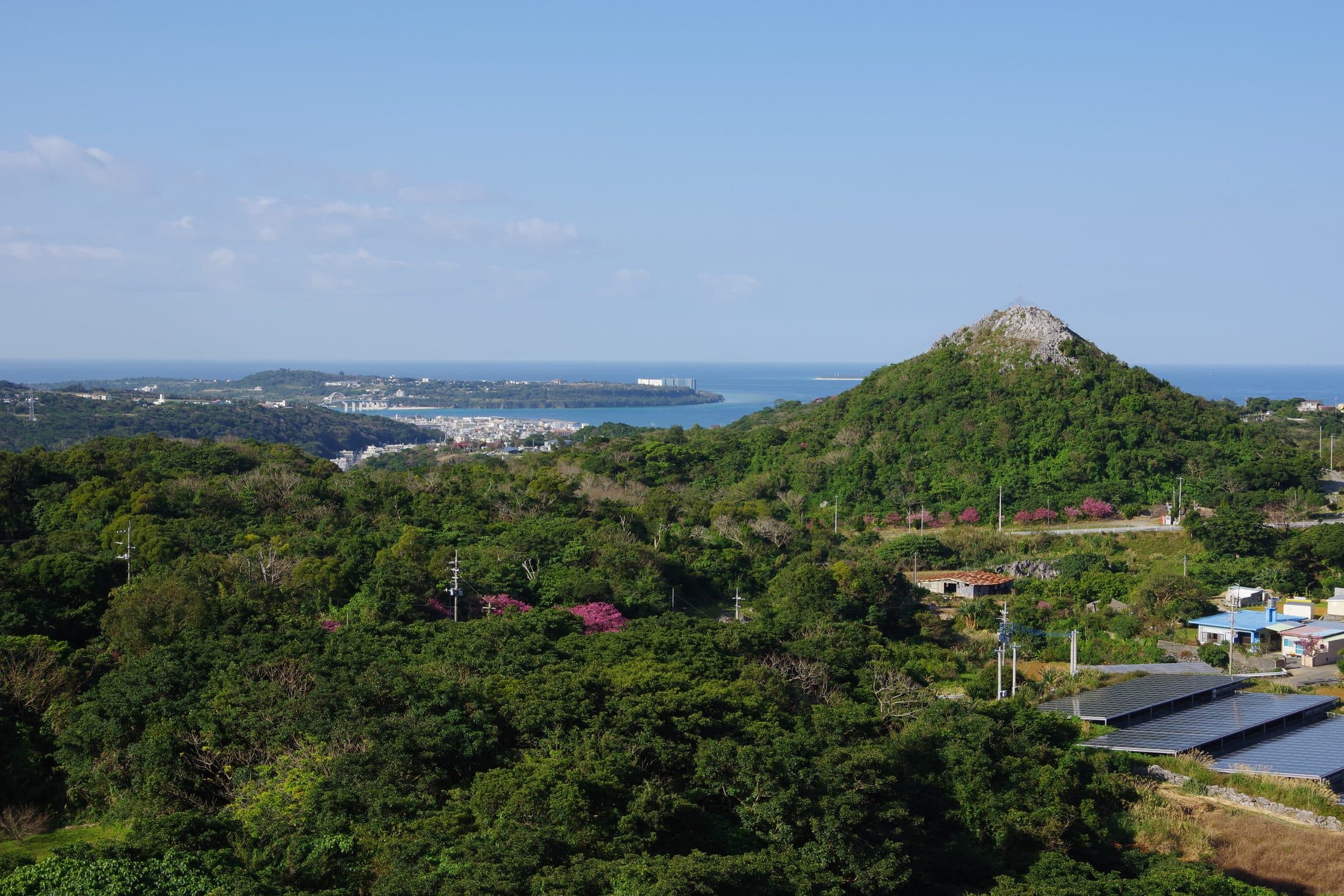
Motobu and the Churaumi Area
A quieter northern base for Ocean Expo Park, the aquarium, nearby coast, and slower evenings.
Naha
Walkable streets, Yui Rail access, restaurants, and the island's easiest arrival and departure rhythm.
Chatan and Mihama
A city-adjacent coastal base combining beach access, shops, dining, and evening activity.
Onna
A spread-out west-coast resort corridor for beach-centered stays, couples, and families.
Motobu and the Churaumi Area
A quieter northern base for Ocean Expo Park, the aquarium, nearby coast, and slower evenings.
Image credits
Okinawa Island rewards a different kind of planning than Tokyo or Kyoto. In most Japanese cities, a hotel a few train stops from your first choice barely changes the trip. On Okinawa Island, it can change the trip entirely. A hotel that looks appealing in a search result — palm trees, a pool, an ocean-facing room — may sit far from the restaurants, the capital's museums, or the aquarium a family actually came to see, with a rental car standing between the listing photo and the reality of the stay.
This is not a warning against any particular kind of trip. It is a reason to decide the shape of the trip before booking a room. Naha, the island's capital, is compact, walkable, and served by a monorail that reaches the airport, the main shopping street, and the historic Shuri district without a transfer. The resort coast running north from Chatan through Onna to the Motobu Peninsula is a different proposition — beach-first, spread across long stretches of coastline, and built around driving distances that a map thumbnail rarely communicates honestly.
This guide compares those choices directly: what each area actually includes, how staying there changes a day, who it suits, and what it costs in convenience. It covers Okinawa Island only — not Miyakojima, Ishigaki, Taketomi, Iriomote, or the Kerama Islands, which sit in different island groups with their own transport and accommodation logic entirely.
There is no single best area for every Okinawa trip. The right choice depends on whether the visit centers on the capital, the beach, or a specific attraction in the north — and on whether renting a car fits the plan.
Best for a first short visit: Naha. It is the easiest base to arrive into, the easiest to leave without complications, and the only area where a car genuinely isn't needed.
Best without a rental car: Naha, by a wide margin. Yui Rail reaches central Naha, Kokusai-dori, Makishi, Omoromachi, and Shuri directly. Every other area on this list is reachable without driving, but with real trade-offs in flexibility.
Best for restaurants and evenings: Naha and, to a lesser extent, Chatan and Mihama — both offer genuine dining and evening options beyond hotel restaurants.
Best for beach-resort time: Onna, which holds the island's densest concentration of beach-facing resort hotels.
Best for families: Onna and Motobu both suit families well, for different reasons — Onna for resort infrastructure built around beach days, Motobu for proximity to Ocean Expo Park and Okinawa Churaumi Aquarium.
Best for access to Churaumi Aquarium: Motobu and the Churaumi area, as a second base or a dedicated one-to-two-night stop rather than the sole base for a short trip.
Best for a split stay: Naha paired with Chatan/Mihama or Onna — the two combinations that add the least travel friction for the value they add.
Best for specialist nature travel: Yanbaru, covered under Other Areas Worth Considering — a deliberate choice for travelers whose trip centers on forest and hiking, not a default recommendation.
None of these is the universal right answer. The rest of this guide explains the trade-offs behind each one.
Not always — but the answer changes sharply depending on which area you choose, and it is worth deciding before you book.
A rental car is not required for a Naha-focused trip. Yui Rail, the island's monorail, connects the airport directly to central Naha, Kokusai-dori, Makishi, Omoromachi, and Shuri without a transfer, running frequently enough during the day to plan around comfortably. A visitor who stays in Naha and uses buses or organized tours for selected day trips can build a varied Okinawa Island itinerary without renting a car.
Chatan and Mihama, Onna, and Motobu are all reachable without driving — resort-area shuttle and limousine-bus services connect them to Naha Airport and to Naha itself. But "reachable" is not the same as "flexible." These services run on a fixed, limited schedule rather than turning up every few minutes, and moving between resort areas without a car narrows your options for spontaneous evenings, later returns, or side trips that don't match the bus timetable. Technically possible; practically convenient once; realistically restrictive if you want to move around often.
A car becomes practically important — not strictly mandatory, but genuinely useful — once a trip combines more than one resort-coast base, or includes meaningful time in Onna's spread-out resort corridor, or reaches toward Motobu and the north with any regularity. Onna in particular is not one compact neighborhood; it is a long coastal stretch, and getting between your hotel and a restaurant a short drive away can be awkward without your own transport or a taxi.
Yanbaru, the forested far north, is the clearest case where a car — or an organized tour — is close to necessary. Public transport there is minimal, and the deepest parts of the national park are not realistically reachable by an independent traveler without one or the other.
One note on payment: Naha's Yui Rail accepts nationwide IC cards such as Suica and PASMO, so a card loaded in Tokyo or Osaka will work on the monorail without any special setup. Do not assume the same card works on every Okinawa bus service, however — payment systems vary by operator, and OKICA or cash may be required on routes that don't accept nationwide cards. Check the relevant operator's current policy before relying on a mainland IC card for bus travel on Okinawa Island.
Four areas cover most first-time and return itineraries on Okinawa Island. None is universally better; each trades one kind of convenience for another.
Four areas — each trades one kind of convenience for another.
Stay in Naha
You want a walkable, restaurant-rich base and don't want to think about a rental car.
Strong on city life and airport access; light on beach-resort immersion.
Stay in Chatan and Mihama
You want beach access and evening energy without leaving the city-adjacent part of the coast.
More evening activity than a resort corridor, but less urban density than Naha and less resort immersion than Onna.
Stay in Onna
Resort immersion and beach time are the actual point of your stay.
Spread out and car-friendlier than it is walkable, with less spontaneous evening variety.
Stay in Motobu and the Churaumi Area
Ocean Expo Park and the aquarium are a trip priority, or you want a quieter northern base.
Strongest as a second base, with a quieter evening rhythm than the areas further south.
No area is universally better. Yanbaru suits a specific nature-focused add-on — covered in Other Areas Worth Considering.
The table below compares Naha, Chatan and Mihama, Onna, and the Churaumi area side by side. Use it to compare trade-offs in parallel — not to find a winner. Yanbaru is covered separately, in Other Areas Worth Considering, because its accommodation and transport picture is different enough from these four that a direct column comparison would be misleading.
Four areas compared by transport, atmosphere, and trip fit — not ranked.
| Criteria | Naha | Chatan/Mihama | Onna | Motobu/Churaumi |
|---|---|---|---|---|
| Overall atmosphere | Compact capital city, walkable, urban | City-adjacent resort hybrid, beach and shops together | Spread-out resort corridor, beach-first | Quieter northern peninsula, aquarium-anchored |
| Car usefulness | Optional — Yui Rail covers the core | Helpful for flexibility, not essential for a single stay | Strongly recommended for getting around within the area | Recommended, especially beyond the immediate area |
| Airport access | Direct, easiest of the four | Shuttle options or car; check current service | Shuttle options or car; longer ride | Bus or car options; longest transfer |
| Beach access | Limited, urban waterfront | Genuine beach access alongside city amenities | Strongest of the four, resort-facing beaches | Good, quieter beaches near the peninsula |
| Restaurants and evenings | Strongest and most varied | Strong, genuinely non-hotel options | Mostly hotel-centered, some outside options | Present but limited, quiet evenings |
| Best for | First-timers, short trips, no-car travel | Beach-and-city balance, evening variety | Beach-resort immersion, couples, families | Aquarium priority, quieter northern base |
| Main trade-off | Least beach immersion | Less urban than Naha, less resort-immersive than Onna | Less walkable, less spontaneous evening variety | Quiet, and a longer transfer from Naha |
| Best trip role | First or only base | First or second base | First or second base | Usually second base |
Overall atmosphere
Car usefulness
Airport access
Beach access
Restaurants and evenings
Best for
Main trade-off
Best trip role
Yanbaru is not included here — see Other Areas Worth Considering for its separate accommodation and transport picture.
Naha is Okinawa Island's capital, and for most independent travelers, it is the strongest all-around base — not because it is more authentic than a resort stay, but because it is the only area on this list where a car is genuinely optional and where restaurants, evening options, and airport access all come easily.
Central Naha, Kokusai-dori, Makishi, and Omoromachi sit on the same Yui Rail line, each a short ride apart with no transfer required. Shuri — home to Shuri Castle — is on that same line, a few stops further out, which means a Naha stay already includes convenient access to one of the island's most significant cultural sites without any additional transport planning. These four areas differ in character — Kokusai-dori is the busiest shopping street, Makishi holds the public market, Omoromachi is newer and more commercial, Shuri is quieter and residential near the castle grounds — but they function as one accommodation decision, not four separate ones, because the monorail connects them so directly.
Staying in Naha means your day starts and ends in a walkable, well-lit city with restaurants open into the evening, convenience stores everywhere, and the shortest possible transfer from the airport. It is the easiest base for a short trip, the easiest base to arrive into after a long flight, and the easiest base to leave from on departure day. What it does not offer is beach-resort immersion — Naha's own waterfront is urban and harbor-oriented, not the resort coastline further north. A traveler whose Okinawa trip is built around beach days will find Naha a poor central base for that specific priority, though a short Naha stay bookending a resort stay elsewhere works well.
Hotels immediately around Naha Airport exist and can make sense for an unusually late arrival or an early-morning departure — but for anything longer than one transitional night, central Naha itself is close enough that a dedicated airport-area stay rarely adds real value over staying a few minutes further into the city.
Chatan is the town; Mihama, and the American Village complex within it, is the district most visitors mean when they picture staying here. It is the resort coast's most city-adjacent option — closer to Naha than Onna or Motobu, and built around a genuine mix of beach access, shopping, dining, and evening activity rather than resort isolation.
American Village is a shopping and entertainment complex shaped by decades of American cultural influence in the area — a real, visible part of the district's character, worth describing factually rather than treated as a curiosity or as somehow less representative of Okinawa than any other part of the island. It offers restaurants, shops, and sunset-facing waterfront space that reads as genuinely different from both central Naha and the quieter resort stretches further north.
Chatan and Mihama are reachable from Naha Airport by resort shuttle services as well as by car. Chatan is generally the easiest resort-coast option to combine with Naha, although traffic and limited evening transport still require planning. Without a car, the shuttle network makes an initial transfer workable, but repeated independent movement — several trips back and forth, or a late return after an evening elsewhere — becomes noticeably more restrictive than it would be in Naha.
As a base, Chatan and Mihama suit travelers who want beach access and evening atmosphere without committing to a fully isolated resort stay, and who value being close enough to Naha that a change of scene doesn't require a long drive. It suits couples and families reasonably well, and nightlife-oriented travelers will find more here than in the quieter resort stretches to the north. The trade-off is that it is neither Naha's full urban density nor Onna's resort-hotel concentration — a genuine hybrid, with the compromises that implies in both directions.
Onna is Okinawa Island's most concentrated beach-resort corridor — a long stretch of coastline between Yomitan and Nago carrying the island's widest range of resort hotels, with accommodation ranging across different resort styles and scales.
It is important to describe Onna accurately: it is not one compact, walkable neighborhood. It is a resort corridor that runs a real distance along the coast, and different hotels within it can sit a meaningful drive apart from each other. A visitor who books a resort in Onna expecting to stroll to a restaurant outside the property, the way they might in Naha or even Chatan, will often find that outside options exist but require a car, taxi, or hotel shuttle to reach comfortably.
What Onna does exceptionally well is resort immersion: many stays prioritize direct or nearby beach access, a genuine sense of arriving somewhere apart from the city, and enough accommodation variety to suit different travel styles. Onna is reachable from Naha Airport without a car via resort shuttle services, but — as with Chatan — that access is a scheduled service, not a flexible one, and it works far better as a single transfer into a resort stay than as a base for frequent independent movement.
As a base, Onna suits travelers whose priority is the resort and the beach itself, more than travelers who want to explore independently each evening. It is a strong fit for a beach-focused block of a longer trip, whether as a sole base for a shorter, resort-centered visit or as the second half of a Naha-plus-coast split stay. The trade-off is real: less spontaneous evening variety than Naha or Chatan, and enough internal distance that treating "staying in Onna" as automatically simple undersells how spread out the area actually is.
The Motobu Peninsula sits toward the northern half of Okinawa Island and is best known internationally as the location of Ocean Expo Park and Okinawa Churaumi Aquarium, alongside nearby beaches and a noticeably quieter surrounding landscape than the central resort coast.
Staying in Motobu makes the most sense for visitors whose trip specifically prioritizes the aquarium and Ocean Expo Park, or who want a genuinely quieter northern base after time in Naha or on the central coast. It is not an aquarium-only district — restaurants and local dining options exist beyond hotel properties — but the evening atmosphere is noticeably quieter than Naha or Chatan, and the range of choices is narrower than what a visitor accustomed to a city or a dense resort corridor might expect.
Motobu is reachable from Naha Airport without a car through a direct bus service, and this can work well for a planned, one-way transfer into a Motobu-based stay. As with the rest of the resort coast, independent movement without a car becomes more restrictive the more you want to do beyond the immediate area — day trips back toward Naha, or side excursions elsewhere in the north, are realistic with a car and considerably harder to arrange without one.
For most first-time visitors, Motobu works best as a second base — paired with a Naha or Onna stay — rather than as the only base for a trip. Committing an entire short visit to Motobu alone means accepting a quieter evening rhythm and a longer initial transfer from the airport in exchange for proximity to the aquarium; for a longer trip, or for a family whose main priority genuinely is Ocean Expo Park, a Motobu-anchored stay can be the right call on its own.
Several other areas appear often in searches and on maps but don't serve most first-time visitors as a primary base. They belong here as context, not as competing defaults with the four areas above.
Yanbaru, the forested region occupying the island's far north, is a genuine and distinctive choice for travelers whose trip centers specifically on forest, hiking, and nature — the region includes UNESCO-recognized subtropical forest and a national park with real ecological significance. But it is a specialist choice, not a default one. Accommodation is sparse compared to anywhere else on this list, restaurants and evening options are minimal outside a handful of resort or hostel properties, and public transport is limited enough that a car, or an organized tour, is close to necessary for most independent travelers. Yanbaru rewards a traveler who has already decided nature is the point of that portion of the trip; it is a poor fit as a general first-time base, and pairing it with Naha as a standard two-base plan is not something this guide recommends.
Yomitan, a village between Chatan and Onna, offers a quieter, more transitional alternative to either — useful for some travelers, but it sits between two stronger, more distinct options without a clear, independent reason to choose it as a first stop.
Nago, a small city near the island's north-central neck, sits on the route toward Motobu and the north. For the purposes of this guide, it works mainly as a practical gateway — more functional than atmospheric for most visitors, and worth knowing as a transit point rather than booking as a base.
Nanjo and southern Okinawa, home to Sefa Utaki and other sites significant to Ryukyuan spiritual practice, are generally stronger as day-trip territory from Naha than as an overnight accommodation choice — the area rewards a visit, not necessarily a stay.
Okinawa City, also known as Koza, has a genuinely distinct identity shaped by its own music, food, and evening culture, different from both Naha and the resort coast. It is a real option for a traveler specifically drawn to that scene, but it remains a specialist urban choice rather than a mainstream first-time base.
Airport-area hotels, found in the immediate vicinity of Naha Airport, are worth booking mainly for unusually late arrivals or very early departures. For any longer stay, a dedicated airport-area night is usually unnecessary when central Naha is already easy to reach and offers considerably more to do.
Trip length should guide this decision more than any other factor.
For 2–3 nights, one base is usually enough. Naha suits an urban, cultural, or no-car-focused short trip well. Chatan/Mihama or Onna suit a beach-focused short trip well. Changing hotels for only two or three nights typically creates more friction — packing, checking out, traveling, checking in again — than it returns in variety.
For 4–6 nights, a second base can add real value without excessive disruption. Naha plus Chatan/Mihama and Naha plus Onna are the strongest combinations — both pair Naha's walkable, no-car days with a genuine beach-resort block, and both involve a manageable drive or shuttle transfer between the two. Naha plus Motobu is a more situational combination: it works well for a trip specifically built around the aquarium and the north, but the distance between the two bases is long enough that it suits a deliberate northern-focused visitor more than a general first-timer.
For trips of 7 nights or more, a further northern extension becomes more reasonable. Naha, Onna, and Motobu together is a coherent three-base plan for a longer trip, since the leg between Onna and Motobu is shorter than a direct Naha-to-Motobu run — but more than two hotel changes should not be recommended automatically. Each additional change adds real logistical cost, and a longer trip is not obligated to maximize the number of areas visited.
Naha plus Yanbaru is not recommended as a standard combination for a first-time visitor. Yanbaru's specialist, sparse character (see Other Areas Worth Considering) makes it a better fit as a guided day trip, or as a dedicated add-on for a traveler who already knows nature is the priority, than as a general split-stay pairing.
A few seasonal factors are specific to how accommodation choice plays out on Okinawa Island, separate from the full seasonal picture covered in When Is the Best Time to Visit Japan?
Weather disruption, including typhoon risk during the warmer months, is a real planning factor here. During periods when weather disruption is more likely, consider booking terms that allow changes or cancellation. Cancellation and rebooking policies vary significantly between hotels and booking channels — there is no single universal rule, so check the specific terms of whatever you book.
Where you stay also affects how a disrupted day actually feels. Naha's density gives a rained-out or storm-affected day real indoor alternatives — museums, covered shopping streets, a wide range of restaurants — that a more isolated resort simply has fewer of. A stay in Onna or Motobu offers fewer off-property alternatives when weather keeps the day indoors. This is not a reason to avoid resort stays; it is a reason to factor weather flexibility into which nights you spend where, particularly if your trip falls during a higher-risk stretch of the calendar.
Is Naha or a beach resort better for a first visit?
Neither is universally better. Naha suits travelers who want walkability, restaurants, and no-car simplicity; a beach resort suits travelers whose priority is the coastline itself. Many first-time visitors do well combining a few nights of each.
Can I visit Okinawa Island without renting a car?
Yes, especially if your trip stays mostly in Naha. Resort-coast areas are also reachable without driving, but expect less flexibility once you're there.
Is Chatan convenient without a car?
Reasonably, for a single transfer in and a relaxed stay. Frequent independent movement in and out becomes more restrictive without one.
Is Onna walkable?
Not in the way Naha is. Onna is a long resort corridor, and moving between your hotel and anything outside it usually calls for a car, taxi, or resort transport.
Should I stay near Churaumi Aquarium?
If the aquarium and Ocean Expo Park are a trip priority, staying in the Motobu area can be worthwhile — most often as a second base rather than your only one on a short trip.
Is it worth changing hotels partway through the trip?
Often yes, for trips of four nights or more — pairing Naha with one coastal base is the strongest combination. For shorter trips, one well-chosen base usually serves better than the added friction of moving.
Where should families stay?
Onna and Motobu both work well for families, for different reasons — Onna for resort-centered beach days, Motobu for aquarium access. Naha also works for families prioritizing culture and city life over beach time.
Does my Suica or PASMO work in Okinawa?
On Yui Rail, yes. On buses, don't assume it — payment systems vary, and OKICA or cash may be required. Check the operator before you rely on it.
Decide whether you want a car before you book accommodation — the answer changes which areas make sense as a base, not just how you get around once you're there.
Don't choose a resort from a map thumbnail alone. Confirm exactly where within Onna, in particular, a property sits, since the area covers real distance and "resort coast" can mean very different drive times depending on the specific location.
If you're relying on buses, check the current operator's timetable and payment method directly rather than assuming a schedule or a card will work the way it does elsewhere in Japan.
Keep your arrival and departure nights simple. A straightforward first and last night — often in Naha — reduces the risk of a long transfer colliding with a tired arrival or an early flight.
Resist the urge to add a third or fourth hotel change just because a trip is long enough to fit it. More areas visited is not automatically a better trip; each change has a real cost in time and logistics.
If your trip falls during a period when weather disruption is more likely, favor flexible booking terms over the cheapest non-refundable rate.
Decide what kind of trip this actually is before comparing specific hotels: mostly urban and cultural, mostly beach and resort, or a deliberate mix of both. That decision should come before any hotel search, not after.
If a car is part of the plan, decide roughly when you'll need it — from the airport, or only once you leave Naha — since that shapes whether an early pickup or a later one makes more sense.
Read When Is the Best Time to Visit Japan? for how season and weather risk should shape your dates, especially if your trip falls in a period when disruption is more likely.
Read How to Use Luggage Forwarding in Japan if your itinerary includes a split stay — moving bags ahead between a Naha night and a resort-coast night can simplify a travel day considerably.
If sacred or historically significant sites are part of your plan — Shuri, Sefa Utaki, or others — read Japanese Etiquette Explained for general guidance, and approach these specific places with the restraint and quiet they're maintained with by the communities who continue to hold them significant.
Choose your area first. Specific hotel recommendations belong after that decision, not before it.
The right base on Okinawa Island is not the one with the best photo. It is the one whose mornings match the trip you are actually building — a walkable capital, a resort corridor, or a quieter coast further north.
Naha, Chatan and Mihama, Onna, and Motobu each offer a real version of the island, and each collects a different cost in transport flexibility, evening atmosphere, or distance from the airport. None is the default correct answer.
Choose the area — and whether a car and a second base genuinely fit the trip — before searching for a specific hotel. When the area matches the way you actually want to move through the island, the hotel becomes infrastructure again, and Okinawa Island becomes the point.
If you have compared Okinawa areas and know which base fits your trip, the next step is choosing a specific place within that area.
Stay near the places you will actually spend time — the station you will use most days, the streets you want after dinner, and the walks you want before coffee. Japan Atlas will add curated area collections here when editorial vetting is complete. For now, your neighborhood decision is the planning work that matters.
Future: neighborhood hotel collections by area — editorial picks chosen for station access and daily rhythm, not commission rankings.
Continue exploring this way of seeing Japan.