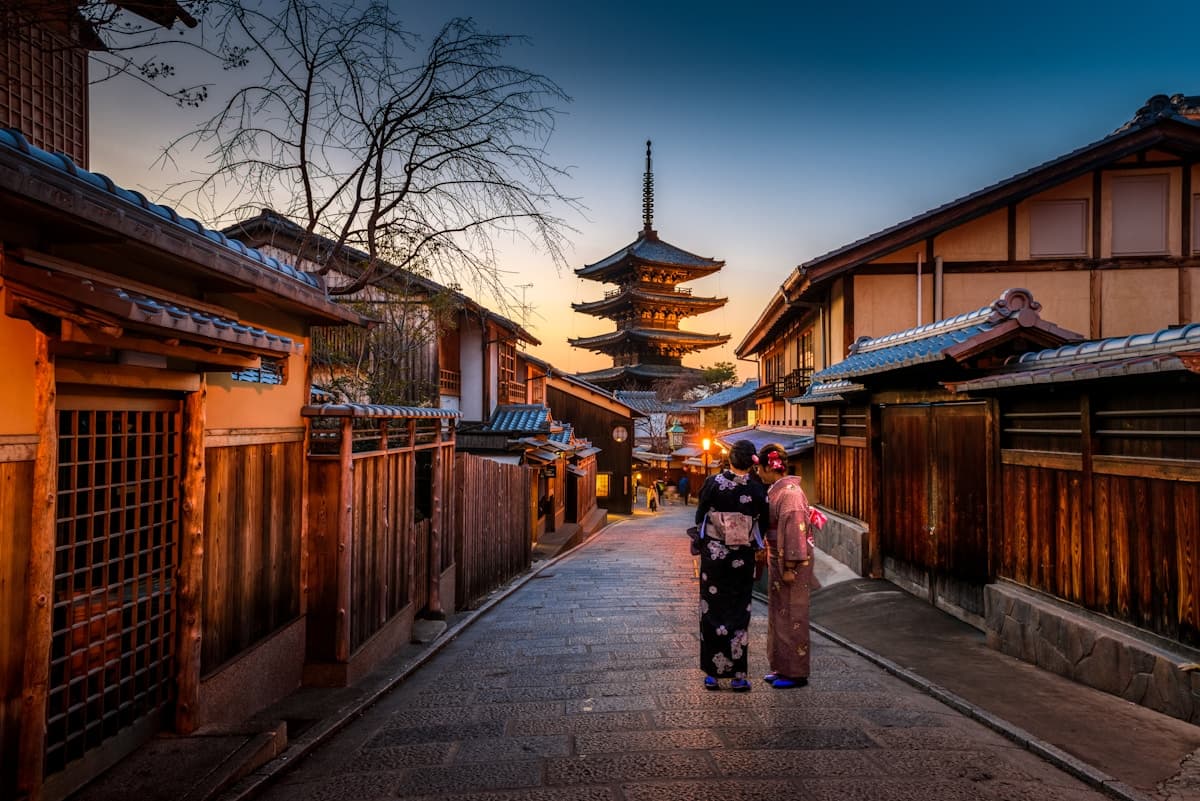
Kyoto
Where tradition still shapes everyday life.
What is a first-time visitor participating in, and how can they take part respectfully without pretending expertise?
A tea ceremony is not a beverage order. It is an invitation into a short, deliberately prepared encounter between a host who has spent time considering the room, the season, and the guest, and a guest who agrees to slow down and pay attention in return. For a first-time visitor, that shift matters more than any single gesture. You are not there to watch a performance or complete a checklist — you are being received. Practice varies by school, host, and setting, and a single afternoon cannot teach what practitioners spend years learning. This article explains what the practice is trying to create, what a visitor is likely to encounter, and how to take part without pretending an expertise no first visit can offer.
The Japanese tea ceremony — chanoyu, literally "hot water for tea" — refers to the practice of preparing and serving matcha within a set sequence of movements. Sadō or chadō, "the way of tea," describes the broader discipline built around that practice: study, repetition, and a philosophy of attention that extends beyond any single gathering. Different schools favor different pronunciations — the Urasenke tradition reads the characters as chadō, while Omotesenke favors sadō — a small sign of how much variation exists beneath a single English label.
At its center, chanoyu is organized around four principles attributed to the sixteenth-century tea master Sen no Rikyū: wa (harmony), kei (respect), sei (purity), and jaku (tranquility). In practice, these are less abstract than they sound. Harmony shows up in how host and guest move around each other without friction. Respect shows up in unhurried greetings and careful handling of shared objects. Purity shows up in the ritual cleaning of utensils before use — a functional act as much as a symbolic one. Tranquility is the cumulative effect: a room where nothing is rushed.
What the ceremony is not trying to create is spectacle. There is no audience to impress and no performance to judge. A host's preparation — selecting utensils suited to the season, choosing a scroll or flower arrangement for the alcove, timing the charcoal and water — exists to give a specific guest, on a specific day, an experience that could not be repeated identically. That specificity, more than any technique, is the point.
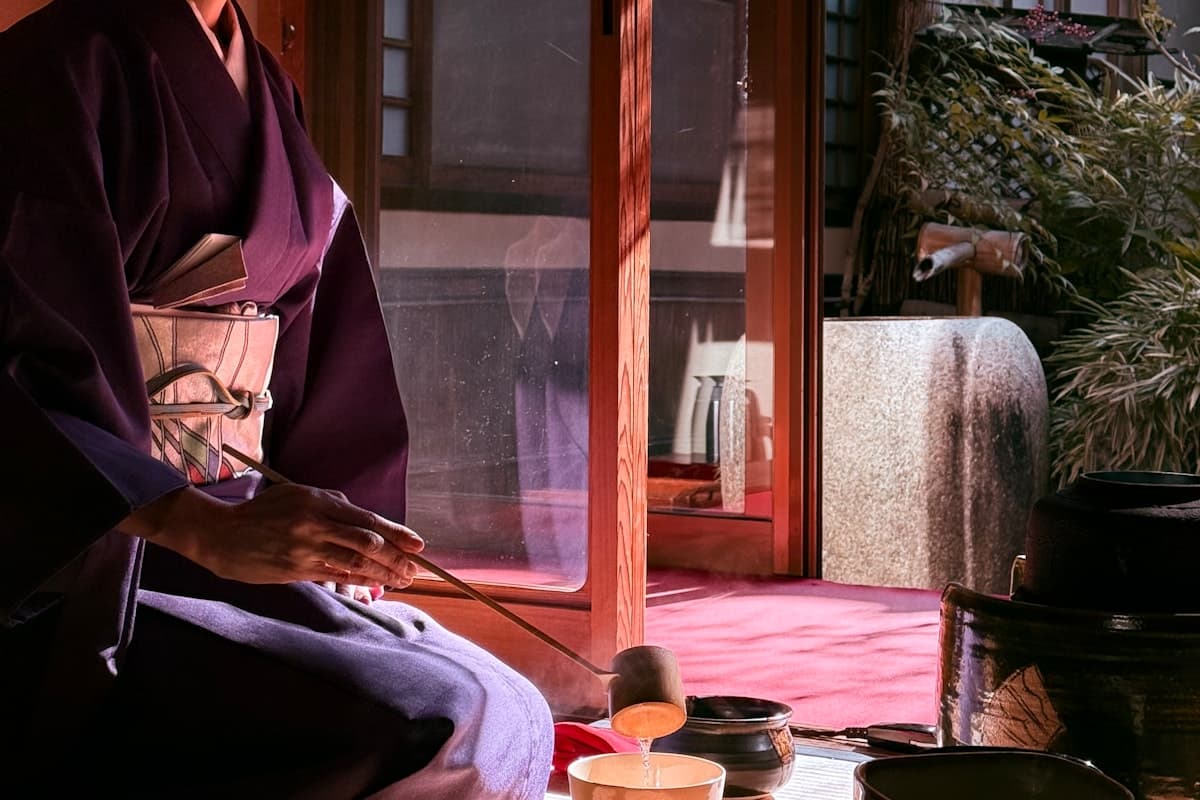
The host (teishu) is responsible for everything a guest does not have to think about: water temperature, the pace of the gathering, the selection of sweets, and the choreography of movements known as otemae — the formal sequence of preparing and presenting the tea. Guests have their own responsibilities, smaller but real: arriving attentive, accepting what is offered with both hands, and following the principal guest's lead if the group is unfamiliar with the sequence.
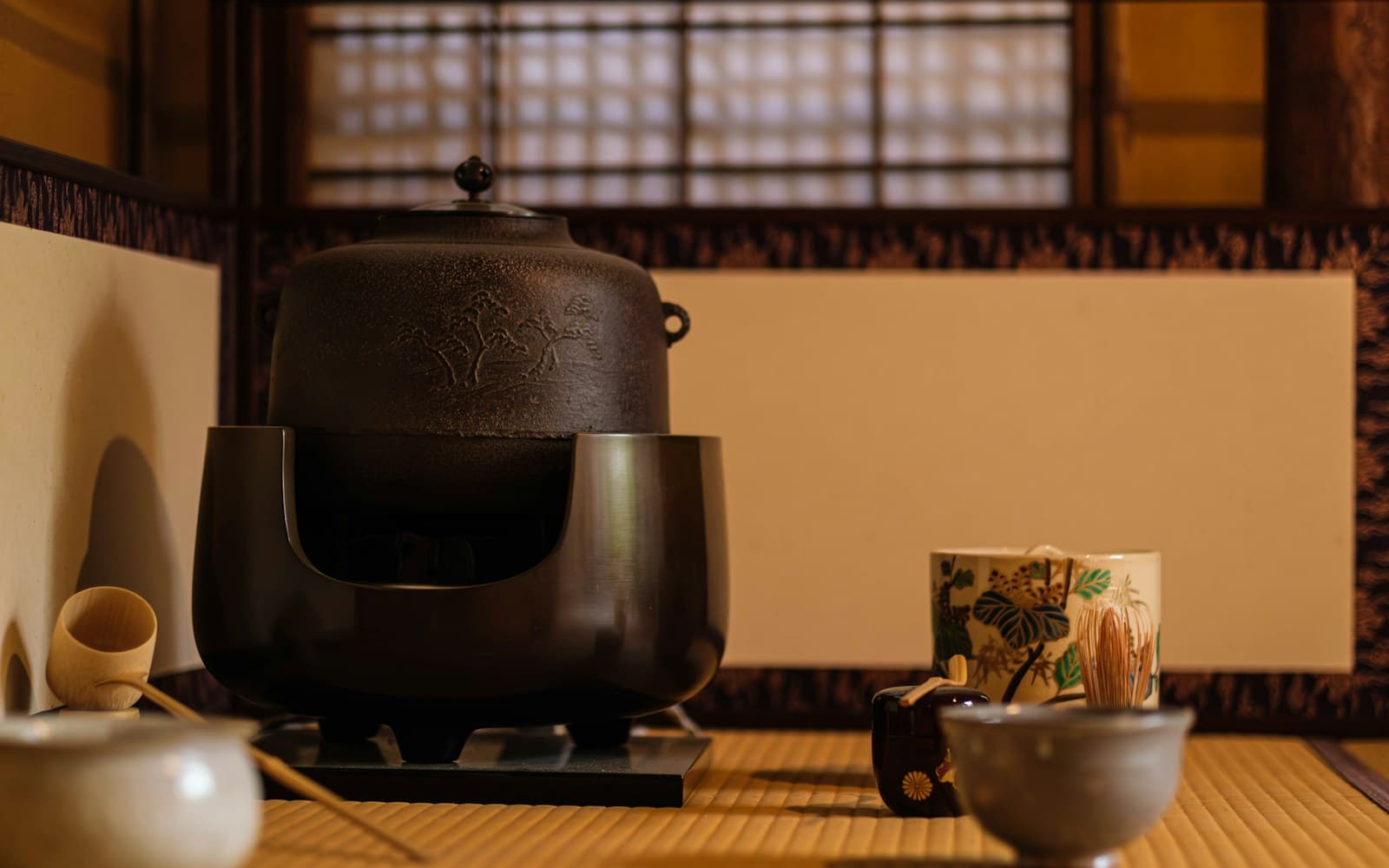
The room itself, a chashitsu, is built around restraint — tatami flooring, a low entrance in more traditional spaces, a tokonoma alcove holding a single scroll or seasonal arrangement. It is worth distinguishing a chashitsu from an ochaya, the "teahouses" associated with Kyoto's Gion district. Ochaya are historically venues for geisha entertainment — conversation, music, and hospitality — and are not built or used for chanoyu. A visitor looking for a tea ceremony room should not assume Gion's teahouses are the destination; the terms share a literal translation but not a function.
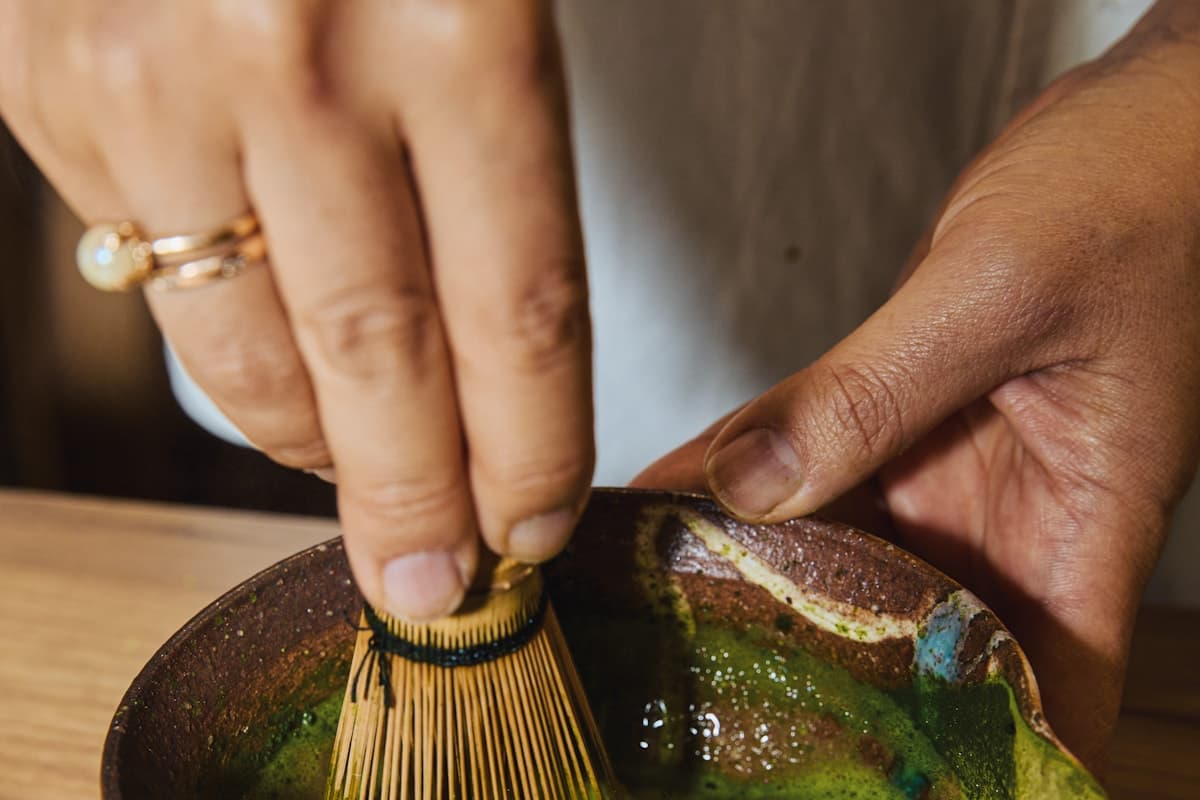
Utensils are functional before they are decorative. The chawan (tea bowl) is chosen for the season and for how it feels in the hands, often deliberately imperfect rather than symmetrical. The chasen (bamboo whisk) has no substitute — its fine tines are what give whisked matcha its texture. The chashaku (bamboo scoop) measures the tea. None of these objects are displayed for their own sake; each has a single, specific job in producing the bowl a guest will drink from that day.
Unsplash (VhPtiipk0tE) by Adrien Lopes — Unsplash License
No two experiences run identically, but an introductory session commonly follows a loose shape: arrival and a brief explanation of what will happen, seating (on a low stool or chair in many visitor-oriented settings, rather than on the floor), and a short period to notice the room — the alcove, the season reflected in a flower or scroll, the sound of water. A small wagashi sweet is usually served first, timed to balance the bitterness of the matcha that follows.
The host then prepares the tea, often narrating each step in an introductory setting where demonstration is part of the point. The bowl is presented with its front facing the guest; convention in many schools is to rotate it slightly before drinking, so as not to drink from the bowl's most visually prominent side, then compliment the tea and bowl before returning it. Conversation is usually restrained rather than absent — hosts in visitor-facing sessions frequently welcome questions, and a good session treats curiosity as part of the exchange rather than an interruption.
This sequence is a starting outline, not a script. The order, formality, and pacing shift by host, school, and format — a hotel-based introductory session, a garden teahouse, and a private machiya lesson will not feel identical, even when each is a legitimate way to encounter the practice.
It helps to separate what a short visit offers from what long-term practice involves. A demonstration is the lightest version: a host prepares and explains tea while the visitor mainly observes, sometimes with a chance to taste. A participatory workshop goes further, usually letting a visitor whisk their own bowl of matcha under guidance — approachable, forgiving of mistakes, and a reasonable place to start. A more formal chaji gathering, extending across a meal and multiple courses of tea, follows fuller convention and is less commonly offered to first-time tourists without a personal introduction.
Long-term study (keiko) is a different undertaking entirely — years of regular lessons within a specific school, building toward a depth of knowledge no single visit approximates. None of this is a hierarchy of worth. A well-run introductory workshop, honestly presented as an introduction, is not a lesser experience — it simply promises something different than formal training does. The problem arises only when a short commercial session is marketed as equivalent to years of practice, or when a visitor assumes one afternoon has taught them the whole of chadō. It has taught them a beginning.
Respectful participation is closer to a set of habits than a checklist. Arrive on time — a tea gathering is built around a schedule the host has prepared around. Remove jewelry that could damage a bowl if asked, and avoid strong perfume, since scent interferes with the tea's aroma. Watch before imitating: in a group setting, letting the first guest demonstrate a step before following is normal practice, not hesitation.
Handle any object you are given with both hands, and treat the pause before and after drinking as part of the exchange rather than dead time to fill with conversation. If a host offers instructions, follow them over anything you may have read beforehand — settings and schools vary, and a host's guidance for that specific room is more reliable than a general rule. Ask when uncertain; hosts running visitor-oriented sessions generally expect questions and would rather answer one than watch a guest guess.
Photography is the detail most visitors get wrong. Many hosts are comfortable with photographs before or after the formal preparation begins, but ask before photographing the host, other guests, or the tea being prepared — and if a room posts no-photography guidance, follow it without exception. None of this requires performing the ceremony perfectly. A visitor who is attentive, asks before assuming, and does not treat the room as a costume backdrop has already participated respectfully, regardless of whether every gesture was technically correct.
Because formats vary so widely, the more useful question is not "which is best" but "which matches what I actually want." A few things worth checking before booking: whether the session is described as an introductory demonstration, a participatory workshop, or a formal gathering — the language operators use is usually a reliable signal of what will happen. Whether instruction is offered in a language you understand, and whether the explanation covers cultural context or only the physical steps. Group size, since a session with two or three guests will look very different from one with fifteen.
Venue matters too. A hotel conference room, a public garden teahouse, and a historic machiya each produce a different atmosphere, even when the tea itself is prepared the same way. Ask about seating — some venues offer chairs for guests who cannot sit in seiza for an extended period, which matters if mobility is a concern. Confirm photography rules and session length in advance rather than assuming.
Favor operators that are transparent about who they are and what tradition or school, if any, they follow, and that explain the practice's meaning rather than only its choreography. This is a decision worth making with the same care as any other cultural activity — not by ranking, but by matching the format to what you are hoping to take from it.
Kyoto carries the deepest institutional history — it is home to the headquarters of several major tea schools and to the largest concentration of teaching households in Japan, part of why introductory sessions are widely available across the city. One clarification worth making before visiting: Gion's well-known "teahouses" are ochaya, geisha entertainment venues, not chanoyu tea rooms; a visitor looking for a tea ceremony should look toward temples, machiya, and dedicated tea rooms rather than assuming Gion's teahouse district is the destination. For planning the surrounding stay, see Where to Stay in Kyoto.
Kanazawa offers a more compact alternative. The city is sometimes described as a tea-culture stronghold in its own right, with several machiya in the Higashi Chaya district now hosting beginner-friendly sessions distinct from that district's own ochaya heritage, and public teahouses inside Kenrokuen Garden giving an accessible, unscheduled way to encounter the practice during an ordinary garden visit. For the neighborhood decision around a Kanazawa stay, see Where to Stay in Kanazawa.
Tokyo's version is the most incidental. Public gardens such as Hamarikyu, built around a former shogunate residence, include a lakeside teahouse open to visitors without a special reservation in many cases — a low-commitment way to experience the practice inside a trip that was not built around it. None of these three cities owns the tradition; each simply offers a different way in.
Unsplash (TmgR2If58HM) by Tiago Ebisui — Unsplash License
A tea ceremony asks very little of a first-time visitor beyond attention: arrive on time, watch before acting, and let the host's preparation be received rather than rushed. What you are participating in has been refined over centuries, but a single afternoon does not require you to master it — only to meet it honestly. The bowl, the season, and the quiet pause before drinking were arranged for this specific visit. That is worth noticing, whether the room is in a Kyoto temple, a Kanazawa machiya, or a Tokyo garden most tourists walk straight past.
Now that you know roughly what to expect, the next step is choosing a city and a trip rhythm that leaves room for it.
Kyoto has the widest range of introductory sessions and the deepest institutional history. Kanazawa offers a more compact, less-booked alternative inside a walkable heritage district. Tokyo works best if a tea experience is a low-commitment addition to a trip that was not built around it, not the reason for the trip itself.
Future: vetted tea experiences and workshops by city — added only after editorial review of a specific, currently-operating, official or clearly-identified operator. No commercial links exist here yet.
Continue exploring this way of seeing Japan.