Kyoto
Where tradition still shapes everyday life.
Why do some places become beautiful without asking to be noticed?
Along a station path in an ordinary suburb, something small grows where the concrete meets the edge of the rail. No plaque marks it. No photograph frames it. Commuters pass within a foot of it every morning, often without looking down. It was not planted for admiration. Nobody maintains it as scenery. Rain arrives; heat arrives; the trains continue on schedule. The flower persists because the conditions allow it — not because anyone asked it to be beautiful.
Yet something in the glance, when it happens, stays. Not the flower itself, exactly. The absence of performance around it.
Much of what people later call beautiful was never intended to be seen. It was simply the result of something else — a habit continued, a surface wiped, a tool returned to the same place each evening, a meal arranged because hunger required arrangement and care required dignity. The bicycle leaning outside a wooden house is not posed. The shop curtain moving in the wind is not decoration. The handwritten sign made only to be useful carries no thought of being admired. These things become visible to the eye only because use has shaped them slowly, and slowness has left its trace.
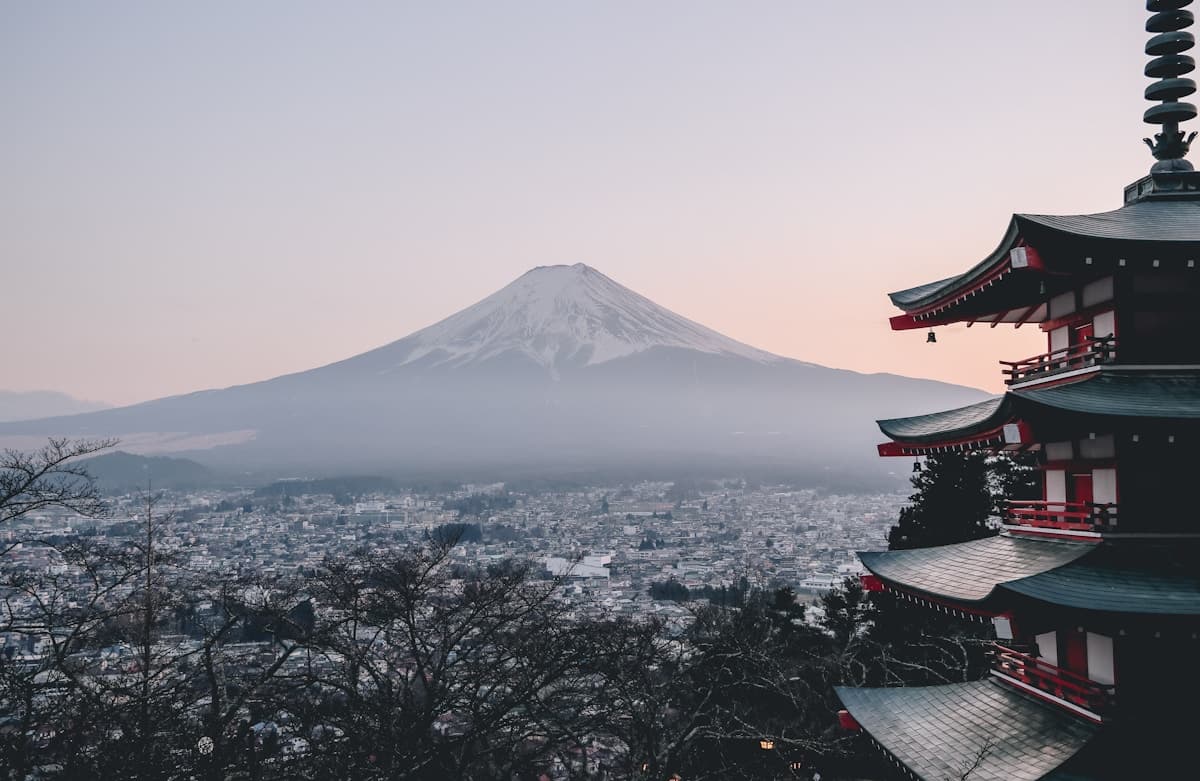
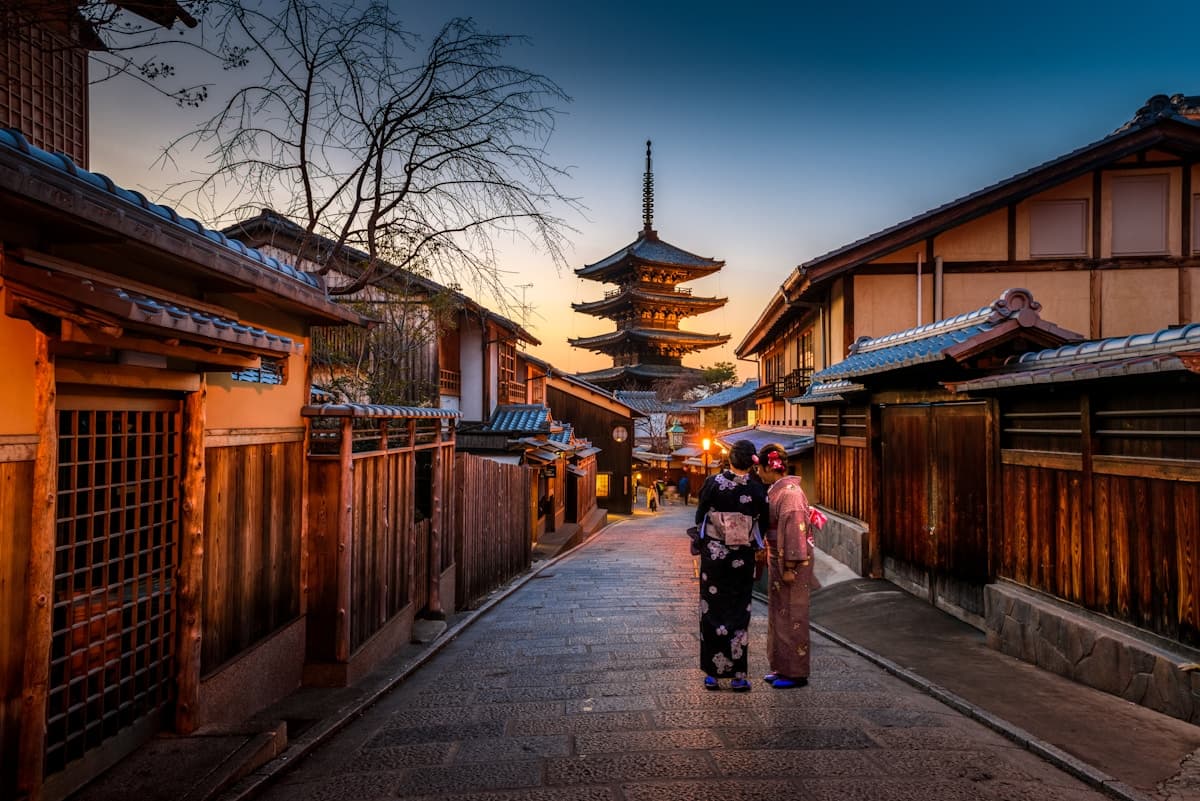
In Kyoto, where old materials remain in daily circulation rather than behind glass, this is often easier to notice. A gate worn smooth by hands. Stone steps darkened by rain and footsteps across years. A small garden visible through an open door — not staged for passersby, but swept because sweeping belongs to the morning. The beauty is not added. It is what remains when function has been attended to long enough that function itself begins to look like intention.
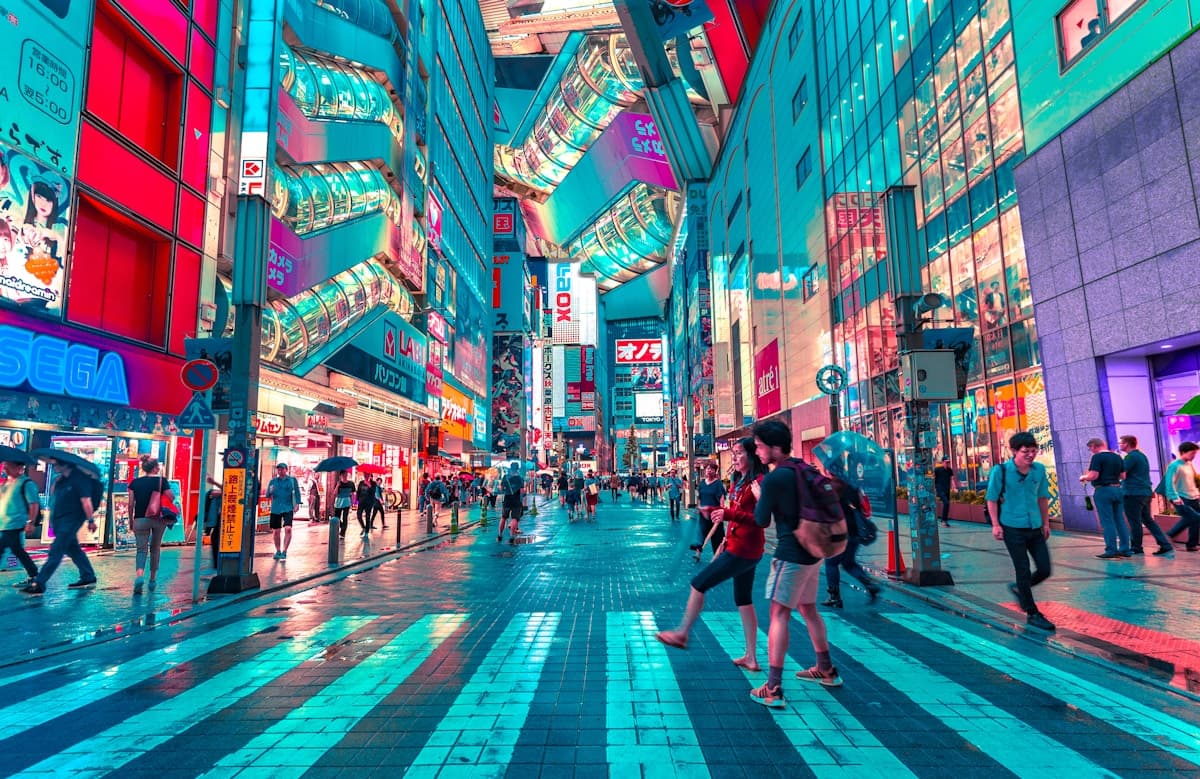
Even where life moves quickly and things are replaced often, beauty still appears in corners that were never competing for attention — morning light entering a quiet café before the rush; laundry drying beside a wall that has faded without apology; fruit arranged not for display photography, but because it will be handled, chosen, and eaten. None of this requires the traveler to hunt for hidden gems. It requires only the willingness to see that many beautiful moments are by-products — the residue of care, repetition, and use.
Some objects become beautiful by surviving their purpose. An old kettle repaired instead of replaced. Wooden steps polished by generations of feet. A door that still closes cleanly because someone continued to adjust the hinge. These are not relics waiting to be appreciated. They are working things maintained past the point when replacement would have been easier. The beauty grows through continued relationship — the slow argument between a person and a material that refuses to be finished with.
This is different from preservation as spectacle. A building maintained quietly across decades does not announce its age. It simply remains useful, and usefulness, extended, acquires a kind of gravity. Worn wood is not charming because it is old. It is beautiful because it records contact — hands, weather, years — without asking to be read as history. The traveler who mistakes this for a style called wabi-sabi has already turned observation into vocabulary. Better to notice the fact itself: the object was kept because someone decided it was still worth keeping.
In smaller towns and older neighborhoods, this patience is visible in ordinary maintenance — gutters cleared, paint touched where it had faded, tools stored in the order that tomorrow will require. Nothing here is performed for visitors. Much of it would continue if no visitor came. That continuity is part of what makes the impression last. Beauty that must be announced often fades when the audience leaves. Beauty that was never displayed has no audience to lose.
Sometimes nothing changes except the observer. The same street, walked once in haste and again without purpose, does not alter between visits. The light, however, does. The mind does. A meal arranged carefully though no photograph will be taken looks different when the eater is present rather than documenting. Moss growing where nobody planned it becomes visible only when the walker is not already committed to the next destination.
This is why attention matters more than intention. The world does not always offer beauty on the schedule that tourism prefers. It offers conditions — weather, material, time of day, the accidental alignment of ordinary things — and attention completes them. A temple stone darkened by rain is the same stone in sun. The difference is not theatrical. It is perceptual. Rain deepens color. Silence changes the ear. The place has not performed. The observer has simply arrived with enough room to notice.
Japan does not have a monopoly on this. Any country knows moments when nothing remarkable happened and yet something remained. What repeats here, often enough to be recognized, is how frequently the remarkable is not separated from the daily — how little effort is spent announcing that a thing should be admired, and how much effort is spent, without commentary, simply continuing it. The traveler who leaves intervals unassigned — who allows a walk to end without objective — is more likely to feel this shift. Not because Japan hides beauty from the efficient, but because beauty here so often lives inside the unefficient: the path not optimized, the object not replaced, the glance not required to become content.
An honest account cannot treat beauty as only harmony. Cracked walls are beautiful. Winter branches against a gray sky are beautiful. Empty streets after rain are beautiful in a way that has nothing to do with comfort. Fading paint, rust at a corner, a building standing slightly wrong after years of use — these are not failures awaiting correction. They are records. They ask nothing. They simply continue being what they are, and the eye, if it is not hunting prettiness, may recognize honesty as a form of beauty.
This matters because the gentle version of beauty is easy to sell. The harder version refuses to soothe. It does not promise that everything is in order. It does not ask the viewer to feel restored. It presents a world that has been lived in, weathered, delayed, repaired imperfectly, and still in use. Some travelers find this unsettling. Others find it more trustworthy than surfaces made to look untouched. A country that values maintenance does not therefore value only the maintained. It also lives among what maintenance has not yet reached, or has reached only partially, or has chosen to leave alone because leaving alone was the more correct relationship.
To reduce beauty to harmony is to reduce observation to reassurance. The world is not always reassuring. It is often more interesting than that.
By the end of a journey, many travelers discover that their clearest memories are not the ones they were told to collect. They are the ones that arrived without instruction — the bicycle seen from a window, the curtain lifting in wind, the meal eaten in silence, the small flower beside a path used every day by people who were not looking for it. These moments were not waiting to become memories. They became memorable because nothing required them to compete.
Beauty, approached this way, is not a category of scenery. It is what appears when performance withdraws — when a place is allowed to be itself, when an object is kept because it is still needed, when a person arranges a room or a meal or a day without asking to be observed doing so. The world becomes richer not when everything demands attention, but when most things continue quietly and a few, by accident or by care, become visible to someone who happened to be paying attention.
By then, the pattern may already be visible without needing to be named. Something appears, passes, and is not forced before its time. Care completes itself before speech. An afternoon with no assignment leaves room for a street that was never on the list. Two people walk without filling the silence between them. None of this requires a theory. It requires only that attention remain available long enough for the ordinary to stay visible — and for what was never offering itself to be received without being turned into proof.
A traveler does not need to search for beauty in Japan. Searching turns the eye into an instrument of acquisition, and acquisition is already a kind of noise. The more useful practice is slower and less photogenic: to walk without requiring each moment to justify itself; to allow an object, a street, a meal, a rain-darkened stone to remain ordinary long enough that ordinariness itself becomes visible.
Beauty often arrives after we stop trying to collect it — when the list loosens, when the camera remains lowered, when the afternoon has no assignment and the mind, unexpectedly free, notices what was never offering itself at all. The flower beside the platform was not waiting to be found. It was simply there, unperforming, alongside everyone else's commute.
Nothing more is required.
Continue exploring this way of seeing Japan.